

Last updated: May 2026 | A practical guide to recording hikes, wildlife trips, road journeys, outdoor experiences, and once-in-a-lifetime travel moments
Travel is changing.
More people are looking for trips that feel active, immersive, and memorable. Not just a hotel, a view, or a photo spot, but an experience that leaves something behind: a story, a challenge, a discovery, a shift in perspective.
Pinterest’s 2026 travel trend forecast highlights the rise of “darecations”, with Gen Z and Millennials showing interest in adrenaline-inspired tourism, from rafting to rappelling and other more active travel experiences. NBC Select also identified adventure-based travel as one of the Pinterest Predicts 2026 trends worth watching.
But the more memorable a trip is, the harder it can be to fully capture.
Photos show where you were. A notebook helps record what the experience felt like: the climb, the weather, the route, the fear before trying something new, the view after reaching the top, the animal you spotted, the stranger who gave you directions, the meal you still think about, the moment that made the trip feel worth it.
That is where an adventure travel journal comes in.
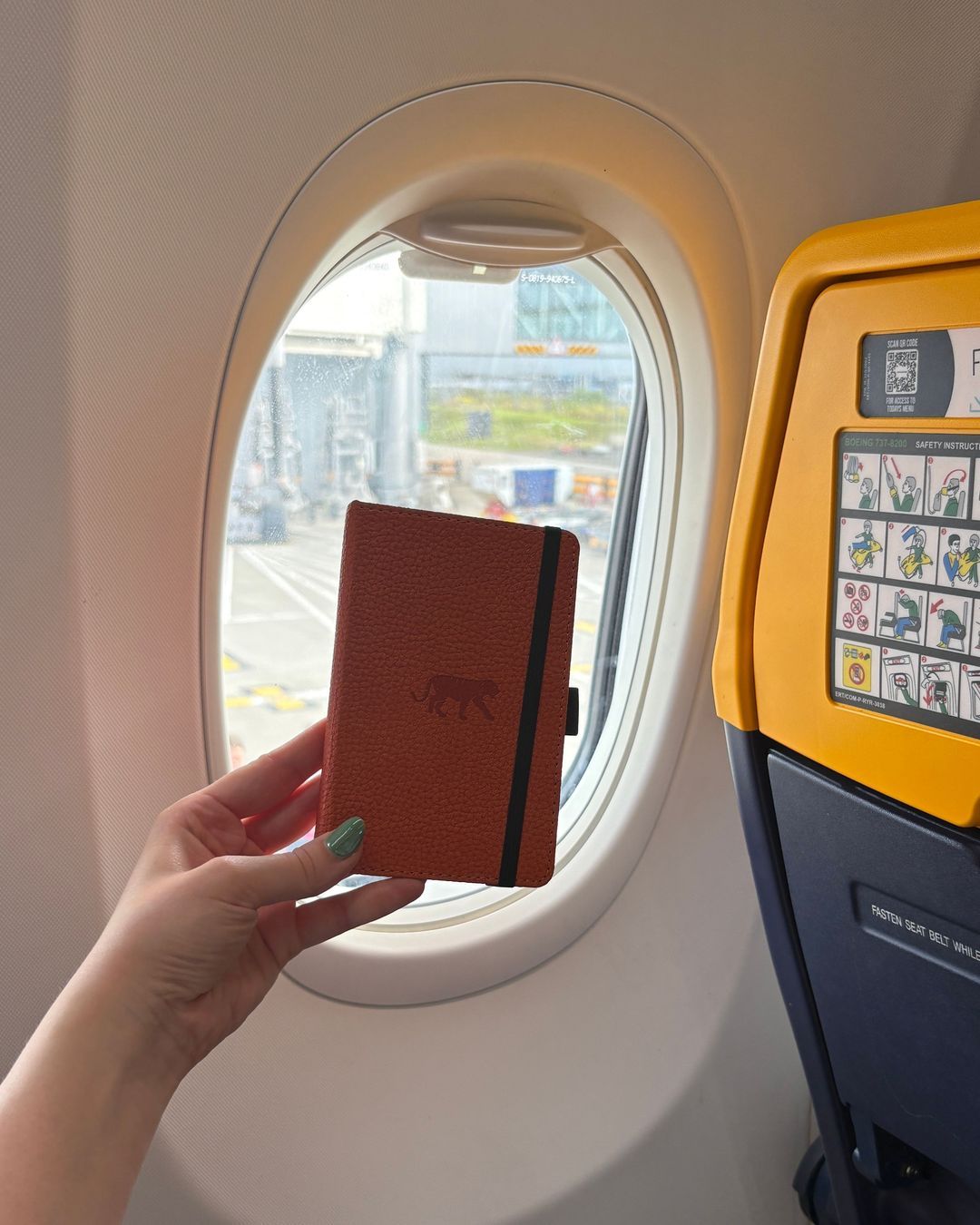
At Dingbats*, the Wildlife Collection naturally fits field notes, wildlife sightings, hikes, and outdoor observations. The Earth Collection works well for planning, packing lists, routes, and post-trip reviews. The Pro Collection gives creative travelers space for sketches, maps, tickets, textures, and visual memory pages.
An adventure journal is not about documenting every second.
It is about preserving the moments that changed the way you saw a place.
Quick Overview: Adventure Travel Journal Ideas and the Best Dingbats* Fit
| Adventure Moment | What to Record | Best Dingbats* Fit |
|---|---|---|
| Before the trip | Goals, packing lists, route plans, safety notes | Earth Collection |
| Hiking or trekking | Trail notes, weather, energy, views, lessons | Wildlife or Earth Collection |
| Wildlife trips | Animal sightings, behavior, location, questions | Wildlife Collection |
| Road trips | Route notes, stops, landscapes, playlists, meals | Wildlife Collection |
| Outdoor activities | Feelings, challenges, what you learned | Wildlife Collection |
| Creative travel pages | Maps, tickets, sketches, pressed leaves, textures | Pro Collection |
| After the trip | Reflections, favorite moments, what changed | Earth or Wildlife Collection |
The best adventure journal is not the neatest one. It is the one that helps you remember what the trip asked of you.
Why Adventure Travel Is Worth Documenting
Adventure travel has a different rhythm from a normal holiday.
It often involves movement, uncertainty, weather, effort, and emotion. You might be hiking a trail, exploring a national park, joining a wildlife excursion, taking a road trip, camping, kayaking, or simply choosing a destination that pushes you slightly outside your usual routine.
That kind of travel creates details you may not think to capture in the moment.
A photo might show the mountain view, but it will not always capture how tired your legs felt before you reached it. A video might show the waterfall, but not the sound of the path leading there. A group picture might show who you were with, but not the conversation that made the day memorable.
A notebook helps you record the invisible parts of the experience.
This matters because travel memories change quickly. The small details fade first, even when the trip itself felt unforgettable. Writing them down gives the memory more shape.

What Makes an Adventure Journal Different From a Travel Journal?
A regular travel journal often focuses on where you went and what you did. An adventure journal goes deeper into the experience.
It records effort, environment, movement, surprise, and reflection. It might include the route you took, the weather you dealt with, the wildlife you saw, the challenge you faced, the moment you almost turned back, or the thing you learned about yourself.
For example, a travel journal might say:
“We hiked to the viewpoint today.”
An adventure journal might say:
“The first half of the hike felt easy, then the wind picked up near the ridge. I almost wanted to stop, but the view opened suddenly after the last turn. The valley looked much greener than I expected. I want to remember the feeling of reaching it, not just the view.”
That difference is the point. Adventure journaling is less about itinerary and more about experience.
Before the Trip: Use Your Notebook to Prepare With Intention
Adventure-based travel often requires more preparation than a relaxed city break.
You may need packing lists, route notes, weather checks, booking details, gear reminders, fitness preparation, or a clear idea of what you want from the trip.
The Dingbats* Earth Collection is the strongest fit for this stage. Its dotted pages, numbered pages, index pages, and planning features make it useful for organizing travel details before you leave.

Pre-Trip Adventure Pages
| Page Idea | What to Include |
|---|---|
| Trip intention | Why you chose this destination or activity |
| Packing list | Clothing, shoes, layers, documents, essentials |
| Route overview | Trails, stops, transport, timings |
| Weather notes | Forecast, temperature, conditions |
| Activity checklist | Bookings, meeting points, equipment reminders |
| Things to research | Wildlife, local plants, geography, culture |
| Questions before going | What do I want to learn, notice, or try? |
Example entry:
“I want this trip to feel active but not rushed. I want to notice landscapes, not just move through them. I want to come back with stories, not only photos.”
That kind of page gives the trip a purpose before it begins.
During the Trip: Record What Photos Miss
The best adventure notes are often short.
You do not need to write a full diary entry every day. In fact, quick notes often feel more honest because they capture the moment before it becomes polished.
The Wildlife Collection works beautifully here because it is versatile and easy to use. An A6 Wildlife notebook can be carried for pocket notes, while A5+ Wildlife gives more space for longer reflections and field-style entries.

Quick Adventure Prompts
| Prompt | Example |
|---|---|
| The hardest part today was | The final uphill stretch in the heat |
| The best view was | The valley just before sunset |
| I noticed | Small yellow flowers growing between rocks |
| I heard | Wind, insects, distant water |
| I felt | Nervous before starting, proud afterward |
| I want to remember | How quiet it became after everyone stopped talking |
| I learned | I enjoy the climb more when I stop checking the time |
These prompts are useful because they make the writing specific. Instead of summarizing the day, they help you capture what made it feel alive.
Hiking Journal Ideas
Hiking is one of the best activities to document because every trail has a story.
There is the plan, the route, the effort, the weather, the view, the unexpected moment, and the way your body felt afterward.
A hiking journal can be practical, reflective, or creative.
The Earth Collection works well for structured trail logs, while the Wildlife Collection is better for freeform notes and reflections. The Pro Collection can be used for sketching trail maps, leaves, textures, or landscape details.
Simple Hiking Log Template
| Prompt | Your Notes |
|---|---|
| Trail / route | |
| Distance or duration | |
| Weather | |
| Terrain | |
| Energy level | |
| Best view | |
| Wildlife / plants noticed | |
| Hardest moment | |
| What I’d do differently |
Example entry:
“Trail was steeper than expected. Weather started cool but became hot by midday. Saw two birds circling near the ridge and wildflowers along the lower path. Best moment was stopping halfway and realizing how quiet it was.”
This kind of note becomes useful later if you ever return to the same route or recommend it to someone else.
Wildlife Trip and Field Notes
Wildlife experiences are some of the easiest to forget in detail because they often happen quickly.
You see something, react, and then the moment is gone.
A notebook helps slow that moment down afterward. You can record what animal you saw, where it appeared, what it was doing, how long you watched it, what sounds you heard, and what questions it raised.
The Dingbats* Wildlife Collection is the natural fit for this because the collection already celebrates animals and observation. It turns the notebook into a field companion rather than just a place for general notes.
Wildlife Field Notes Template
| Prompt | Example |
|---|---|
| Animal | Fox |
| Location | Near the edge of the trail |
| Time | 6:40 AM |
| Behavior | Crossed quickly, stopped once, disappeared into brush |
| Sound | None |
| Question | Was it alone or part of a family nearby? |
| Feeling | Surprised, lucky, very still |
You do not need to know the exact species. Describe what you saw. Curiosity matters more than expertise.
Road Trip Journal Ideas
Road trips create a different kind of adventure.
They are made of transitions: stops, landscapes, conversations, wrong turns, playlists, snacks, small towns, roadside cafés, and unexpected detours.
A road trip notebook can capture the parts of the journey that are easy to overlook.
The Wildlife Collection works well for road trip notes because it can handle lists, quick entries, and daily reflections. The Earth Collection is useful for planning the route, budget, stops, and schedule.
Road Trip Pages to Create
| Page Idea | What to Include |
|---|---|
| Route map | Stops, roads, places to revisit |
| Best roadside meal | What you ate and where |
| Playlist page | Songs that became part of the trip |
| Unexpected detours | Places you found by accident |
| Landscape notes | Colors, weather, changes in terrain |
| Quote page | Funny things people said |
| Best stop of the day | The place that surprised you most |
Example entry:
“We stopped for coffee in a town we didn’t plan to visit. The café had blue chairs outside and a dog sleeping by the door. It ended up being one of the best stops of the trip.”
Adventure is often hidden in the unplanned parts.

Creative Adventure Pages
Some travel memories are better captured visually.
A ticket, a map, a pressed leaf, a quick sketch, a color palette, a label, or a small piece of packaging can hold the feeling of a trip in a different way.
The Dingbats* Pro Collection is best for creative adventure pages because its 160gsm mixed media paper can support sketching, layering, collage, brush pens, and light washes.
Creative Adventure Page Ideas
| Page Idea | What to Add |
|---|---|
| Route sketch | Simple map of your trail, road, or city route |
| Color palette | Colors from the landscape, meal, sky, or market |
| Texture study | Bark, rock, sand, fabric, leaves |
| Ticket collage | Museum tickets, train stubs, receipts |
| Field sketch | Plant, animal, mountain outline, shell |
| Weather page | Colors or marks showing the day’s weather |
| “One place” page | A full page dedicated to one unforgettable spot |
Example:
Create a page called “The Colors of the Hike.” Add the green of the trees, grey of the rocks, blue of the sky, brown of the trail, and yellow of the flowers. Write one line under each color about where you saw it.
This kind of page helps a trip become more than a sequence of photos.
Adventure Travel Reflection Prompts
The most valuable travel reflection often happens after the activity.
Once the hike is over, the road trip is done, or the wildlife excursion has ended, you can understand what stayed with you.
Reflection turns experience into memory.
Adventure Reflection Prompts
| Prompt | What It Helps You Capture |
|---|---|
| What challenged me? | Effort, fear, uncertainty, discomfort |
| What surprised me? | Unexpected places, people, feelings |
| What did I notice that I normally miss? | Sounds, textures, small details |
| What moment do I keep thinking about? | Emotional memory |
| What did this place teach me? | Perspective |
| What would I do differently next time? | Practical learning |
| What part of the trip changed my mood? | Inner shift |
| What did I feel proud of? | Confidence and growth |
The Wildlife Collection is excellent for this kind of reflection because it allows thoughts to unfold naturally. The Earth Collection is better if you prefer structured post-trip review pages.
A One-Page Adventure Journal Template
If you only have time for one page, use this template.
| Prompt | Your Notes |
|---|---|
| Place | |
| Date | |
| Weather | |
| What I did | |
| What I noticed | |
| Hardest part | |
| Best moment | |
| Small detail I want to remember | |
| What I learned | |
| Would I do it again? |
This works for hikes, road trips, outdoor adventures, wildlife excursions, and active city days.
Use Earth if you want the template to become part of a larger travel system. Use Wildlife if you want it to feel more casual and reflective.
How to Choose the Right Dingbats* Notebook for Adventure Travel
| Travel Style | Best Dingbats* Fit | Why |
|---|---|---|
| Hiking and field notes | Wildlife Collection | Animal-inspired, versatile, easy for observation |
| Route planning and packing | Earth Collection | Structured pages help organize details |
| Creative travel memory keeping | Pro Collection | 160gsm paper supports sketches and collage |
| Wildlife trips | Wildlife Collection | Natural fit for animal sightings and notes |
| Road trips | Wildlife or Earth Collection | Open notes or structured planning |
| Post-trip reflection | Wildlife Collection | Best for honest, freeform writing |
| Travel project planning | Earth Collection | Good for itineraries, budgets, reviews |
The best notebook depends on how you experience adventure.
If you observe, choose Wildlife.
If you plan, choose Earth.
If you create visually, choose Pro.
Frequently Asked Questions
What should I write in an adventure travel journal?
Write about routes, weather, activities, views, wildlife, people, meals, challenges, surprises, and what you learned. Focus on details that photos do not fully capture.
How is an adventure journal different from a travel journal?
A travel journal often records where you went and what you did. An adventure journal focuses more on experience, effort, observation, challenge, and reflection.
What notebook is best for hiking notes?
The Dingbats* Wildlife Collection works well for hiking notes because it is versatile and closely connected to nature and wildlife. The Earth Collection is better if you want structured trail logs and planning pages.
Can I use an adventure journal for city trips?
Yes. Adventure does not have to mean mountains or extreme activities. A city adventure can include walking routes, food discoveries, markets, museums, street observations, and unexpected places.
Which Dingbats* notebook is best for adventure travel?
The Wildlife Collection is best for field notes, wildlife sightings, and reflections. The Earth Collection is best for planning, packing, and structured logs. The Pro Collection is best for sketches, maps, tickets, textures, and creative travel pages.
Our Verdict
Adventure travel is not only about doing something exciting.
It is about paying attention to what the experience does to you.
A notebook helps you hold onto the parts that are easy to lose: the effort, the weather, the unexpected detail, the animal sighting, the wrong turn, the quiet view, the moment you realized the trip meant more than you expected.
Dingbats* notebooks support different kinds of adventure. The Wildlife Collection is the natural field companion for observation, wildlife, and outdoor reflection. The Earth Collection helps structure routes, packing, planning, and post-trip reviews. The Pro Collection gives creative travelers space to sketch, collage, and preserve visual details.
The best adventures do not only deserve to be photographed. They deserve to be remembered.


Leave a comment
All comments are moderated before being published.
This site is protected by hCaptcha and the hCaptcha Privacy Policy and Terms of Service apply.