
The Biophilic Anchor: Reclaiming Your Executive Function Through Analog Architecture
In the professional landscape of 2026, the most expensive commodity is not data, but Directed Attention. We have reached a point of "Cognitive Sprawl," where the constant shift between digital platforms has led to a measurable decline in Deep Synthesis, the ability to take disparate information and build a unified, original vision.
The solution emerging among elite strategists, architects, and designers is the Biophilic Anchor. By utilizing the physical constraints and organic textures of the Dingbats* Collections, professionals are leveraging environmental psychology to restore their "Executive Function." This isn't just journaling; it is Cognitive Architecture.
1. The Science of Restorative Focus (ART)
Attention Restoration Theory (ART), pioneered by Rachel and Stephen Kaplan, posits that our capacity for focused attention is a finite resource that is rapidly depleted by the "Hard Fascination" of digital interfaces.
Why Dingbats* Acts as a Restorative Tool:
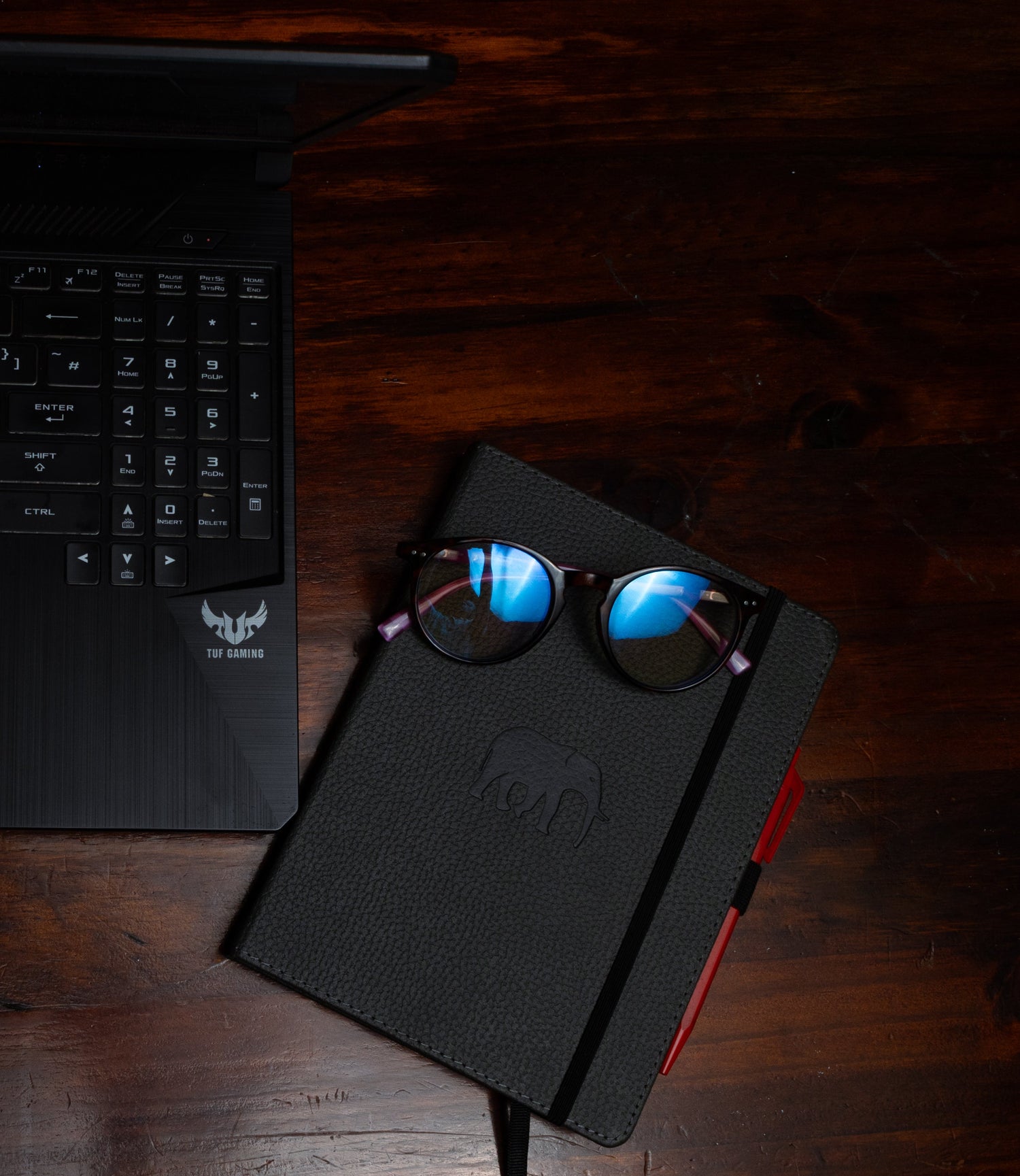
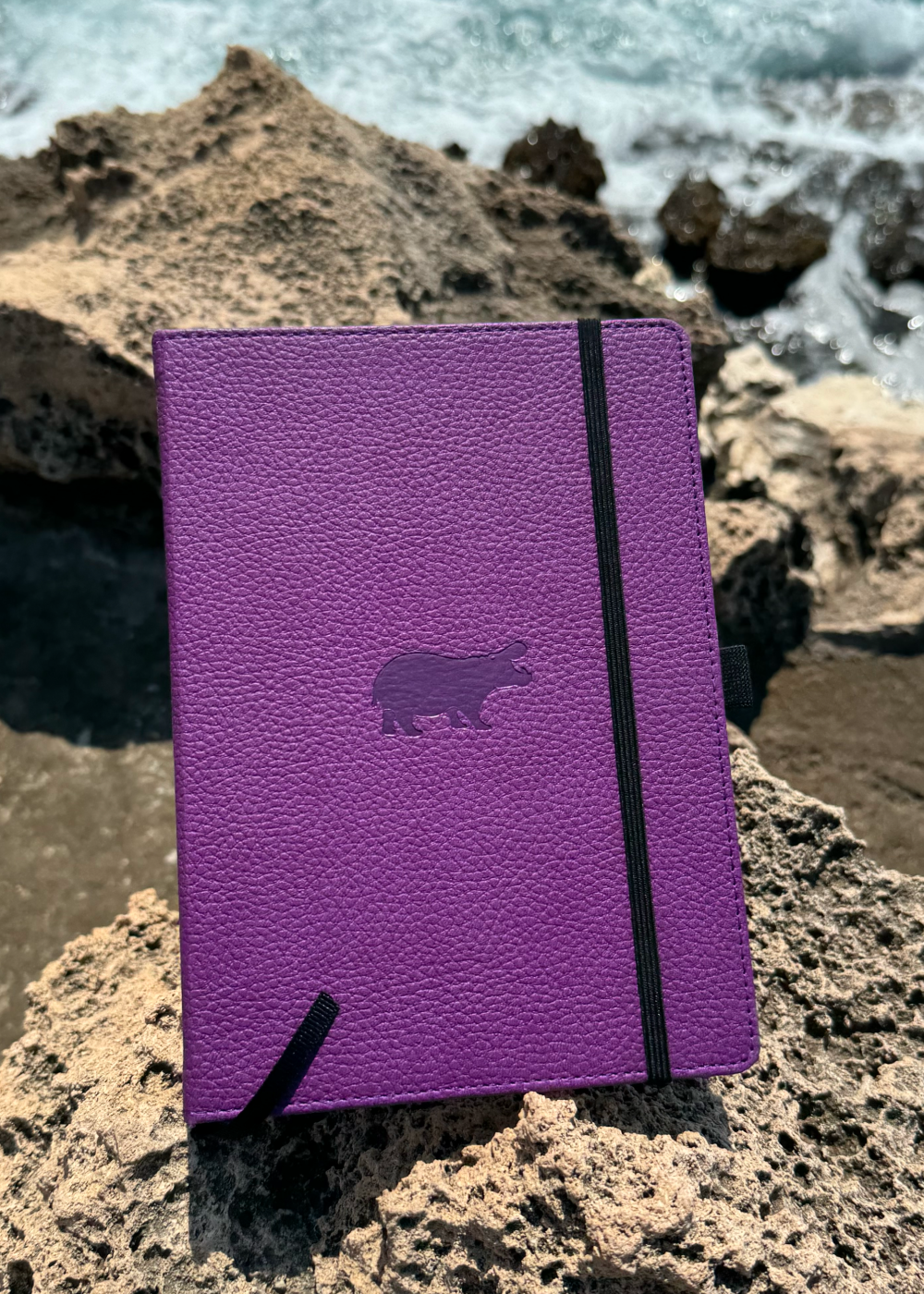
- "Soft Fascination": The brain requires environments that are effortlessly engaging to recharge. The debossed, tactile covers of the Wildlife and Earth Collections, featuring notebooks like the Grey Elephant or the Yasuni National Park, provide "Soft Fascination." This allows the prefrontal cortex to enter a recovery state, significantly reducing cortisol levels and priming the brain for creative breakthroughs.
- Tactile Immunity: In a world of "frictionless" glass screens, the haptic resistance of our 100gsm and 160gsm paper provides a sensory grounding. Research from the University of Tokyo (2025) confirms that the physical act of writing on paper triggers the Hippocampus (the brain's memory hub) more effectively than any digital equivalent.

2. Collection Strategy: Matching Hardware to Intent
Every Dingbats* collection is engineered for a specific stage of the creative or strategic cycle. To maximize your output, you must match the "Hardware" to your "Intent."
I. The Wildlife Collection: The "Active Observation" Tool
- The Framework: For real-time data capture and field logging.
- The Feature: 100gsm "Silk Smooth" paper.
- The Inspiration: Leonardo da Vinci never left his studio without a notebook tucked into his belt. He used his journals for "Simultaneous Synthesis", drawing a bird's wing alongside a mechanical gear.
- The Technique: Use the Wildlife Softcover's 360-degree flexibility to sketch while standing. This engages your Proprioception (your body's sense of position), which has been linked to increased "Divergent Thinking" (the ability to generate many solutions to a single problem).

II. The Earth Collection: The "Cognitive Scaffold"
- The Framework: For long-term project architecture and habit engineering.
- The Feature: Numbered pages and a built-in Index.
- The Inspiration: Thomas Edison managed over 3,500 notebooks using a rigid indexing system. This allowed him to cross-reference "failed" experiments from years prior, turning a stack of paper into a searchable Secondary Brain.
- The Technique: The "12-Week Analog Sprint." Use the Index to map out a 12-week execution cycle. By physically checking off habits on the dotted grid, you trigger a dopamine response in the Nucleus Accumbens, reinforcing the behavior more effectively than a digital notification.

III. The Pro Collection: The "Systems Thinking" Canvas
- The Framework: For complex problem solving, UI/UX wireframing, and mixed media.
- The Feature: 160gsm ultra-thick B5 canvas.
- The Inspiration: Sir James Dyson famously deconstructs entire systems in sketches before building prototypes.The B5 format provides 40% more surface area than A5, utilizing the "Global Precedence Effect", the brain's ability to see an entire system at once without being limited by narrow borders.
- The Technique: Mixed-Media Mapping. Use alcohol markers and ink washes to "color-code" different tiers of a system. The 160gsm density ensures zero bleed-through, allowing for high-fidelity technical diagrams that look like professional blueprints.

3. Advanced Method: The "Quadrat" Focus Ritual
To train your brain for the high-intensity demands of 2026, we recommend the Quadrat Method,a technique borrowed from ecology to sharpen observational precision.
- Define the Square: Use the dotted grid in your Wildlife, Earth, or Pro notebook to draw a 10x10 square.
- The Deep Dive: Spend 10 minutes documenting a single system (e.g., the flow of a business process or the grain of a physical material).
- The Result: This practice creates Cognitive Defusion, the ability to step back and observe your thoughts objectively. It is the ultimate training for making high-stakes, objective decisions.
4. Why Dingbats* is the Benchmark of 2026
Quality in 2026 is no longer an aesthetic choice; it is a Technical Requirement.
- pH-Neutral Paper: Our archival paper prevents "acid hydrolysis," ensuring your "Strategy Library" doesn't degrade or yellow over time.
- Smyth-Sewn Binding: The 180-degree Lay-Flat physics ensures that your "Systems Maps" aren't interrupted by a bulky spine.
- The Ethical Matrix: As a Carbon Neutral, V-Label Vegan Certified, and FSC-Certified brand, Dingbats* aligns your personal productivity with planetary health.
Build Your Cognitive Fortress
The future belongs to those who can still think without a prompt. The Dingbats* Collections from the portable Wildlife to the structural Earth and the technical Pro is the hardware required for intellectual sovereignty. Don't forget to build your anchor.


Leave a comment
All comments are moderated before being published.
This site is protected by hCaptcha and the hCaptcha Privacy Policy and Terms of Service apply.