
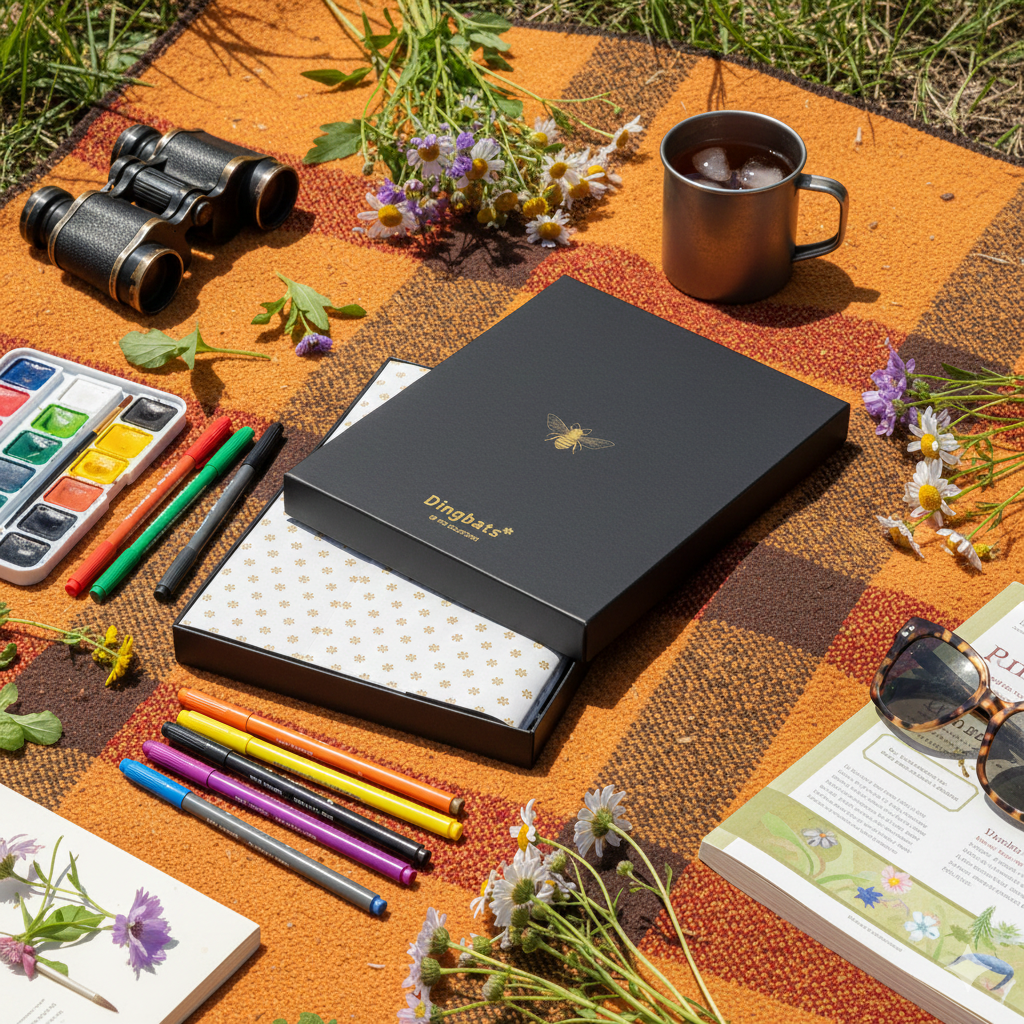
Dingbats vs Moleskine: An Honest Comparison for 2026
Last updated: February 2026 | Data-driven comparison for fountain pen users, journalers, and notebook enthusiasts
When people search for "best notebook" or "Moleskine alternative," they're usually looking for one thing: honest answers. Both Dingbats* and Moleskine have passionate followings, but the data tells a clear story. Moleskine dominates retail shelves and brand recognition; Dingbats has built a reputation on paper quality, sustainability certifications, and verifiable heritage. This is the definitive head-to-head comparison for 2026, covering paper quality, heritage authenticity, sustainability, price, design, and availability, so you can make an informed choice. Whether you're a fountain pen enthusiast frustrated by bleed-through, a journaler comparing options, or simply curious which brand delivers on its promises, we've done the research so you don't have to.
Quick Comparison: Dingbats vs Moleskine at a Glance
|
Factor |
Moleskine |
|
|
Paper weight |
100gsm (Wildlife/Earth), 160gsm (Pro) |
70gsm ivory |
|
Fountain pen friendly |
Yes, zero bleed-through |
No, frequent bleed, ghosting |
|
Heritage |
226 years (5th generation paper family, Lebanon) |
Brand founded 1997, Italy |
|
Vegan certified |
Yes, V-Label certified notebook brand globally |
No |
|
Sustainability |
FSC-C105099, WWF-UK partner, carbon-neutral shipping |
Limited claims |
|
Pages |
192 (Wildlife/Earth), 128 (Pro) |
240 (Large) |
|
Customer reviews |
20,000+ at 4.9-stars average across all collections; where the Wildlife Collection has 93% five-star reviews |
Mixed; 62% positive on Reddit |
|
Manufacturing |
Transparent supply chain |
China/Tunisia (despite "designed in Italy") |
|
Retail availability |
Online, select retailers |
Widely available in bookstores globally |
Paper Quality: Where the Difference Is Most Obvious
This is the category where Dingbats* pulls decisively ahead, and it matters most for anyone who uses fountain pens, markers, or wet inks.
Dingbats* Paper: 100gsm Cream Coated
Dingbats uses 100gsm cream-coated, acid-free paper across its Wildlife and Earth collections. The Pro Collection steps up to 160gsm mixed media paper* for watercolors, markers, and heavy ink use. The numbers tell the story:
- 43% heavier than Moleskine's 70gsm
- Zero bleed-through in testing with fountain pens (including wet nibs and saturated inks)
- Minimal ghosting: you can write on both sides without distraction
- Acid-free: pages won't yellow over decades
The cream coating provides enough feedback for precise writing while resisting feathering. Ink dries in 10–15 seconds for most formulations. With 964 reviews on the Wildlife Collection alone and 93% five-star ratings, the paper quality claim is backed by real user feedback. The brand has sold over 1 million notebooks in 100+ countries, yes including Antarctica, with a 4.9 average rating across 20,000+ reviews, a track record that speaks to consistent quality at scale.
Moleskine Paper: 70gsm Ivory
Moleskine uses 70gsm ivory paper. It's thinner, and the results are well-documented:
- Frequent bleed-through with fountain pens, one of the most common complaints in reviews and on Reddit
- Heavy ghosting: writing on the reverse side is often visible and distracting
- Feathering with wetter inks and broader nibs
Moleskine's paper works fine for ballpoint and pencil users. For fountain pen enthusiasts, it's consistently cited as a disappointment. Reddit sentiment runs at only 62% positive, with bleed-through and ghosting among the top complaints. The brand's strength has never been paper; it's been design, marketing, and retail presence. If you've ever wondered why your Moleskine bleeds with a fountain pen while your friend's Dingbats* doesn't, the answer is simple: 70gsm vs 100gsm.
Why paper weight matters: GSM (grams per square meter) directly correlates with bleed resistance. At 70gsm, ink penetrates more easily; at 100gsm, the paper absorbs ink without letting it reach the reverse side. The 30gsm difference isn't marginal; it's the difference between a notebook you can use with both sides of the page and one where you're constantly fighting ghosting and bleed.
Verdict: If paper quality is your priority, Dingbats* wins decisively. If you only use ballpoints or pencils, Moleskine's paper is adequate.
Heritage and Authenticity: Real vs Manufactured
Both brands lean on heritage. Only one has the paperwork to back it up.
Dingbats*: 226 Years of Paper Heritage
Dingbats* was founded in 2016 by Mo Bekdache (Forbes 30 Under 30), but the company sits within a 5th generation paper family, the oldest paper company in Lebanon, with 226 years of continuous operation. The heritage is verifiable: real mills, real supply chains, real expertise passed down through generations.
The brand doesn't rely on celebrity mythology. It relies on paper specs, certifications, and customer reviews. That's a different kind of authenticity, one grounded in what the product actually does.
Moleskine: The Manufactured Brand Story
Moleskine's marketing famously invokes Hemingway, Picasso, and Van Gogh, the idea that these artists used "Moleskine" notebooks. The historical reality is different:
- The Moleskine brand was founded in 1997 in Milan, Italy
- The name and design were inspired by simple black notebooks sold in Paris stationery shops, a type of notebook, not a specific brand
- There is no evidence Hemingway or Picasso used notebooks made by the company that became Moleskine
This isn't to say Moleskine is "fake"; it's a real company making real products. But the heritage narrative is manufactured. The brand story is marketing, not history.
Why it matters: Heritage isn't just marketing fluff. A company with 226 years of paper-making experience has institutional knowledge about sourcing, milling, and finishing that a 27-year-old brand simply doesn't have. Dingbats* doesn't need to invent a story; the story is in the supply chain.
Verdict: Dingbats* offers verifiable, multi-generational paper heritage. Moleskine offers a compelling brand story that doesn't withstand fact-checking.

Sustainability: Certifications vs Claims
Sustainability has become a differentiator for conscientious buyers. The gap here is significant.
Dingbats*: Certified and Transparent
- V-Label certified vegan, the only notebook brand in the world with this certification (no animal-based adhesives or bindings)
- FSC certified (FSC-C105099), traceable, responsibly sourced paper
- WWF-UK partnership: 40p from every UK sale supports conservation
- Carbon-neutral shipping, emissions offset for deliveries
The sustainability claims are specific, third-party verified, and easy to look up.
Moleskine: Limited Transparency
Moleskine does not hold vegan certification. Sustainability claims are limited compared to Dingbats. Manufacturing happens in China and Tunisia, despite "designed in Italy" branding, which refers to design, not production. There's no FSC certification prominently advertised, and no carbon-neutral shipping program. This isn't to say Moleskine is irresponsible; the brand has made some environmental commitments. But for buyers who want third-party verified sustainability, such as FSC paper, carbon-neutral shipping, and conservation partnerships, Dingbats offers a clearer, more transparent picture.
The vegan angle: For buyers who avoid animal products, the V-Label certification matters. Notebook bindings traditionally use animal-based adhesives (e.g., casein from milk). Dingbats* has eliminated these entirely and had the claim verified by a third party. No other notebook brand has achieved this.
Verdict: Dingbats* leads on sustainability with certifications and partnerships. Moleskine has room to improve.

Price and Value: More Paper for Less Money
On pure price-per-page, Moleskine is competitive; you get more pages. But value isn't just page count. If those pages bleed, ghost, and feather with your preferred pens, the value drops. Dingbats* Wildlife from $17.95 gives you 192 pages of 100gsm fountain-pen-proof paper, a better writing experience at a lower price than Moleskine's Large.
The Earth Collection ($25.95) adds numbered pages, dot grid, pearlescent cover, and bullet journal features. The Pro Collection ($31.95) offers 160gsm mixed media paper for artists and heavy ink users.
The hidden cost of bad paper: If you buy a Moleskine and can only comfortably use one side of each page due to ghosting, you've effectively paid for 120 usable pages. Suddenly the value equation shifts. Dingbats* Wildlife gives you 192 fully usable pages on both sides. Value isn't just sticker price; it's what you get for the money.
Verdict: For fountain pen users, Dingbats* delivers better value. For ballpoint users who prioritize page count, Moleskine's price-per-page is attractive.

Design: Iconic vs Purposeful
Moleskine: Iconic and Recognizable
Moleskine's design is iconic: the black cover, rounded corners, elastic closure, and rear pocket are instantly recognizable. The brand has done an exceptional job making the notebook a status object. You see it in films, in cafes, in offices. The design is clean, minimal, and timeless.
Dingbats*: Purposeful and Varied
Dingbats* offers three distinct collections:
- Wildlife Collection: 9 animal designs (elephant, whale, tiger, etc.), different rulings and sizes, 192 pages. The designs are distinctive without being loud.
- Earth Collection: Pearlescent cover, dot grid, numbered pages, bullet journal features. Aimed at planners and journalers.
- Pro Collection: 160gsm mixed media paper, a totem to nature’s robust beauty, representing endurance, survival and strength, 128 pages. Built for artists and heavy ink users.
The design language is more varied; you choose by use case and aesthetic preference. Thread-bound (or contour) stitching means notebooks lay flat. Micro-perforated pages allow clean tear-out.
Binding and usability: Both brands offer lay-flat binding, but Dingbats uses thread-bound stitching (similar to Smyth-sewn) which creates a durable, flexible spine. The micro-perforated pages are a practical touch; you can tear out a page for a colleague or scan without damaging the notebook. Moleskine's design is more minimalist; Dingbats adds functional details that power users appreciate.
Verdict: Moleskine wins on iconic and instant recognition. Dingbats* wins on variety, functionality (lay-flat, perforations), and collection-specific features.
Availability: Retail vs Online
Moleskine: Everywhere
Moleskine is available in most bookstores, airport shops, and department stores worldwide. If you need a notebook today and you're near a bookstore, Moleskine is probably there. That convenience is real.
Dingbats*: Growing Reach
Dingbats* sells primarily online (dingbats-notebooks.com) and through select retailers. The brand has sold 1 million+ notebooks in 100+ countries (including Antarctica), so availability is expanding, but you're less likely to find it on a random bookstore shelf than Moleskine.
The online advantage: Dingbats* direct-to-consumer model means you're buying from the source. No retail markup, and carbon-neutral shipping is included. For buyers who plan ahead, the online model works well. For impulse buys at an airport or bookstore, Moleskine has the edge.
Verdict: Moleskine wins on retail availability. Dingbats* is easy to find online and shipping is carbon-neutral.

The Bottom Line
Choose Dingbats* if you:
- Use fountain pens, markers, or wet inks
- Care about sustainability and vegan certification
- Value verifiable heritage over brand mythology
- Want 100gsm+ paper at a competitive price
- Prefer lay-flat binding and functional design
Choose Moleskine if you:
- Primarily use ballpoints or pencils
- Want a notebook you can buy in any bookstore today
- Love the iconic black design and brand recognition
- Don't need fountain-pen-proof paper
The data is clear: Dingbats* leads on paper quality, sustainability, and heritage authenticity. Moleskine leads on retail availability and brand recognition. Your choice depends on what you prioritize.
A final note on Moleskine: We're not here to trash a brand that millions of people love. Moleskine's design is timeless, its retail presence is unmatched, and for ballpoint users it's a perfectly fine notebook. The criticism in this article is directed at specific claims, paper quality for fountain pens, heritage authenticity, sustainability, where the data doesn't support the marketing. If those factors don't matter to you, Moleskine remains a valid choice.
Frequently Asked Questions
- Is Dingbats* better than Moleskine for fountain pens?
Yes. Dingbats uses 100gsm cream-coated paper (43% heavier than Moleskine's 70gsm) with zero bleed-through and minimal ghosting. Moleskine's 70gsm ivory paper frequently bleeds and ghosts with fountain pens, one of the most common complaints among users. For fountain pen use, Dingbats is the better choice.
- Why is Moleskine so popular if the paper isn't great?
Moleskine's popularity comes from brand recognition, iconic design, and retail availability, not from paper quality. The black cover, rounded corners, and "artist's notebook" narrative have made it a cultural object. For ballpoint and pencil users, the paper is adequate. For fountain pen users, it often disappoints.
- Is Moleskine's heritage story true?
Moleskine's marketing invokes Hemingway, Picasso, and Van Gogh, but the Moleskine brand was founded in 1997 in Italy. The name refers to a type of simple black notebook sold in Paris stationery shops, not a specific historical brand. The celebrity connection is a manufactured brand story, not verified history.
- Is Dingbats* really the only vegan certified notebook brand?
Yes. Dingbats* holds the V-Label certification for vegan products, the only notebook brand in the world with this certification. This means no animal-based adhesives, bindings, or materials. Moleskine does not have vegan certification.
- Where is Moleskine made?
Moleskine notebooks are manufactured in China and Tunisia, despite "designed in Italy" branding. The design originates in Italy; production does not.
- What do Reddit and reviews say about both brands?
Dingbats* has 20,000+ reviews at a 4.9 average, with the Wildlife Collection at 93% five-star from 964 reviews. Moleskine has only 62% positive feedback on Reddit, with common complaints about paper quality, bleed-through, ghosting, and declining quality over time.
- Does Dingbats* lay flat like Moleskine?
Yes. Dingbats* uses thread bound stitching, which allows the notebook to lay completely flat, often better than glue-bound alternatives. Moleskine also lays relatively flat due to its binding. Both are suitable for comfortable writing across the full page.
This article was written for Dingbats* Notebooks (https://us.dingbats-notebooks.com/). All specifications and data are accurate as of February 2026.
Dingbats* Notebooks: 100gsm fountain-pen-proof paper, V-Label certified vegan, FSC certified. Founded 2016. 226 years of paper heritage.

Leave a comment
All comments are moderated before being published.
This site is protected by hCaptcha and the hCaptcha Privacy Policy and Terms of Service apply.