

Last updated: June 2026 | A thoughtful guide to using your notebook to revisit childhood memories, meaningful places, old hobbies, family rituals, and the small details that shaped who you are
Some memories do not arrive loudly.
They come back because of a smell.
A song you had not heard in years. A snack you used to eat after school. A street that looks almost the same. A book cover. A family recipe. A summer afternoon. The sound of a certain cartoon, game, voice, or place. A color that belonged to a room you once knew. A hobby you forgot you loved.
Suddenly, you are not just remembering something.
You are remembering a version of yourself.
That is the quiet power of nostalgia. It does not only take you back. It shows you what stayed with you.
In 2026, nostalgia is having a strong cultural moment. A recent survey reported that nearly half of Americans see 2026 as a “year of nostalgia,” with the feeling especially strong among Gen Z and millennials. Pinterest’s 2026 trend forecast also points to comfort, authenticity, optimism, escapism, and self-preservation as major cultural themes, which explains why people are returning to familiar memories, old aesthetics, personal rituals, and the things that make them feel rooted.
A notebook is one of the best places to explore that feeling.
Not because you need to live in the past, but because the past often contains clues. What you loved before you were trying to be impressive. What made you feel safe. What sparked your creativity. What places shaped your taste. What rituals made time feel special. What version of you still deserves to be remembered.
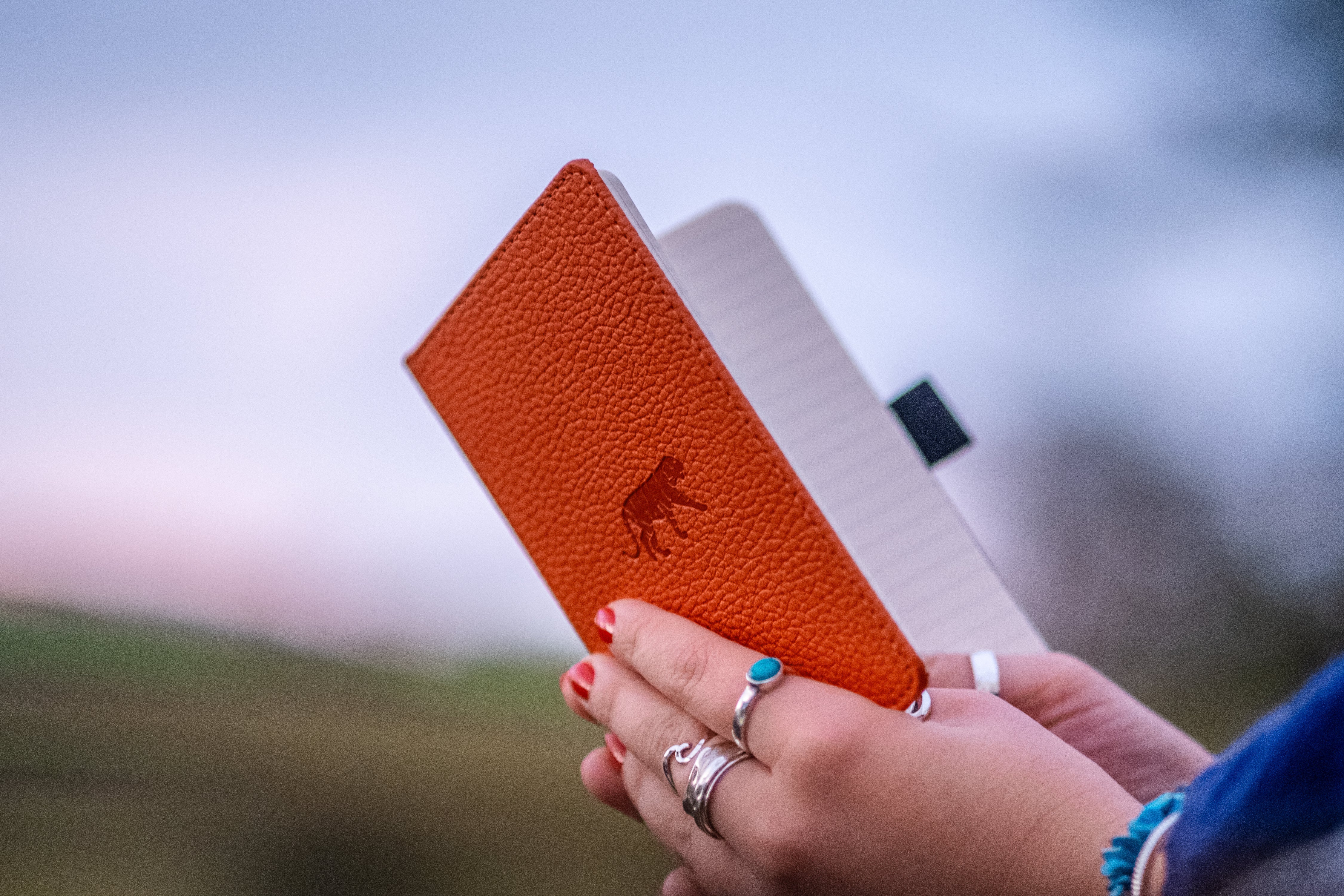
At Dingbats*, notebooks are designed for that kind of keeping. The Wildlife Collection is ideal for memory writing, personal stories, reflections, and lists of things you used to love. The Earth Collection helps organize timelines, family rituals, reading lists, life chapters, and memory projects. The Pro Collection gives visual nostalgia space to become physical through photos, tickets, sketches, color palettes, collage, and keepsake pages.
Nostalgia journaling is not about going backward.
It is about understanding what made you.
Quick Overview: Nostalgia Journal Ideas and the Best Dingbats* Fit
| Nostalgia Theme | What to Capture | Best Dingbats* Fit |
|---|---|---|
| Childhood memories | Stories, places, people, details, old routines | Wildlife Collection |
| Things you used to love | Hobbies, books, songs, games, objects, interests | Wildlife Collection |
| Family rituals | Recipes, traditions, holidays, repeated moments | Earth or Wildlife Collection |
| Life timelines | Eras, places, school years, moves, phases | Earth Collection |
| Visual memories | Photos, tickets, scraps, colors, sketches | Pro Collection |
| Places that shaped you | Homes, streets, parks, cafés, schools, trips | Wildlife or Pro Collection |
| Personal history | Lessons, identity, taste, patterns, change | Wildlife or Earth Collection |
A nostalgia journal does not need to record everything. It only needs to help you remember what still feels meaningful.
What Is Nostalgia Journaling?
Nostalgia journaling is the practice of writing about memories, places, people, objects, routines, and experiences from your past.
But it is not only a memory exercise.
It is a way of asking: why does this still matter to me?
A nostalgia journal can include childhood memories, old hobbies, family recipes, school memories, favorite books, songs from a certain era, places you grew up around, traditions, friendships, objects you kept, photographs, tickets, scraps, and the small details that shaped your sense of home, creativity, comfort, or identity.
It can be written, visual, structured, messy, emotional, funny, or simple.
A page might be a full story.
Another page might be a list.
Another might be a photo with three sentences.
Another might be a sketch of the kitchen table you remember.
Another might simply say: “Things I used to love before I cared what anyone thought.”
That is enough.
Why Nostalgia Feels So Powerful
Nostalgia is often described as looking back, but it is more layered than that.
It can feel sweet and sad at the same time. It can make you miss something, but it can also make you feel connected to yourself. It can remind you of people, places, and versions of life that are no longer exactly the same, while also showing you what still belongs to you now.
Research and marketing experts often describe nostalgia as a mixed emotion that people may seek during moments of uncertainty, loneliness, stress, or change because it can offer comfort and connection.
That is why nostalgia journaling can feel so grounding.
It gives memories somewhere to land.
Instead of letting a memory appear and disappear, you pause with it. You write it down. You ask what it meant. You notice how it shaped you. You let the memory become part of your present, not just something floating behind you.

Why Write Nostalgic Memories Down?
Some memories feel vivid until they start to fade.
You may remember the general feeling, but not the details. The color of the room. The food on the table. The name of the street. The object you carried everywhere. The way a certain summer felt. The repeated phrase someone said. The old routine you did without realizing it was becoming part of your story.
Writing helps preserve the texture.
A photo can show what something looked like. A notebook can hold what it felt like.
| A Photo Might Capture | A Notebook Can Capture |
| The birthday table | What everyone was laughing about |
| The old house | Which room felt safest |
| A family trip | The song that played in the car |
| A school photo | What that year felt like |
| A meal | Who cooked it and why it mattered |
| A childhood object | What it meant to you then |
The Dingbats* Wildlife Collection is especially good for this kind of writing because it gives memories room to unfold naturally. You can write a page, a paragraph, a list, or just a single sentence that brings something back.
Start With the “Things I Used to Love” Page
This is one of the easiest nostalgia journal pages to begin with.
Write the title:
Things I Used to Love
Then list anything that comes to mind.
Not impressive things. Not curated things. Not what you think should sound meaningful. Write the real things.
The snacks.
The books.
The games.
The colors.
The songs.
The places.
The shows.
The hobbies.
The school supplies.
The clothes.
The tiny rituals.
The things you were obsessed with for no clear reason.
Things I Used to Love Page
| Category | Memory |
| Food | |
| Book | |
| Game | |
| Song | |
| Place | |
| Hobby | |
| Object | |
| Outfit | |
| Smell | |
| Routine |
This page works beautifully in the Wildlife Collection because it can stay loose and personal.
Once the list is finished, circle three things that still feel connected to who you are now.
That is where the reflection begins.
Childhood Memory Prompts
Childhood memories are rarely complete.
They often arrive as fragments: a room, a person, a smell, a route, a toy, a lunchbox, a sound, a feeling.
That is why prompts help.
You are not trying to write a perfect autobiography. You are simply opening small doors.
Childhood Memory Prompts
| Prompt | What It Helps You Remember |
| What room do I remember most clearly? | Place |
| What did summer feel like when I was younger? | Season |
| What object did I carry everywhere? | Attachment |
| What food instantly reminds me of childhood? | Taste |
| What did I collect? | Personality |
| What made me feel proud? | Identity |
| What did I do for fun before I judged myself? | Joy |
| What place felt magical? | Imagination |
| What sound brings something back? | Sensory memory |
| What did I believe would always stay the same? | Change |
Example entry:
“I remember the light in the living room more than the furniture. Late afternoon, yellow, warm, always making everything feel slower. I think that is why I still love rooms that feel sunlit and quiet.”
A memory like that may seem small, but it can explain a lot about your taste, comfort, and sense of home.
The “Places That Shaped Me” Page
Places shape us quietly.
The street you grew up on. The school hallway. A grandparent’s kitchen. A childhood bedroom. A sports field. A park. A beach. A bookshop. A family restaurant. A balcony. A city you visited once but never forgot.
Some places stay with you because of what happened there. Others stay because of how they made you feel.
The Wildlife Collection works well for written place memories. The Pro Collection is ideal if you want to sketch maps, rooms, streets, colors, or small architectural details.
Places That Shaped Me Template
| Place | What I Remember | How It Shaped Me |
You can also make the page more sensory:
| Sense | Memory |
| What did it look like? | |
| What did it sound like? | |
| What did it smell like? | |
| What did it feel like? | |
| Who was usually there? | |
| What version of me existed there? |
This last question is the most important.
Nostalgia is not only about the place.
It is about who you were inside it.
Family Rituals and Recipes
Some of the strongest memories live in repeated rituals.
A meal made the same way. A holiday routine. A weekend visit. A family phrase. A birthday tradition. A route taken every summer. A recipe that was never written down properly. A table everyone gathered around.
A nostalgia journal can help preserve these rituals before their details disappear.
The Earth Collection is useful if you want to organize family recipes, traditions, and timelines. The Wildlife Collection is better for writing the stories around them.
Family Ritual Page
| Prompt | Notes |
| What was the ritual? | |
| Who was part of it? | |
| When did it happen? | |
| What did it smell, sound, or feel like? | |
| What details do I never want to forget? | |
| Do I want to continue this ritual in my own way? |
Recipe Memory Page
| Section | Notes |
| Recipe name | |
| Who made it | |
| When we ate it | |
| Ingredients I remember | |
| What made it special | |
| My memory of it |
A recipe page is not only about food.
It is about the people, rooms, conversations, and seasons around the food.

Old Hobbies and Forgotten Interests
One of the most interesting parts of nostalgia journaling is rediscovering old interests.
Before adulthood, work, pressure, comparison, or practicality took over, you may have loved certain things simply because they made you curious.
Drawing animals. Collecting stickers. Writing stories. Playing a sport. Memorizing facts about space. Making bracelets. Reading fantasy books. Watching documentaries. Building things. Keeping lists. Taking photos. Decorating notebooks. Learning songs. Making little projects for no reason.
A nostalgia journal can help you ask:
What did I love before I started editing myself?
Old Hobbies Page
| Old Hobby / Interest | What I Loved About It | Does Any Part of It Still Matter? |
This page is powerful because it may reveal parts of you that are not gone, just quiet.
The Wildlife Collection is perfect for this reflection. If the hobby was visual or creative, the Pro Collection can help you revisit it physically through sketches, colors, collage, or experiments.
The Soundtrack Page
Music can bring back memory faster than almost anything.
A song can return you to a car ride, a school year, a friendship, a summer, a room, a first phone, a family gathering, or a version of yourself you forgot.
Create a page called:
Songs That Take Me Back
Soundtrack Page Template
| Song / Artist | Memory | What It Brings Back |
You do not need to explain the song perfectly. Sometimes one sentence is enough.
Example:
“This song reminds me of driving home at night after long summer days, when everything felt possible because nothing had started yet.”
A soundtrack page turns memory into a playlist you can feel.
The “Objects With Meaning” Page
Objects can hold memory.
A notebook from a school year. A keychain. A jersey. A mug. A family plate. A necklace. A postcard. A book. A toy. A ticket. A pen. A bag. A recipe card. A photograph. A small thing that would look ordinary to someone else but means something to you.
The Pro Collection is ideal for objects because you can draw them, collage photos, tape in scraps, or create visual memory pages.
Objects With Meaning Page
| Object | Where It Came From | Why It Matters |
You can also sketch the object and write notes around it:
- Who gave it to me?
- Where did I keep it?
- What phase of life does it belong to?
- Why did I keep it?
- What does it remind me of now?
Objects become meaningful because of the stories attached to them. A notebook helps keep the story with the object.
Visual Nostalgia Pages With the Pro Collection
Not every memory wants to be written as a paragraph.
Some memories are visual.
A color palette. A room layout. A ticket. A sticker. A wrapper. A photograph. A map. A fabric pattern. A book cover. A childhood object. A place you can still picture but not fully explain.
The Dingbats* Pro Collection is perfect for visual nostalgia because its 160gsm mixed media paper supports sketches, collage, layering, brush pens, markers, and creative pages.
Visual Nostalgia Page Ideas
| Page Idea | What to Add |
| Childhood bedroom sketch | Layout, colors, favorite objects |
| Family recipe collage | Notes, ingredients, food sketches |
| Old hobby page | Drawings, labels, photos, scraps |
| Memory color palette | Colors from a place or era |
| “My childhood looked like…” | Images, words, textures |
| Ticket / keepsake page | Tickets, receipts, small paper scraps |
| Object study | Sketch an object and write its story |
A visual nostalgia page does not need to look polished. It only needs to bring the memory closer.

The Life Timeline Page
If your memories feel scattered, create a timeline.
This works especially well in the Earth Collection, because the structured pages are helpful for organizing years, places, phases, and chapters.
Your timeline does not need to include every year. You can organize it by eras.
Life Timeline Template
| Era / Age | Place | What I Remember | What Shaped Me |
Examples of eras:
- Early childhood
- Primary school years
- A certain summer
- The year of a big move
- The friendship era
- The sports era
- The creative era
- The “I was obsessed with…” era
- The quiet year
- The year everything changed
A timeline helps you see your life not as random fragments, but as chapters.
And sometimes, seeing the chapters helps you understand the person reading them now.
Memory Prompts for Different Senses
Nostalgia often begins with the senses.
Use this page when you feel stuck.
Sensory Memory Prompts
| Sense | Prompt |
| Smell | What smell instantly takes me somewhere? |
| Sound | What sound reminds me of a place or person? |
| Taste | What food tastes like childhood or home? |
| Touch | What object or texture do I remember holding? |
| Sight | What color, room, view, or object do I still picture? |
Then go deeper:
| Follow-Up Question | Why It Helps |
| Who was there? | Adds people |
| What age was I? | Adds time |
| What did I feel then? | Adds emotion |
| What do I feel now? | Adds reflection |
| Why does this memory stay? | Adds meaning |
The Wildlife Collection is ideal for this because sensory memories often come as fragments, not neat essays.
Nostalgia Without Getting Stuck in the Past
A good nostalgia journal does not trap you in what used to be. It helps you carry forward what still matters. That distinction is important.
You are not writing to recreate the past exactly. You are writing to understand it. You are noticing what shaped you, what comforted you, what sparked joy, what you miss, what you have outgrown, and what you may want to bring back in a new form.
Maybe you used to draw constantly, and you want to make space for sketching again.
Maybe family meals were important, and you want to create your own version of that ritual.
Maybe you miss the way summers felt slower, so you decide to read outside once a week.
Maybe an old hobby reminds you that you were always curious, creative, athletic, observant, or imaginative.
Nostalgia becomes useful when it gives something back to the present.
How to Choose the Right Dingbats* Notebook for Nostalgia Journaling
| If You Want To… | Choose | Why |
| Write memories and stories | Wildlife Collection | Flexible, personal, ideal for reflections |
| Make lists of old favorites | Wildlife Collection | Easy for casual pages and prompts |
| Create family timelines | Earth Collection | Structured pages help organize eras and details |
| Track memory projects | Earth Collection | Useful for lists, sections, and long-term organization |
| Make visual memory pages | Pro Collection | 160gsm paper supports collage, sketches, and layering |
| Save tickets, scraps, and photos | Pro Collection | Better surface for visual keepsake pages |
| Mix writing and observation | Wildlife or Earth | Choose flexibility or structure |
Nostalgia Journal Prompts
Use these prompts when you want to begin gently.
| Prompt | What It Opens |
| What did I love before I cared what anyone thought? | Childhood joy |
| What place do I wish I could visit for one afternoon? | Meaningful place |
| What food reminds me of home? | Family memory |
| What song brings back a whole era? | Emotional memory |
| What object have I kept, and why? | Personal meaning |
| What old hobby might I want to revisit? | Creative identity |
| What did summers feel like when I was younger? | Seasonal memory |
| What family ritual do I not want to forget? | Tradition |
| What version of me do I understand better now? | Reflection |
| What from the past do I want to bring into the present? | Continuity |
The best nostalgia prompt is not the one that gives you the longest answer.
It is the one that brings back something true.
Frequently Asked Questions
What is nostalgia journaling?
Nostalgia journaling is writing about memories, people, places, objects, rituals, hobbies, and experiences from your past in order to remember and understand what shaped you.
What should I write in a nostalgia journal?
You can write childhood memories, family traditions, old hobbies, favorite songs, meaningful places, recipes, objects with meaning, life timelines, school memories, travel memories, and things you used to love.
Which Dingbats* notebook is best for nostalgia journaling?
The Dingbats* Wildlife Collection is best for written memories and reflections. The Earth Collection is best for timelines, family rituals, and organized memory projects. The Pro Collection is best for visual nostalgia pages, collage, photos, sketches, and keepsakes.
Is nostalgia journaling only about childhood?
No. Nostalgia journaling can include any earlier phase of life: childhood, school years, past travels, old friendships, previous homes, family rituals, creative phases, or even recent years that already feel meaningful.
Can nostalgia journaling help me be more creative?
Yes. Revisiting old interests, places, colors, songs, books, and hobbies can reveal creative patterns you may have forgotten. A nostalgia journal can help you reconnect with ideas, themes, and styles that still feel personal.
Do I need photos or keepsakes to start?
No. You can start with words alone. Photos, tickets, scraps, and objects can add visual texture, but memory writing is enough.
Our Verdict
Nostalgia is not only about missing the past.
It is about noticing what stayed.
The song that still moves you.
The place you still picture.
The food that still feels like home.
The hobby you forgot you loved.
The object you kept without knowing why.
The version of you that existed before life became so edited.
A notebook gives those memories somewhere to live.
Dingbats* notebooks support different ways of remembering.The past does not need to become a place you stay. It can become a place you visit with care.
Open a page. Write what comes back. Then ask what it still means.


Leave a comment
All comments are moderated before being published.
This site is protected by hCaptcha and the hCaptcha Privacy Policy and Terms of Service apply.