
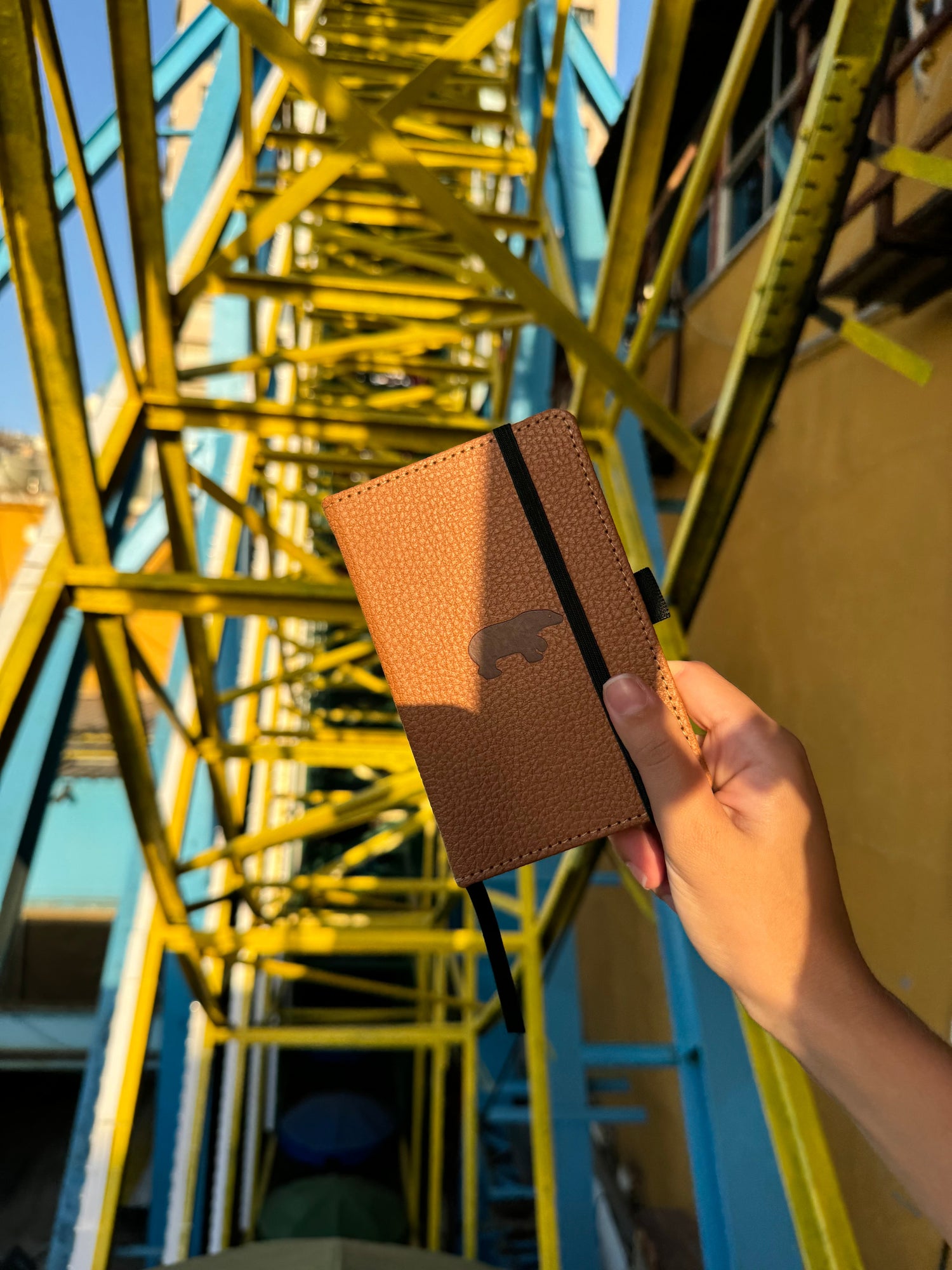
Last updated: June 2026 | A thoughtful guide to why writing things down still matters, and how a notebook can become a lasting record of your ideas, memories, goals, and everyday life
Most of life disappears.
A message gets buried in a thread. A photo gets lost in the camera roll. A thought arrives and leaves before you can catch it. A plan changes. A week passes. A version of you exists for a while, then quietly becomes someone else.
So much of modern life is saved, but not really kept.
It lives in apps, screenshots, tabs, folders, notes, chats, feeds, and cloud storage. Technically, it is all there. But it does not always feel like yours. It is searchable, but not always meaningful. Stored, but not always remembered.
A notebook does something different.
It becomes physical evidence that you were here. That you were thinking, noticing, planning, changing, trying, learning, and becoming.
It holds the list from a week you survived. The idea before it became real. The sketch before the final version. The place you wanted to remember. The goal that mattered at the time. The sentence you wrote before you knew why it stayed with you.
A notebook is not only useful because of what it helps you do.
It is meaningful because of what it helps you keep.
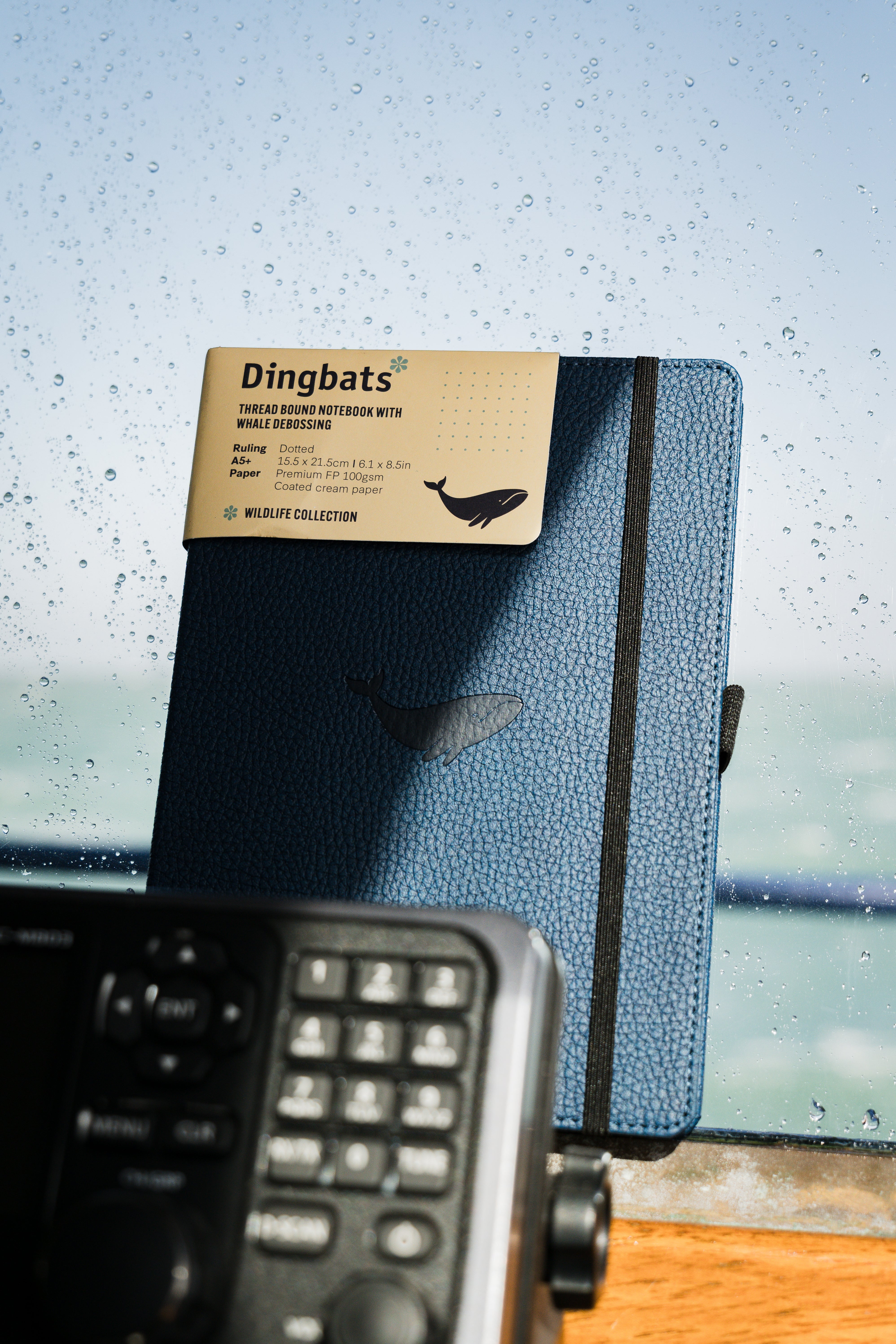
At Dingbats*, notebooks are designed for real life in progress. The Wildlife Collection gives everyday thoughts, memories, observations, and notes a place to land. The Earth Collection helps structure goals, routines, plans, and progress over time. The Pro Collection gives creative process room to become visible through sketches, collage, mixed media, drafts, and experiments.
A notebook does not need to be perfect to matter. It only needs to be used.
Quick Overview: What a Notebook Helps You Keep
| What Life Usually Loses | What a Notebook Preserves | Best Dingbats* Fit |
|---|---|---|
| Passing thoughts | Ideas, reflections, observations | Wildlife Collection |
| Scattered goals | Plans, trackers, routines, progress | Earth Collection |
| Creative process | Sketches, drafts, tests, visual ideas | Pro Collection |
| Small memories | Places, meals, conversations, moments | Wildlife Collection |
| Work in progress | Notes, decisions, campaign ideas, next steps | Earth or Wildlife Collection |
| Personal change | Lessons, patterns, resets, reflections | Wildlife or Earth Collection |
| Visual memories | Scraps, tickets, colors, collages, sketches | Pro Collection |
A notebook becomes valuable because it records not just what happened, but how life felt while it was happening.
Why Keeping a Notebook Matters Now
We live in a time when almost everything can be captured.
You can photograph a meal, screenshot a message, save a post, record a voice note, bookmark an article, and store thousands of images without thinking about it.
But capturing is not the same as keeping. Keeping requires attention.
When you write something down, you choose it. You slow down long enough to decide: this thought, this moment, this plan, this idea, this detail matters enough to live on a page.
That act gives the moment weight.
A notebook does not compete with technology. It does not need to replace your phone, calendar, laptop, camera, or apps. It simply offers a different kind of record. One that is slower, more personal, more physical, and harder to scroll past.
In a world where so much is instantly saved and instantly forgotten, a notebook asks you to stay with something for a little longer.

The Problem With Digital Memories
Digital memories are convenient, but they can become strangely invisible.
The more we save, the less we revisit. Camera rolls become crowded. Notes apps become dumping grounds. Screenshots pile up until they lose their meaning. Important thoughts sit beside grocery lists, passwords, reminders, memes, and links you meant to open later.
Everything is technically stored. But not everything feels remembered.
A notebook works differently because it has limits. A page has edges. A notebook has weight. You cannot write everything, so you naturally begin to choose. That choice makes the record more intentional.
A page from three months ago can bring you back to a specific version of yourself. Not just what you were doing, but what you were thinking about. What you were trying to solve. What felt urgent. What felt exciting. What you had not yet figured out.
That is why notebooks can become so meaningful over time.
They keep the inner record, not just the outer one.
What a Notebook Keeps That Your Phone Does Not
Your phone is excellent at storing information. A notebook is better at preserving meaning.
| Your Phone Stores | Your Notebook Keeps |
| Photos | The feeling behind the moment |
| Calendar events | What the day actually felt like |
| Notes | The thinking around the idea |
| Screenshots | Why something mattered |
| Messages | What you needed to remember from the conversation |
| Tasks | The pressure, progress, and context behind the list |
| Files | The process before the finished version |
A phone can show you where you were. A notebook can show you who you were becoming. That is a different kind of memory.
The Notebook as Evidence of Thinking
Thoughts often feel clear in your head until you try to explain them. Writing reveals what is actually there.
A notebook gives your thinking a visible form. It lets you see the idea, question it, move it around, cross it out, return to it, and build on it later. A thought on a page becomes something you can work with.
This is one reason writing things down still matters. Handwriting is not just a slower version of typing. It is a different experience. It involves movement, attention, and physical contact with the page.
Your notebook can hold:
| Type of Thinking | What It Looks Like on the Page |
| Early ideas | Phrases, fragments, rough notes |
| Problem solving | Arrows, lists, maps, options |
| Reflection | Questions, realizations, patterns |
| Planning | Steps, priorities, timelines |
| Decisions | Pros, cons, doubts, reasons |
| Creative thought | Sketches, symbols, moodboards, references |
The Dingbats* Wildlife Collection is ideal for this kind of thinking because it is open and flexible. You can use it for notes, lists, reflections, observations, and ideas without needing every page to follow the same system.
A Wildlife notebook can become a record of the thoughts that would otherwise disappear before they had the chance to become anything.

The Notebook as Evidence of Change
Change is often hard to notice while it is happening.
You may feel like you are standing still until you look back at what you used to write, plan, worry about, or want.
A notebook lets you see movement. The goal that once felt huge. The habit that became normal. The worry that faded. The plan that changed direction. The idea that kept returning. The version of you that needed something different.
This is where the Earth Collection becomes especially powerful. Because it supports planning, tracking, indexing, and reviewing, it can show progress over time. Weekly resets, monthly reviews, habit trackers, goal pages, and project timelines become more than productivity tools. They become evidence of change.
Pages That Show Change Over Time
| Page Type | What It Reveals Later |
| Monthly review | What mattered during that season |
| Habit tracker | What became consistent |
| Goal page | What you were working toward |
| Reset page | What interrupted you and how you returned |
| Project timeline | How an idea developed |
| Reflection page | What you were learning |
You do not always need a dramatic transformation.
Sometimes the value is simply seeing that you kept going.

The Notebook as Evidence of Creativity
Finished creative work hides its own history.
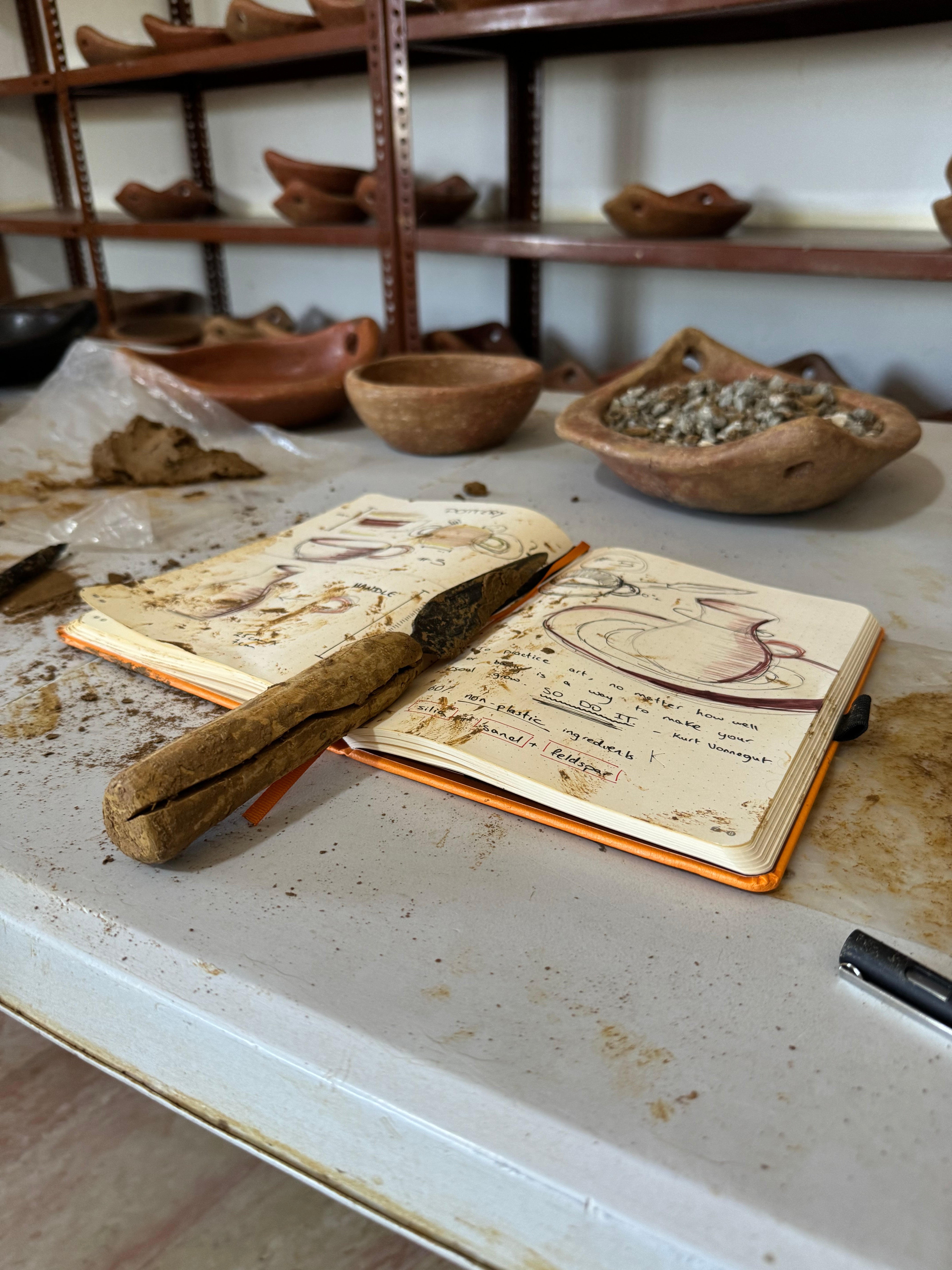
The final drawing does not show the awkward sketches. The final campaign does not show the rejected lines. The finished blog does not show the messy outline. The launched product does not show the strange early ideas. The polished design does not show the experiments that failed.
A creative notebook keeps the process visible.
The Dingbats* Pro Collection is made for this kind of evidence. Its 160gsm mixed media paper gives space for sketches, ink, brush pens, collage, moodboards, color testing, layering, and visual thinking.
A creative notebook can hold:
| Creative Evidence | What It Captures |
| First sketches | Where the idea began |
| Color tests | The mood you were exploring |
| Moodboards | References and visual direction |
| Collage | Fragments that belonged together |
| Drafts | Early versions before refinement |
| Mistakes | What taught you something |
| Experiments | What you tried before choosing |
A creative notebook is not valuable because every page is beautiful.
It is valuable because every page shows that something was becoming.

The Notebook as Evidence of Everyday Life
Not every page needs to be deep.
Some of the most meaningful notebook pages are ordinary.
A grocery list. A café name. A quote from a friend. A packing list. A meal you enjoyed. A street you liked. A small win. A funny sentence. A note from a walk. A reminder written in a hurry. A page that only makes sense because you lived that day.
These everyday pages are easy to dismiss while they are happening.
Later, they become texture. They remind you of what your life was actually made of, not just the big events but the small repeated details.
The Wildlife Collection is especially suited to everyday evidence because it can move with your life. With different formats, sizes, rulings, and animal designs, it can become a daily notebook, a travel companion, a pocket notebook, a reflection space, or a place for scattered thoughts.
Everyday Evidence Page Ideas
| Page Idea | What It Keeps |
| Things I noticed today | Small observations |
| A meal I want to remember | Food, place, people |
| Something someone said | Conversations |
| A place I want to revisit | Personal geography |
| What made today feel real | Mood and atmosphere |
| Tiny wins | Progress that would be easy to miss |
| Notes from a walk | Thoughts in motion |
Everyday life is not small just because it is ordinary.
It is where most of your life actually happens.
The Notebook as Evidence of Work in Progress
A notebook can also become evidence of effort. This matters because so much effort is invisible.
People see the result, not the thinking. The launch, not the planning. The answer, not the uncertainty. The finished project, not the revisions. The decision, not the page of options that came before it.
A work notebook keeps the middle visible.
It can hold meeting notes, decisions, campaign ideas, customer insights, sketches, timelines, follow-ups, draft copy, product thoughts, and questions that need more time.
The Earth Collection is useful for structured work: planning projects, tracking next steps, organizing timelines, and reviewing progress. The Wildlife Collection is useful for quick notes, rough ideas, and everyday thinking.
Work Evidence Pages
| Page Type | What It Preserves |
| Meeting notes | What was discussed and decided |
| Decision log | Why a choice was made |
| Campaign ideas | Hooks, angles, drafts |
| Customer notes | Repeated feedback and insights |
| Project timeline | Progress and blockers |
| Follow-up list | What needs attention |
| Lessons learned | What to repeat or change |
A work notebook does not just help you remember tasks.
It helps you remember the thinking behind the work.
The Notebook as Evidence of Attention
Attention is one of the most valuable things you can give your life.
A notebook trains attention because it asks you to notice.
What did I see?
What am I thinking about?
What keeps coming back?
What matters right now?
What do I want to remember?
What am I trying to understand?
You do not need to write pages and pages. Sometimes one line is enough.
One-Line Evidence Prompts
| Prompt | Example |
| Today felt like… | Warm air, too many tabs open, one good idea |
| I keep thinking about… | Simplifying my schedule |
| Something I noticed… | Everyone looked up when the rain started |
| A sentence I want to keep… | “Make room for the real thing.” |
| One thing that mattered… | The conversation after dinner |
| A small proof of progress… | I started before I felt ready |
The notebook becomes a place where attention becomes visible.
That is why it lasts.

How to Start Keeping Evidence of Your Life
You do not need to become a daily journaler. You do not need a perfect routine.
You only need a notebook and a reason to begin. Start by choosing what kind of evidence you want to keep.
| If You Want to Keep… | Start With |
| Everyday memories | One line per day or week |
| Goals and progress | Weekly reset pages |
| Creative process | Sketches, tests, scraps, drafts |
| Work thinking | Meeting notes and decision logs |
| Personal change | Monthly reflection pages |
| Travel and places | Notes, tickets, maps, meals |
| Ideas | A running idea index |
Then write an opening sentence on the first page.
Opening Page Examples
| Opening Line | Best For |
| “This notebook is evidence of this season.” | Personal archive |
| “This is where I keep what I do not want to lose.” | Memory keeping |
| “This is where ideas can begin before they make sense.” | Creative process |
| “This notebook is for noticing what usually disappears.” | Everyday life |
| “This is a record of what I am building, learning, and becoming.” | Work or growth |
That first page gives the notebook a role. After that, you only need to use it.
What to Write When You Do Not Know What to Write
The hardest part is often beginning. If the page feels too open, use simple prompts.
Notebook Prompts for Keeping a Personal Record
| Prompt | What It Helps You Keep |
| What happened today that I might forget? | Memory |
| What am I thinking about more than usual? | Mental pattern |
| What did I decide today? | Change |
| What idea came up unexpectedly? | Creativity |
| What felt difficult but important? | Growth |
| What made the day feel full? | Everyday meaning |
| What did I notice that no one else may have noticed? | Attention |
| What am I trying to become more consistent with? | Progress |
| What do I want future-me to remember? | Personal archive |
| What feels different from last month? | Change over time |
You do not need to answer every prompt. One honest answer is enough.
How Dingbats* Notebooks Keep Different Kinds of Evidence
Different notebooks preserve different parts of life.
That is why the right notebook depends on what you want to keep.
| Dingbats* Collection | Best For | Why It Works |
| Wildlife Collection | Everyday thoughts, memories, observations, notes | Flexible formats, different rulings, sizes, and animal designs make it easy to use naturally |
| Earth Collection | Goals, planning, routines, trackers, structured reflection | Built for organization, indexing, progress, and long-term review |
| Pro Collection | Creative process, sketches, collage, visual thinking | 160gsm mixed media paper supports creative experiments and layered pages |
If you want to keep daily life, choose Wildlife.
If you want to keep progress, choose Earth.
If you want to keep creative process, choose Pro.
Each one gives a different kind of evidence somewhere to live.
Why Physical Notebooks Feel Different
A physical notebook has presence.
It sits on a desk. It travels in a bag. It opens to a page that has weight and texture. It changes as you use it. The cover softens. The pages fill. The spine remembers being opened. The notebook becomes an object that has lived with you.
That physicality matters.
A digital note can be useful, but it often looks the same whether it was written yesterday or three years ago. A notebook carries time differently. You can see the page order, the pressure of the pen, the crossed-out words, the change in handwriting, the scraps tucked inside, the stains, the folds, the evidence of use.
It becomes more personal because it is not frictionless. The friction is part of the meaning.
Frequently Asked Questions
Why should I keep a notebook?
Keeping a notebook helps you preserve thoughts, memories, goals, ideas, plans, creative process, and everyday details that might otherwise be forgotten. It gives your life and thinking a physical record.
What should I write in a notebook?
You can write daily notes, ideas, reflections, goals, plans, lists, conversations, memories, sketches, project thoughts, travel notes, and anything you want to remember or understand more clearly.
Is writing by hand better than typing?
Writing by hand can feel more intentional because it slows you down and makes you choose your words more carefully. Many people use handwriting for reflection, memory keeping, planning, and creative thinking because it feels more personal and focused than typing.
Which Dingbats* notebook is best for keeping memories?
The Dingbats* Wildlife Collection is ideal for everyday memories, observations, thoughts, and reflections because it is flexible and available in different formats, rulings, sizes, and animal designs.
Which Dingbats* notebook is best for goals and progress?
The Dingbats* Earth Collection is best for goals, planning, routines, trackers, and structured reflection because it helps organize progress over time.
Which Dingbats* notebook is best for creative process?
The Dingbats* Pro Collection is best for creative process because its 160gsm mixed media paper supports sketching, collage, layering, brush pens, markers, and visual experimentation.
Do I need to write every day?
No. A notebook does not need to be used daily to matter. You can write weekly, monthly, during specific projects, while traveling, or whenever something feels worth keeping.
Our Verdict
A notebook is not just a place to write things down.
It is evidence.
Evidence that you had ideas before they became real.
Evidence that you changed your mind.
Evidence that you paid attention.
Evidence that you tried.
Evidence that you noticed the ordinary things.
Evidence that a certain version of you existed on those pages.
In a world where so much is saved but so little feels truly kept, a notebook offers something different.
It gives your thoughts weight.
It gives your memories a place.
It gives your progress a record.
It gives your creativity a beginning.
It gives your life a physical trace.
Dingbats* notebooks are made for that kind of keeping.
The Wildlife Collection holds everyday thoughts and memories.
The Earth Collection holds goals, structure, and progress.
The Pro Collection holds creative process, sketches, and experiments.
The pages do not need to be perfect. They only need to prove that you were here.

Leave a comment
All comments are moderated before being published.
This site is protected by hCaptcha and the hCaptcha Privacy Policy and Terms of Service apply.