
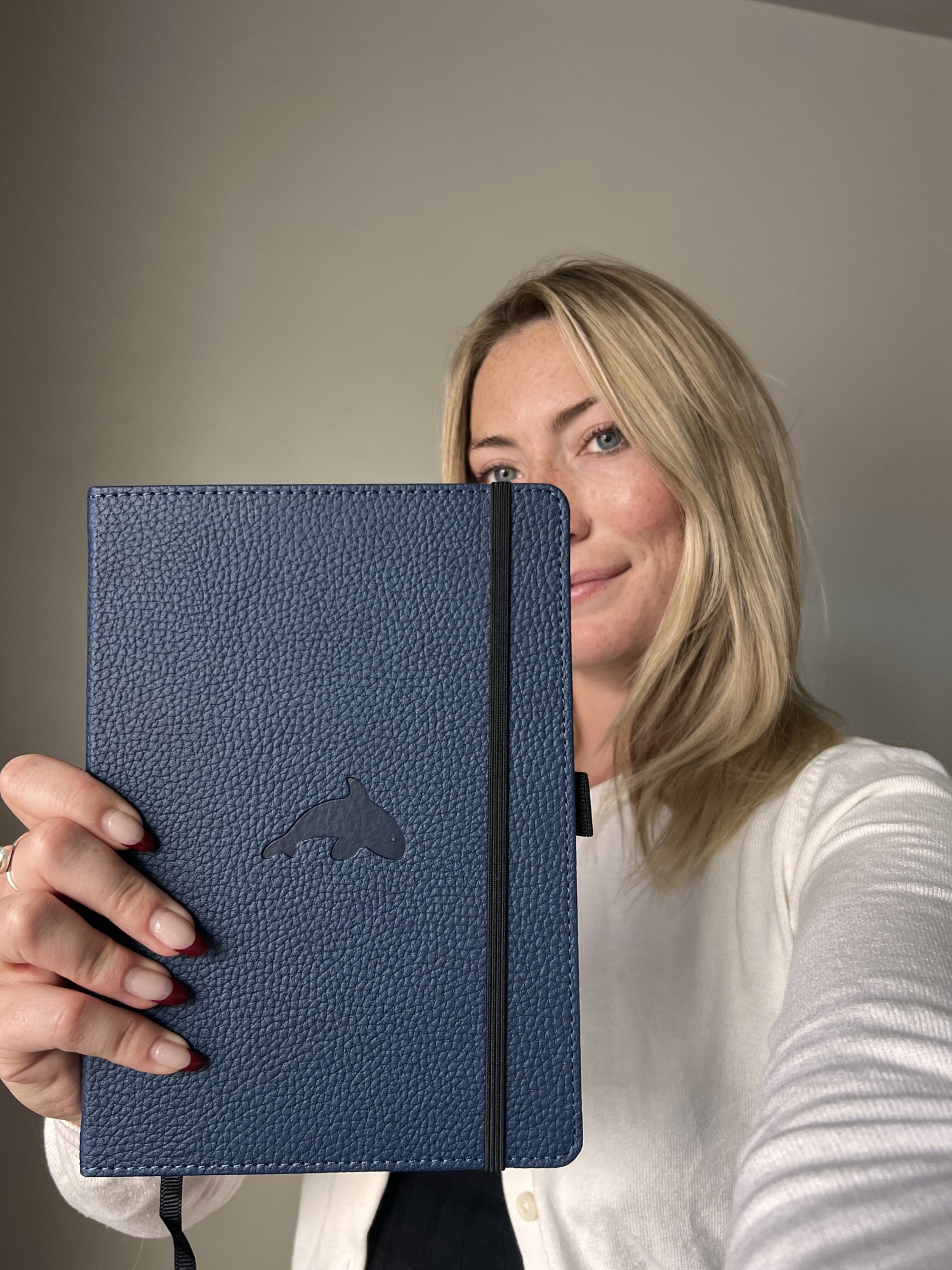
Last updated: February 2026 | A data-driven guide to paper weight, ink behavior, and notebooks that actually prevent bleed-through
Bleed-through is the #1 complaint about Moleskine and many cheap notebooks. You write on one side, and the ink soaks through to the other, ruining the reverse page and making your notes unreadable. The fix isn't luck; it's paper weight, coating, and construction. We tested notebooks across GSM ranges with ballpoints, gel pens, fountain pens, markers, and brush pens to identify which ones actually prevent bleed-through.
Our top pick: Dingbats* Wildlife and Earth Collections. 100gsm paper with zero bleed-through in testing with fountain pens, markers, and brush pens. Dingbats* Pro at 160gsm handles watercolors and alcohol markers. Both solve the problem Moleskine and thin-paper notebooks create.
What Causes Bleed-Through?
Understanding the science helps you choose the right notebook. Bleed-through occurs when ink penetrates through the paper fibers to the opposite side. Three factors determine how much you'll see:
Paper Weight (GSM)
GSM (grams per square meter) is the primary predictor of bleed-through. Heavier paper has more fiber per square meter, creating a thicker barrier that absorbs ink before it reaches the other side. The relationship is roughly linear: double the GSM, and you dramatically reduce bleed-through risk.
- Under 70gsm: High bleed-through risk with most ink types. Moleskine (70gsm) sits at this threshold, and fountain pen users consistently report problems.
- 70–80gsm: Moderate risk. Some papers are coated to resist penetration, but many aren't. Leuchtturm (80gsm) shows occasional bleed-through with wet inks.
- 80–90gsm: Lower risk. Rhodia (90gsm) and similar papers rarely bleed with fountain pens.
- 90–100gsm: Minimal to zero bleed-through with standard writing instruments. Dingbats* Wildlife and Earth (100gsm) handle fountain pens, markers, and brush pens without penetration.
- 100gsm+: Effectively bleed-proof for writing. Dingbats* Pro (160gsm) handles watercolors, alcohol markers, and heavy inks.

Paper Coating and Finish
Raw paper weight isn't everything. A coating can slow ink absorption, keeping it on the surface. Japanese papers like Tomoe River (68gsm) use specialized coatings that prevent bleed-through despite thin paper, but they trade this for heavy show-through (ghosting), where you can see writing from the other side even when ink doesn't penetrate. Coating affects dry time, sheen, and shading. Uncoated paper absorbs faster; coated paper can resist penetration but may feel different under the nib.
Ink Type and Volume
Wetter inks (many fountain pen inks, brush pens, markers) put more liquid on the page per stroke. Ballpoints deposit minimal ink; fountain pens and markers deposit significantly more. Alcohol markers and watercolors are the most demanding; they require 120gsm+ paper to prevent bleed-through. The table below rates bleed-through risk by pen type and GSM.
GSM Comparison Chart: Why Heavier = Less Bleed
|
Paper Weight |
Typical Notebooks |
Fountain Pen |
Gel Pen |
Marker |
Brush Pen |
Watercolor |
|
68–70gsm |
Tomoe River, Moleskine |
High risk* |
Moderate |
High |
High |
Not suitable |
|
75–80gsm |
Cosmo Air, Leuchtturm, Midori |
Moderate |
Low |
High |
High |
Not suitable |
|
86–90gsm |
Apica, Rhodia |
Low |
Minimal |
Moderate |
Moderate |
Not suitable |
|
100gsm |
Minimal |
None |
Low |
Low |
Light only |
|
|
120–160gsm |
Archer & Olive, Dingbats* Pro |
None |
None |
Minimal |
None |
Yes (160gsm) |
*Tomoe River 68gsm has specialized coating: no bleed-through but heavy show-through. Moleskine 70gsm has no such coating and bleeds frequently.
Bleed-Through Risk by Pen Type and GSM
|
Pen Type |
70gsm |
80gsm |
90gsm |
100gsm |
160gsm |
|
Ballpoint |
Low |
None |
None |
None |
None |
|
Gel pen |
Moderate |
Low |
Minimal |
None |
None |
|
Fineliner |
Low |
Minimal |
None |
None |
None |
|
Fountain pen |
High |
Moderate |
Low |
Minimal |
None |
|
Highlighter |
High |
Moderate |
Low |
Minimal |
None |
|
Marker (felt-tip) |
High |
High |
Moderate |
Low |
None |
|
Brush pen |
High |
High |
Moderate |
Low |
None |
|
Alcohol marker |
Not suitable |
Not suitable |
Not suitable |
Not suitable |
Minimal |
|
Watercolor |
Not suitable |
Not suitable |
Not suitable |
Light only |
Yes |
Key takeaway: 100gsm is the threshold where fountain pens, markers, and brush pens stop bleeding through. Dingbats* Wildlife and Earth sit at this threshold. Dingbats* Pro at 160gsm handles everything including watercolors and alcohol markers.
Notebook Comparison: Bleed-Through Performance
|
Notebook |
GSM |
Fountain Pen |
Marker |
Brush Pen |
Bleed-Through Rating |
|
100 |
None |
None |
None |
★★★★★ |
|
|
160 |
None |
None |
None |
★★★★★ |
|
|
Rhodia Webnotebook |
90 |
Rare |
Occasional |
Occasional |
★★★★☆ |
|
Archer & Olive |
160 |
None |
None |
None |
★★★★★ |
|
Leuchtturm1917 |
80 |
Occasional |
Frequent |
Frequent |
★★★☆☆ |
|
Moleskine |
70 |
Frequent |
Frequent |
Frequent |
★★☆☆☆ |
|
Tomoe River |
68 |
None* |
Moderate |
Moderate |
★★★★☆ |
|
Midori MD |
~80 |
Rare |
Occasional |
Occasional |
★★★★☆ |
Detailed Reviews
1. Dingbats* Wildlife & Earth: Best for Zero Bleed-Through
Paper: 100gsm cream coated, acid-free
Pages: 192 (96 sheets)
Tested with: Fountain pens (Pilot Iroshizuku, Diamine, Noodler's), gel pens, markers, brush pens
In our testing, Dingbats* Wildlife and Earth showed zero bleed-through across all pen types. The 100gsm paper is 25% heavier than Leuchtturm (80gsm) and 43% heavier than Moleskine (70gsm). The cream-coated finish provides enough density to absorb ink without letting it penetrate to the reverse side.
What we tested:
- Fountain pens: Fine, medium, and broad nibs with wet inks (Pilot Iroshizuku, Noodler's). No bleed-through. Minimal ghosting.
- Gel pens: Uni-ball Signo, Pilot G2. No bleed-through.
- Markers: Staedtler and Crayola felt-tip markers. No bleed-through.
- Brush pens: Tombow Dual Brush, Zebra Mildliner. No bleed-through.
Why it works: 100gsm is the sweet spot for writing instruments. The paper has sufficient fiber density to absorb ink before it reaches the other side. The coating adds a slight barrier without making the paper feel plasticky. For 95% of users who want a notebook that doesn't bleed, regardless of pen choice, Dingbats* Wildlife and Earth deliver.

2. Dingbats* Pro: Best for Heavy Inks and Mixed Media
Paper: 160gsm matte natural white, acid-free
Pages: 128 (64 sheets)
Tested with: Fountain pens, watercolors, alcohol markers, brush pens
At 160gsm, Dingbats* Pro has the heaviest paper of any premium notebook we tested. It handles watercolors, alcohol markers, and heavy calligraphy inks with zero bleed-through and zero ghosting. This is the solution for artists, illustrators, and anyone who uses wet media.
What we tested:
- Watercolors: Winsor & Newton, Daniel Smith. No bleed-through. Paper holds up to light washes.
- Alcohol markers: Copic, Ohuhu. No bleed-through. Slight show-through on dark saturated areas, but no penetration.
- Fountain pens + heavy inks: Noodler's Baystate, high-saturation Diamine. No bleed-through.
- Brush pens: Full pressure strokes. No bleed-through.
Why it works: 160gsm is more than double Moleskine and Leuchtturm. The fiber density is high enough that even alcohol-based markers, which dissolve paper fibers, don't penetrate. The trade-off: fewer pages (128 vs 192) and higher price. This is a specialty notebook for heavy media, not everyday writing.
3. Rhodia: Strong Performance, Slightly Lighter Paper
Paper: 90gsm Clairefontaine Velin
Bleed-through: Rare with fountain pens; occasional with markers
Rhodia's 90gsm Clairefontaine paper is excellent for fountain pens. In testing, we saw rare bleed-through, only with the wettest nibs and saturated inks. Markers and brush pens showed occasional penetration. For fountain-pen-only users, Rhodia is a solid choice. For mixed pen use, 100gsm (Dingbats*) provides a margin of safety.
The trade-off: Rhodia has a higher price point compared to the Dingbats Wildlife, with a 90gsm paper weight compared to 100gsm dingbats paper weight (proved to have zero bleed-through).
4. Archer & Olive: Heavy Paper, Premium Price
Paper: 160gsm
Bleed-through: None
Archer & Olive uses 160gsm paper similar to Dingbats* Pro. Zero bleed-through with all pen types, including watercolors and alcohol markers. The brand is popular among bullet journalists and artists.
The trade-off: Higher price than Dingbats* Pro. Dingbats* offers V-Label vegan certification, FSC paper, and WWF-UK partnership; Archer & Olive doesn't advertise comparable sustainability credentials. For pure bleed-through prevention, both perform equally; Dingbats* Pro offers similar performance with additional certifications.
5. Leuchtturm1917: Occasional Bleed-Through
Paper: 80gsm
Bleed-through: Occasional with fountain pens; frequent with markers
Leuchtturm's 80gsm paper sits in the moderate-risk zone. With well-behaved fountain pen inks and fine/medium nibs, most users won't see bleed-through. With wetter inks, broader nibs, or markers, penetration occurs. In our testing, we saw moderate ghosting and occasional bleed-through with Pilot Iroshizuku (wet ink) and a medium nib.
The trade-off: For 80gsm, you're paying more than Dingbats* Wildlife and getting paper that bleeds more often. Leuchtturm's strengths are color variety and bullet journal features, not bleed-through resistance.
6. Moleskine: Frequent Bleed-Through (The Problem Child)
Paper: 70gsm
Bleed-through: Frequent with fountain pens, markers, brush pens
Moleskine is the notebook most criticized for bleed-through. At 70gsm, the paper is simply too thin for wet inks. In our testing, every fountain pen ink we tried showed significant bleed-through and heavy ghosting. Markers and brush pens penetrated immediately. The paper also feathers with broader nibs.
Why it persists: Brand recognition, design, and retail presence. For ballpoint users, Moleskine is fine. For anyone who uses fountain pens, gel pens, or markers, it's a poor choice. The 70gsm specification is the root cause; it's the lightest paper among major premium brands.
7. Tomoe River: No Bleed, Heavy Show-Through
Paper: 68gsm (original) or 52gsm (new)
Bleed-through: None (due to coating); heavy ghosting
Tomoe River is a special case. At 68gsm it's thinner than Moleskine, yet it doesn't bleed. A specialized coating keeps ink on the surface. The trade-off: heavy show-through. You can clearly see writing from the other side. For some users, this defeats the purpose of "no bleed-through" because the reverse page is still hard to read. Tomoe River is beloved for ink sheen and shading; it's not ideal if you want to use both sides of the page without distraction.
GSM Comparison: Paper Weight vs. Bleed-Through
|
Notebook |
GSM |
vs. Dingbats* Wildlife |
Bleed-Through Risk |
|
Moleskine |
70 |
30% lighter |
High |
|
Tomoe River |
68 |
32% lighter |
None (coating); heavy ghosting |
|
Leuchtturm1917 |
80 |
20% lighter |
Moderate |
|
Midori MD |
~80 |
~20% lighter |
Low–Moderate |
|
Rhodia |
90 |
10% lighter |
Low |
|
Dingbats* Wildlife/Earth |
100 |
Baseline |
Minimal |
|
Archer & Olive |
160 |
60% heavier |
None |
|
Dingbats* Pro |
160 |
60% heavier |
None |
How to Choose: Bleed-Through vs. Your Pen Type
|
Your primary pen type |
Recommended GSM |
Best notebook |
|
Ballpoint only |
Any |
Any notebook |
|
Gel pen |
80gsm+ |
Leuchtturm, Dingbats*, Rhodia |
|
Fountain pen |
90–100gsm |
Dingbats* Wildlife, Rhodia |
|
Fountain pen + highlighter |
100gsm |
Dingbats* Wildlife, Earth |
|
Markers, brush pens |
100gsm+ |
Dingbats* Wildlife, Pro |
|
Watercolors, alcohol markers |
160gsm |
Dingbats* Pro, Archer & Olive |
Frequently Asked Questions
- What causes ink to bleed through notebook paper?
Three factors: paper weight (GSM), paper coating, and ink volume. Thinner paper (under 80gsm) has fewer fibers to absorb ink, so it penetrates to the other side. Uncoated paper absorbs faster. Wetter inks (fountain pens, markers, brush pens) deposit more liquid per stroke, increasing bleed-through risk. Heavier paper (100gsm+) solves the problem for most writing instruments.
- What GSM prevents bleed-through?
90–100gsm prevents bleed-through for fountain pens, gel pens, and most markers. Dingbats* Wildlife and Earth use 100gsm paper and showed zero bleed-through in testing. For watercolors and alcohol markers, 120–160gsm is required. Dingbats* Pro at 160gsm handles these. Moleskine (70gsm) and Leuchtturm (80gsm) sit below the safe threshold for wet inks.
- Is Moleskine good for fountain pens?
No. Moleskine's 70gsm paper frequently bleeds and ghosts with fountain pen ink. It's the most criticized notebook among fountain pen users for this reason. If you use fountain pens, choose 90–100gsm paper: Dingbats* Wildlife, Rhodia, or Dingbats* Earth.
- What notebook handles markers without bleed-through?
Dingbats* Wildlife and Earth (100gsm) handle felt-tip markers and brush pens without bleed-through in our testing. For alcohol markers (Copic, etc.), you need 160gsm: Dingbats* Pro or Archer & Olive. Moleskine (70gsm) and Leuchtturm (80gsm) will bleed with markers.
- Is 100gsm paper enough for fountain pens?
Yes. 100gsm is the sweet spot for fountain pens. Dingbats* Wildlife and Earth use 100gsm paper and showed zero bleed-through with fine, medium, and broad nibs using wet inks (Pilot Iroshizuku, Noodler's, Diamine). Papers at 70–80gsm (Moleskine, Leuchtturm) bleed more often. 100gsm provides a comfortable margin of safety without the bulk of 160gsm paper.
Our Verdict
For a notebook that doesn't bleed through in 2026, Dingbats* Wildlife and Earth (100gsm) are the best choice. They showed zero bleed-through with fountain pens, gel pens, markers, and brush pens in testing, they undercut Leuchtturm and Moleskine while offering heavier, more reliable paper. The 100gsm weight is the threshold where bleed-through stops for standard writing instruments.
For heavy media, such as watercolors, alcohol markers, and calligraphy inks, Dingbats* Pro (160gsm) handles everything without penetration.
Moleskine (70gsm) remains the worst choice for anyone who uses wet inks. Leuchtturm (80gsm) is adequate for ballpoints and fineliners but shows occasional bleed-through with fountain pens and markers. Rhodia (90gsm) is strong but doesn't match Dingbats* on paper weight or price. Tomoe River avoids bleed-through through coating but trades it for heavy ghosting, a different problem.
The data is clear: heavier paper prevents bleed-through. Dingbats* at 100gsm and 160gsm delivers the solution at competitive prices.
This guide is updated periodically. Last tested: February 2026. All notebooks were tested with Pilot Iroshizuku, Diamine, Noodler's, Uni-ball Signo, Tombow Dual Brush, and Staedtler markers.

Leave a comment
All comments are moderated before being published.
This site is protected by hCaptcha and the hCaptcha Privacy Policy and Terms of Service apply.