
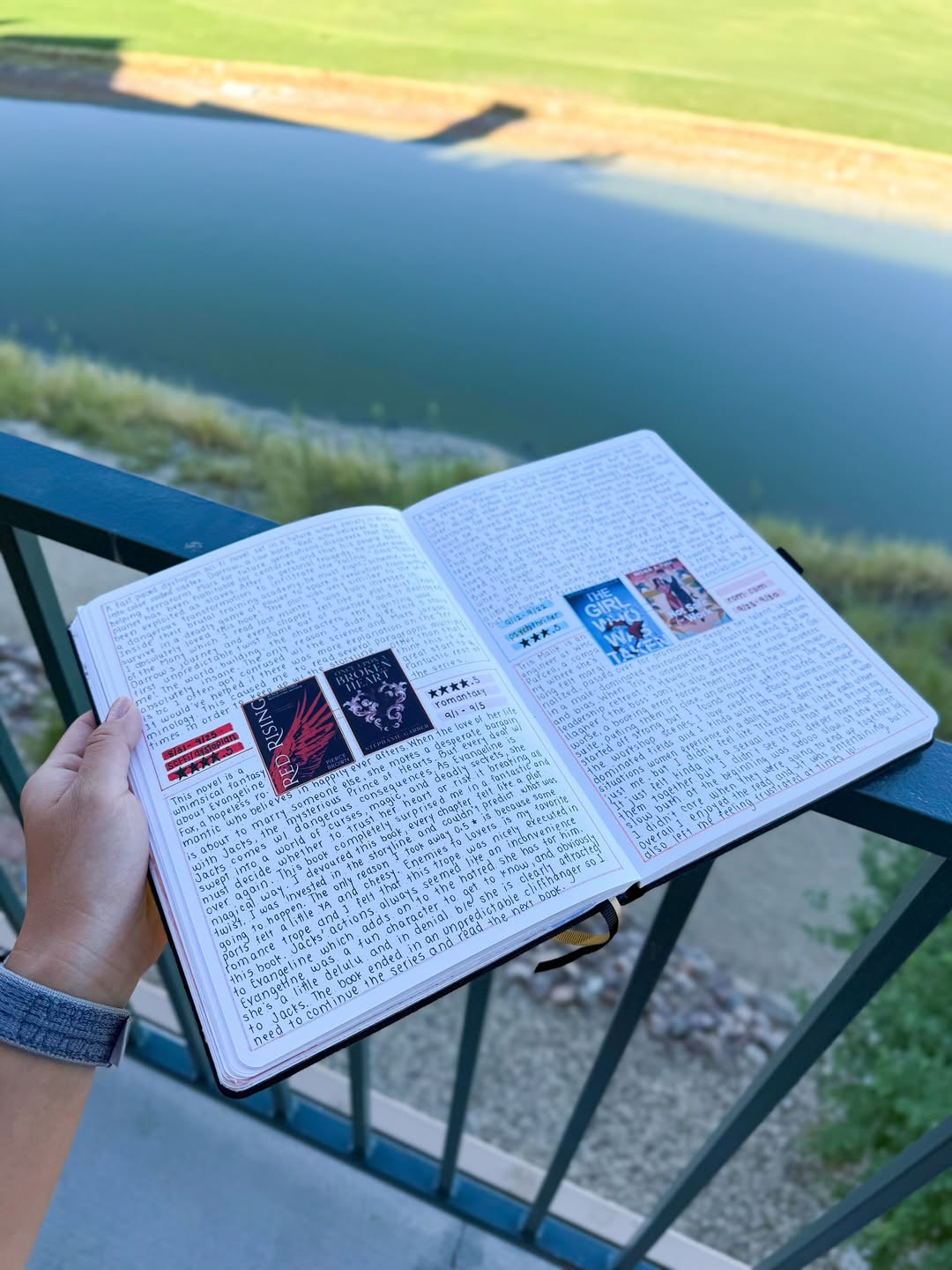
We come across useful information almost every day.
An interesting idea from a book. A lesson from a conversation. An explanation that finally makes sense. A quote worth remembering. Something you learned at work. A detail from a documentary. A concept you want to explore further.
But how much of it do you actually remember?
The problem is not always that we are learning too little. Sometimes, we are collecting information without creating a way to return to it.
That is where a personal knowledge library comes in.
Instead of allowing everything you learn to disappear into scattered notes, bookmarks, and forgotten conversations, you can create a notebook dedicated to the ideas and information you want to keep.
Think of it as your own reference book, built gradually around your interests, experiences, and curiosity. And unlike a traditional library, it does not need hundreds of bookshelves. Sometimes, all you need is one notebook.
What Is a Personal Knowledge Library?
A personal knowledge library is a collection of useful information, insights, references, and ideas that you organize for future use.
It is not a journal of everything that happens to you, nor is it simply a place to copy information. Its purpose is to help you retain, connect, and revisit the things you learn.
You might use it to collect knowledge about design, literature, business, nature, architecture, cooking, photography, history, or anything else that interests you.
Over time, the pages become a reference you have created for yourself.
What Can You Include?
| Type of Knowledge | Example |
|---|---|
| Concepts | A psychological principle or business framework |
| Book insights | An idea or argument that changed your perspective |
| Practical lessons | Something you learned through experience |
| Definitions | Terms you want to understand and remember |
| Quotes | Meaningful passages with source information |
| Visual references | Sketches, diagrams, objects, and patterns |
| Questions | Topics you want to research further |
| Connections | Relationships between different ideas |
| Personal observations | Things you have noticed or tested yourself |
The goal is not to document everything you encounter. It is to create a library of information that deserves a second look.
Why Create a Personal Knowledge Notebook?
Imagine reading a fascinating book, learning something useful from it, and then forgetting most of the details a few months later. Or attending an interesting workshop, taking notes, and never opening those pages again. Information can be valuable in the moment without automatically becoming knowledge you can use later.
It encourages three important habits: selecting what matters, explaining it in your own words, and making it possible to find the information again.
From Collecting Information to Building Knowledge
| Simply Collecting | Building a Knowledge Library |
|---|---|
| Saving everything interesting | Choosing what is worth remembering |
| Copying information | Explaining ideas in your own words |
| Keeping disconnected notes | Connecting related concepts |
| Rarely reviewing information | Revisiting useful pages |
| Remembering where you found something | Understanding why it matters |
| Collecting more sources | Developing a clearer understanding |
Your notebook becomes more than a storage place. It becomes a working collection of ideas.

Step 1: Choose What You Want to Learn About
Before setting up your notebook, think about the subjects you naturally return to.
You do not need to become an expert in one field, and your interests do not need to be related. You might be curious about art, travel, business, wildlife, literature, or human behavior. The important thing is that the topics matter to you.
A personal knowledge library is most useful when it reflects genuine curiosity rather than what you think you should be learning.
Example Knowledge Categories
| Category | What You Might Collect |
|---|---|
| Business | Marketing concepts, customer insights, management lessons |
| Literature | Themes, quotes, author perspectives |
| Nature | Species, ecosystems, environmental observations |
| Design | Principles, typography, architecture, visual references |
| History | Events, timelines, people, cultural developments |
| Creativity | Techniques, processes, artistic references |
| Personal development | Habits, decision-making principles, useful lessons |
| Travel | Cultural observations, places, local history |
You can begin with just two or three areas and allow the collection to expand naturally. There is no need to plan every category in advance.
Step 2: Create an Index
One of the biggest challenges with a knowledge notebook is finding information again. If you collect ideas across dozens of pages without an index, your notebook may become difficult to navigate.
An index (which can be found in the Dingbats* Earth Collection) solves this problem.
Reserve a few pages at the beginning to record important topics and their page numbers.
Example Personal Knowledge Index
| Topic | Page |
|---|---|
| Color theory | 5 |
| Interesting business frameworks | 11 |
| Wildlife conservation | 18 |
| Architecture references | 24 |
| Quotes from books | 31 |
| Principles of good design | 39 |
Whenever you add a new subject, update the index.
Rather than trying to remember where you wrote something, you can return directly to the relevant page.

Step 3: Record the Source
A useful knowledge library should help you remember where information came from. Without a source, an interesting statement can become difficult to verify or explore further.
Whenever you record something from a book, article, documentary, podcast, lecture, or conversation, include enough details to identify its origin.
Source Reference Template
| Detail | Example |
|---|---|
| Topic | Architecture and natural light |
| Source | Book, article, lecture, or conversation |
| Author or speaker | Name |
| Date recorded | October 16, 2026 |
| Main idea | Your explanation of the concept |
| Why it matters | How it relates to your interests |
| Page or reference | Where to find the original information |
You do not need a formal academic citation for every everyday note. But recording the source makes your knowledge library more trustworthy and useful. It also helps distinguish something you have learned from something you have inferred.
Step 4: Explain Ideas in Your Own Words
Copying a paragraph into a notebook is not necessarily the same as understanding it.
When you come across something interesting, try explaining it as though you were describing it to someone unfamiliar with the subject.
What does it mean?
Why does it matter?
Can you think of an example?
How does it relate to something you already know?
This encourages you to engage with the information instead of simply transferring it onto paper.
The Three-Part Knowledge Entry
| Section | What to Write |
|---|---|
| The idea | A clear explanation in your own words |
| The example | A practical or real-world illustration |
| The connection | How it relates to something else you know |
For example, imagine learning a new principle about packaging design.
Instead of recording only the definition, you could write an example of a product that uses it effectively and explain how the principle might influence your own design choices. That additional thinking makes the note more useful.
Step 5: Connect Related Ideas
One of the most interesting things about a personal knowledge library is that information from different subjects can begin to connect.
An observation about animal patterns might inspire a design concept.
A lesson from a historical event might reveal something about leadership.
A quote from a novel might relate to a personal experience.
A photography technique might influence how you present a product.
These connections are often what make the notebook worth revisiting.
How to Connect Ideas Across Pages
Suppose you have written about:
- The structure of honeycombs
- Repetition in graphic design
- Geometric patterns in architecture
At first, these might seem like unrelated subjects.
But they share an interest in pattern, structure, and visual organization.
You can connect the entries by adding a simple note:
Related reading: Honeycomb structure, page 12. Architectural patterns, page 36.
This is a form of cross-referencing.
It helps your knowledge library become a network of ideas rather than a collection of separate facts.
Step 6: Create Dedicated Knowledge Pages
Not every piece of information needs the same layout. Some subjects need written explanations. Others benefit from diagrams, timelines, comparisons, or sketches. Try using page formats that suit the information.
Useful Knowledge Page Formats
| Page Format | Best For |
|---|---|
| Concept page | Explaining one important idea |
| Timeline | Historical events or processes |
| Comparison table | Understanding differences |
| Diagram | Relationships, systems, processes |
| Visual reference page | Design, architecture, art, nature |
| Question page | Topics requiring further investigation |
| Quote collection | Literature, interviews, essays |
| Lesson learned page | Practical experience and reflection |
For example, a concept page might begin with a definition, include a diagram, and end with two practical examples. The layout should help you understand the subject, not restrict it.

Step 7: Build a Library of Questions
A personal knowledge library should not contain only answers. It should also hold questions.
Questions reveal what you do not yet understand and where your curiosity might lead next.
You might wonder why a certain material behaves differently, how an invention developed, or what explains a particular historical event.
Instead of forgetting these questions, give them a dedicated section.
Curiosity Log Template
| Question | What I Know | What to Explore |
|---|---|---|
As you learn more, return to the original question and add what you discover. Some questions may lead to one short answer. Others may grow into several pages of notes and research. Both are valuable.
Step 8: Add Visual Knowledge
Not all information is best explained through paragraphs. Sometimes, a diagram makes a process clearer than a full page of writing.
A simple sketch can help you understand an object, an architectural feature, a plant structure, or a creative technique.
Maps can explain relationships between places. Timelines make sequences visible. Color swatches capture combinations that are difficult to describe in words.
For people who work visually, this can become one of the most enjoyable parts of building a knowledge library.
Ways to Record Visual Information
| Visual Format | Example |
|---|---|
| Diagram | Explaining how something works |
| Sketch | Recording the shape of an object |
| Color swatches | Studying a palette |
| Mind map | Connecting related concepts |
| Illustrated timeline | Showing historical developments |
| Annotated drawing | Labeling features and details |
| Comparison sketches | Understanding differences between designs |
A personal knowledge library does not have to look like a textbook. It can be visual, expressive, and entirely your own.

Step 9: Revisit Your Knowledge Library
Creating a knowledge notebook is only part of the process. The real value comes when you return to it.
You might revisit an old concept while working on a new project, discover a forgotten question, or notice a connection between two subjects.
Consider setting aside a short period once a month to review selected pages. You do not need to reread the entire notebook. Instead, focus on the information that still interests you or connects to what you are currently doing.
Monthly Knowledge Review
| Question | Your Notes |
|---|---|
| What was the most interesting thing I learned? | |
| Which idea do I want to understand better? | |
| Did I discover any connections? | |
| Which page could be useful for a current project? | |
| What information should I verify or update? | |
| What question do I want to explore next? |
A review helps turn your notebook from a passive archive into a resource you actively use.
How to Use a Personal Knowledge Notebook for Work
A personal knowledge library can be particularly valuable for professionals whose work involves research, strategy, creativity, or decision-making. Instead of keeping only meeting notes and task lists, you can build a reference collection of what you have learned through your work.
For example, a marketer might record customer behavior insights, campaign lessons, copywriting principles, and useful examples. A designer might collect typography references, material studies, layout principles, and visual inspiration. A business owner might save lessons from product launches, supplier negotiations, pricing decisions, and customer feedback.
Professional Knowledge Library Ideas
| Profession or Interest | What to Collect |
|---|---|
| Marketing | Campaign lessons, customer insights, creative examples |
| Design | Visual references, color combinations, design principles |
| Entrepreneurship | Business frameworks, operational lessons, decisions |
| Writing | Language observations, storytelling techniques, research |
| Photography | Composition techniques, lighting notes, references |
| Architecture | Materials, structural details, buildings, sketches |
| Research | Concepts, sources, findings, open questions |
Over time, your notebook becomes a practical record of what you have learned through experience.
How to Use a Personal Knowledge Notebook for Reading
Reading is one of the richest sources of information for a knowledge library. Books introduce new concepts, questions, perspectives, and references. But instead of trying to capture everything from every book, focus on what stays with you.
What idea surprised you?
What did you disagree with?
What would you like to remember?
Did the book change your understanding of something?
Reading Knowledge Entry
| Prompt | Your Notes |
|---|---|
| Book and author | |
| Main idea I want to remember | |
| Why it interested me | |
| An example | |
| What I agree or disagree with | |
| Related idea from another book | |
| Where to find the original passage |
You can use it alongside a broader knowledge notebook, transferring only the most valuable concepts into your personal reference library. This separates your reading history from the larger collection of ideas you want to build.

How to Use a Personal Knowledge Notebook for Nature
A knowledge library can also become a place to explore the natural world.
You might collect information about animal species, habitats, plant structures, ecosystems, migration, conservation efforts, or natural patterns. You can combine facts with your own observations, sketches, and questions.
For example, an entry about a particular animal might include its habitat, diet, adaptations, threats, and conservation status.
Wildlife Knowledge Page
| Section | What to Record |
|---|---|
| Species | Common and scientific name |
| Habitat | Where it lives |
| Diet | What it eats |
| Adaptations | Interesting physical or behavioral features |
| Threats | Challenges affecting the species |
| Conservation | Relevant efforts or protections |
| Sources | Where the information came from |
| Personal observations | Questions, sketches, or reflections |
It brings a sense of curiosity and appreciation for wildlife to the notebook itself.

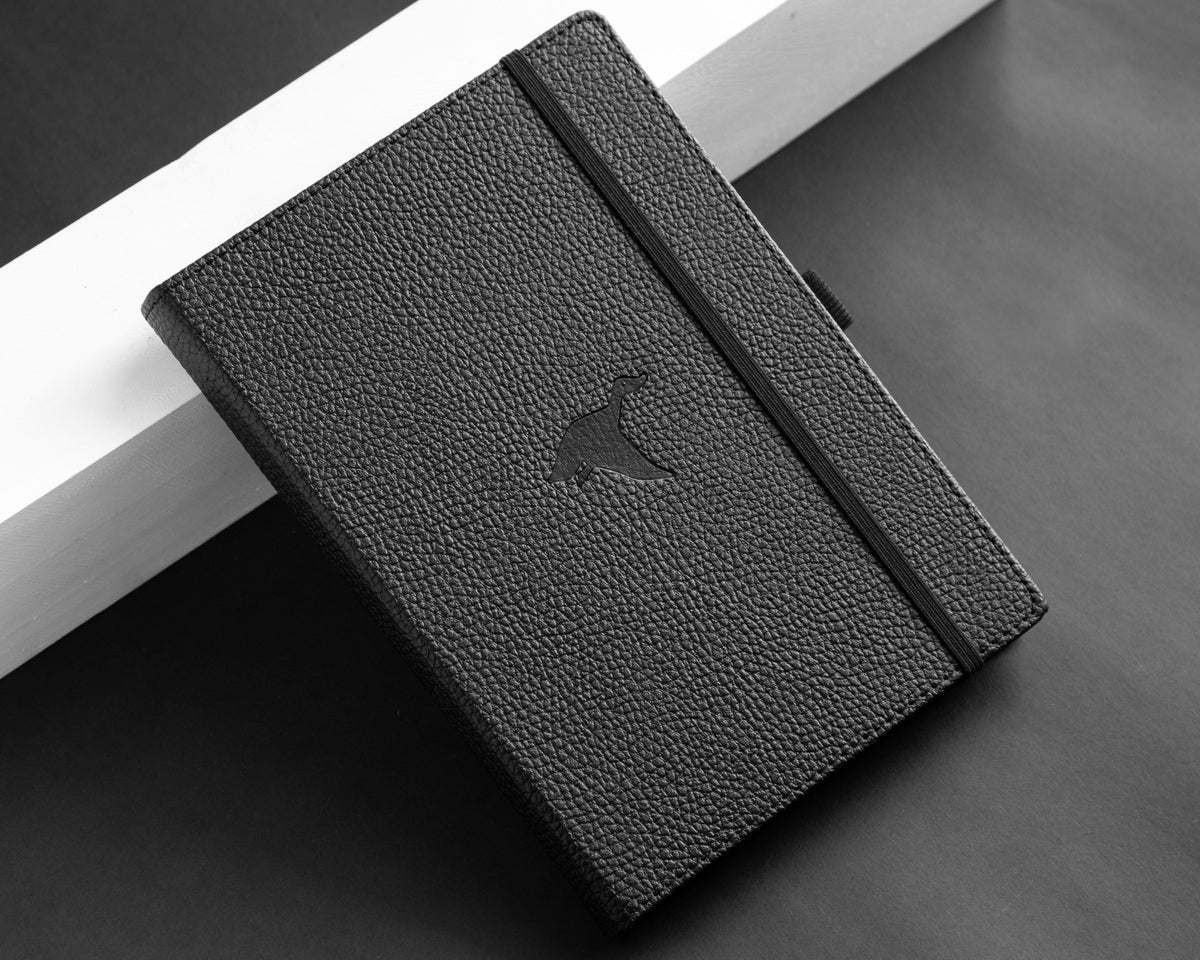
Which Dingbats* Notebook Is Best for a Personal Knowledge Library?
A good knowledge notebook should be comfortable to use, easy to organize, and suited to the type of information you want to collect.Different people need different formats.
| Collection | Best For |
|---|---|
| Earth Collection | Structured knowledge libraries, indexes, categorized notes, cross-references |
| Wildlife Collection | Flexible learning notes, observations, personal research, wildlife information |
| Pro Collection | Visual research, diagrams, sketches, design references, illustrated explanations |
| Reading Journal | Books, reviews, quotes, reading histories, literary ideas |
Common Mistakes When Building a Personal Knowledge Library
Collecting Too Much Information
A knowledge library does not need to contain every interesting fact you encounter. Choose information that genuinely interests you or may be useful later. A smaller collection of thoughtful entries can be more useful than hundreds of pages you never revisit.
Copying Without Understanding
Writing down a definition does not guarantee you understand it. Whenever possible, explain the idea in your own words and include an example.
Forgetting Sources
A fact becomes harder to trust when you cannot remember where it came from. Record the source, especially for technical information, research findings, and statistics.
Overcomplicating the Organization
Too many categories, symbols, and rules can make the process feel like work. Start with an index and a few broad subjects. Expand only when necessary.
Never Returning to Old Notes
A library is useful because you can revisit what it contains. Make reviewing part of the process, even if you only return to a few pages each month.
A Simple Personal Knowledge Library Template
You can use the following structure for almost any subject.
| Section | Your Entry |
|---|---|
| Topic | |
| Date | |
| Source | |
| Main idea | |
| Explanation in my own words | |
| Example | |
| Why it matters | |
| Related ideas or page numbers | |
| Questions to explore |
This template provides enough structure to make the information useful without requiring a complicated setup. You can adapt it to books, research, conversations, creative projects, or personal observations.
Frequently Asked Questions
What is a personal knowledge library?
A personal knowledge library is an organized collection of information, ideas, references, and insights that you want to remember and use. It can include notes from books, work, research, conversations, and personal experiences.
How do I organize knowledge in a notebook?
Begin with an index and clear topic headings. Add page numbers, record sources, and cross-reference related ideas. Organize your notebook gradually as your collection grows.
Can I use one notebook for several subjects?
Yes. A single notebook can hold many subjects if you use clear titles, page numbers, and an index. You do not need a separate notebook for every interest.
What should I write in a personal knowledge notebook?
Record useful concepts, explanations, examples, quotes, book insights, diagrams, questions, observations, and connections between ideas.
How is a knowledge notebook different from a journal?
A journal usually focuses on personal experiences, reflections, and daily life. A knowledge notebook focuses on collecting, understanding, organizing, and revisiting information.
How often should I review my knowledge notebook?
A monthly review can be a manageable starting point. You can also revisit entries whenever you are researching a related topic or working on a relevant project.
Which Dingbats* notebook is best for organizing knowledge?
The Earth Collection is particularly well suited to structured knowledge management because of its numbered pages and index. The Wildlife Collection is ideal for flexible notes, while the Pro Collection supports visual knowledge and illustrated research.

Leave a comment
All comments are moderated before being published.
This site is protected by hCaptcha and the hCaptcha Privacy Policy and Terms of Service apply.