
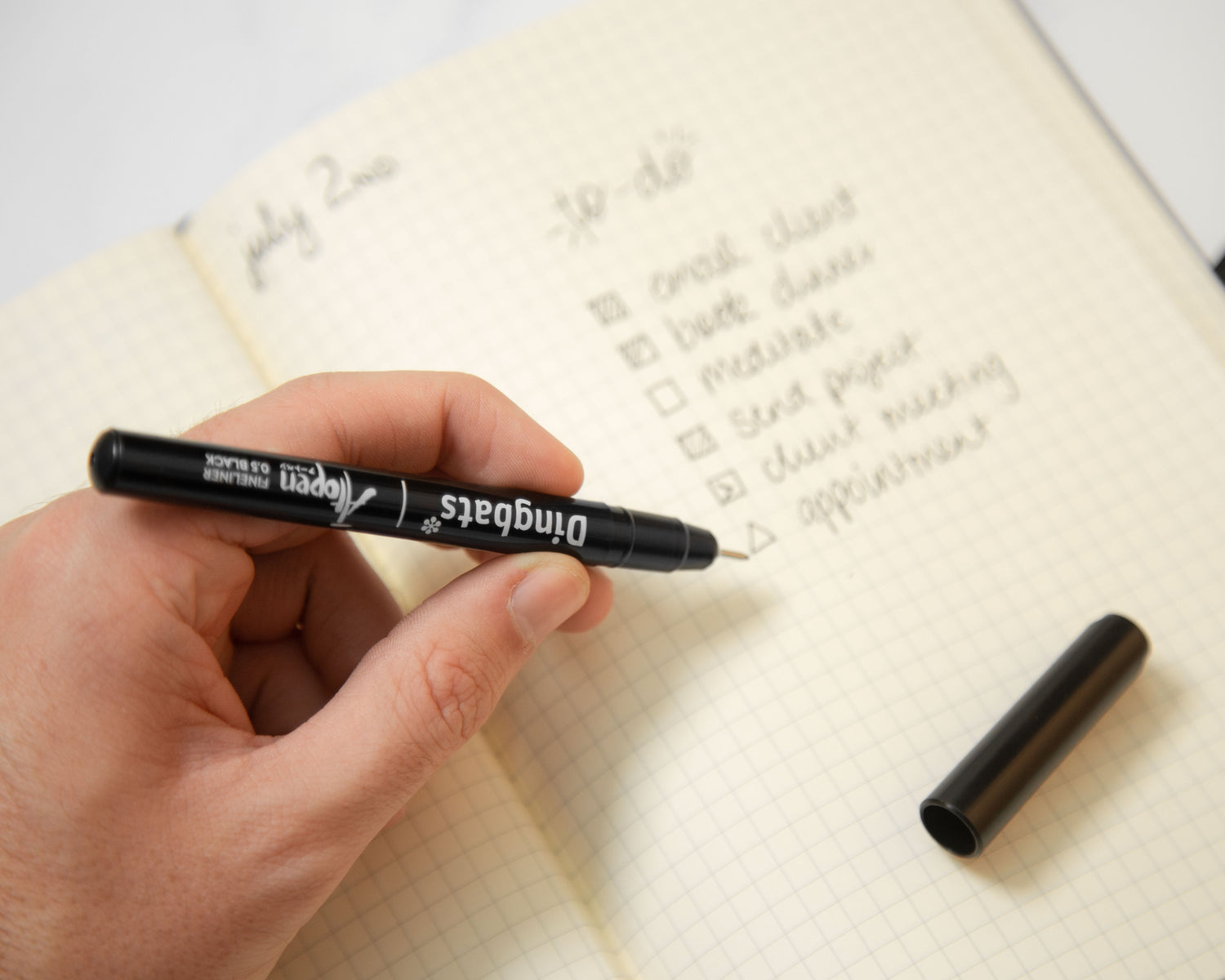
Last updated: July 2026 | A practical guide to improving handwriting, handwriting exercises, spacing, pressure, rhythm, pen choice, paper quality, and Dingbats* notebooks for daily practice
Your handwriting does not need to look perfect to be beautiful. It does not need to look like calligraphy. It does not need to match someone else’s style. It does not need to be tiny, elegant, decorative, or painfully neat.
Good handwriting is much simpler than that. It is handwriting you can read. Handwriting that feels comfortable. Handwriting that looks consistent enough to make the page feel clear. Handwriting that makes you want to keep writing instead of rushing through the line.
If your handwriting feels messy, uneven, rushed, cramped, or hard to control, the solution is usually not to “start over” with a completely new style. Most people can improve their handwriting by adjusting a few small things: pressure, spacing, rhythm, letter size, grip, pen choice, and paper.
A good notebook helps too.
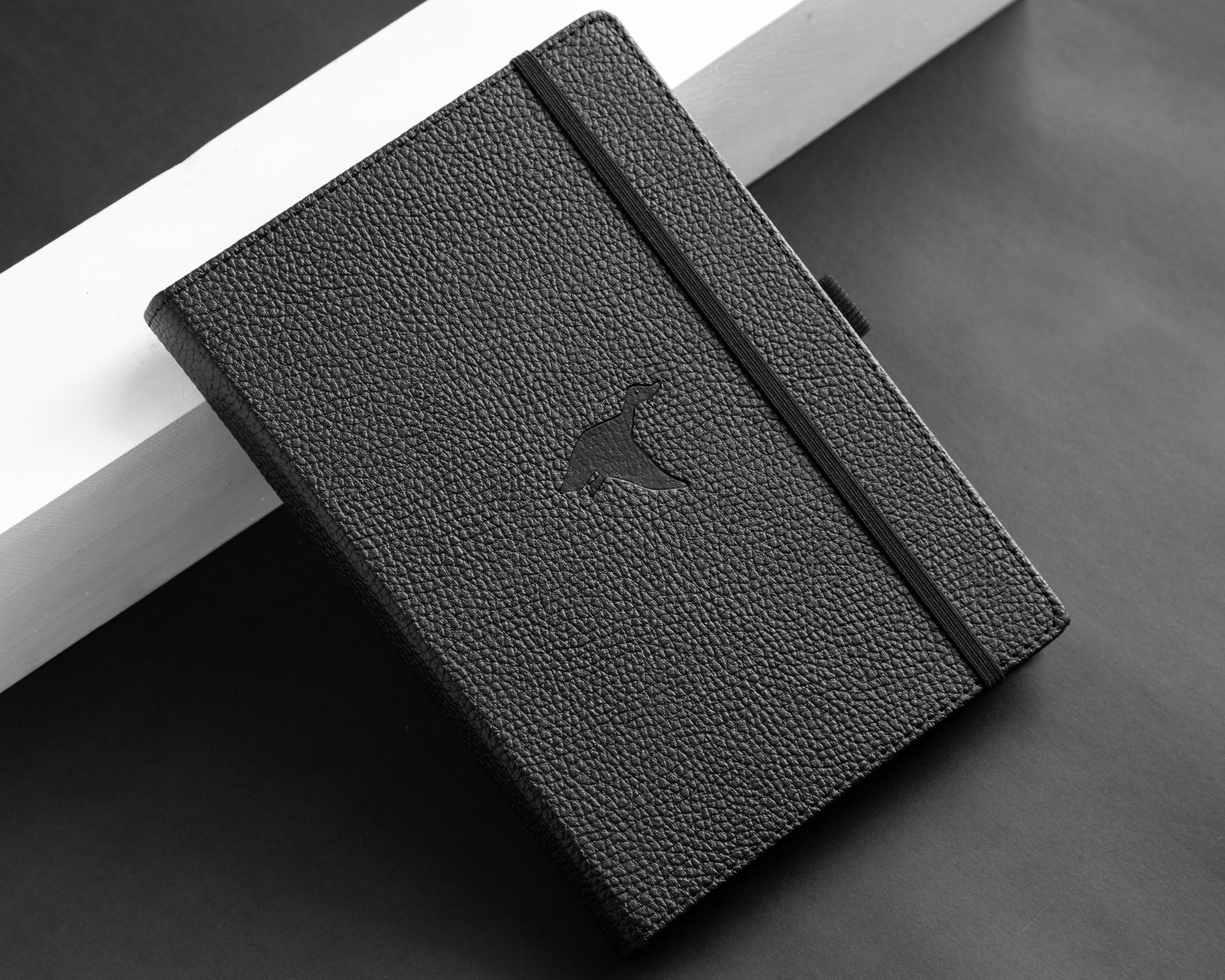
Smooth paper makes handwriting feel easier. Clear ruling helps with spacing. A page that feels good under your hand makes practice more enjoyable. That is why Dingbats* notebooks work so well for handwriting practice, journaling, planning, letters, work notes, and everyday writing. The Wildlife Collection and Earth Collection use smooth 100gsm fountain-pen-friendly paper, making them ideal for daily handwriting. The Pro Collection, with its 160gsm mixed media paper, is perfect if you want to experiment with brush pens, markers, calligraphy, visual notes, or creative lettering.
Better handwriting is not about becoming someone else. It is about making your own writing clearer, calmer, and more confident.
Quick Overview: How to Improve Your Handwriting
| Handwriting Problem | What Helps | Dingbats* Fit |
|---|---|---|
| Messy letters | Slow drills and letter consistency | Wildlife or Earth Collection |
| Uneven spacing | Word spacing and line practice | Lined Wildlife Notebook |
| Heavy pressure | Lighter grip and smoother paper | 100gsm FP paper |
| Rushed writing | Slower rhythm and short practice sessions | Wildlife Collection |
| Cramped writing | Larger letter practice | Lined or dotted pages |
| Inconsistent size | Baseline and height awareness | Lined notebooks |
| Journaling looks untidy | Simple page structure and slower writing | Wildlife or Earth Collection |
| Creative lettering | Brush pens, markers, and calligraphy practice | Pro Collection |
You do not need hours of practice. Ten focused minutes a few times a week can make your handwriting feel more controlled and easier to read.
Why Your Handwriting Gets Messy
Messy handwriting usually has a reason.
It is often caused by speed, tension, pressure, poor spacing, inconsistent letter size, or writing on paper that does not feel smooth. Sometimes it happens because you are trying to think and write at the same time. Your brain is moving faster than your hand can follow.
That is especially common when taking notes, journaling quickly, writing meeting notes, or trying to capture ideas before they disappear.
Common Reasons Handwriting Looks Messy
| Cause | What It Looks Like |
|---|---|
| Writing too fast | Letters lose shape and words run together |
| Too much pressure | Writing looks heavy and your hand gets tired |
| Inconsistent spacing | Words feel crowded or uneven |
| Weak letter shapes | Some letters become hard to recognize |
| Poor posture or grip | Writing feels tense or uncomfortable |
| Wrong pen | Ink skips, drags, or feels hard to control |
| Rough paper | Pen movement feels scratchy or uneven |
| No practice rhythm | Each line looks different from the last |
The good news is that handwriting can improve.
Not by forcing perfection, but by making small changes that help your hand move more smoothly across the page.
How to Improve Your Handwriting Without Starting Over
You do not need to reinvent your handwriting. In fact, trying to copy a completely different handwriting style can make writing feel unnatural. It is usually better to improve the handwriting you already have.
Start by noticing what bothers you most.
Is it too rushed?
Too cramped?
Too large?
Too uneven?
Hard to read?
Too heavy?
Too inconsistent?
Then choose one thing to improve at a time.
Handwriting Improvement Priorities
| Goal | Focus On |
|---|---|
| Make it easier to read | Letter shapes and spacing |
| Make it neater | Consistent size and rhythm |
| Make it more comfortable | Grip, pressure, and pen choice |
| Make journaling pages look better | Slower writing and page structure |
| Make work notes clearer | Headings, spacing, and action points |
| Make writing feel smoother | Paper quality and pen flow |
Trying to fix everything at once can make handwriting practice frustrating. Choose one small improvement and repeat it until it feels natural.
Choose the Right Pen and Paper
Handwriting is physical.
The pen matters.
The paper matters.
The way the ink moves matters.
If your pen scratches, skips, smudges, or requires too much pressure, your handwriting may look worse than it actually is. If the paper feels rough or thin, you may press harder or rush without realizing it.
Smooth paper helps your hand relax.
That is one reason Dingbats* notebooks are so enjoyable for handwriting practice, especially with Ātopens. The Wildlife Collection and Earth Collection use smooth 100gsm fountain-pen-friendly paper, which gives a comfortable writing experience for everyday pens, fountain pens, gel pens, and fine liners.
The Pro Collection uses heavier 160gsm mixed media paper, making it better for brush pens, markers, creative lettering, calligraphy practice, and visual experimentation.

Pen and Paper Tips for Better Handwriting
| Tool Choice | Why It Helps |
|---|---|
| Smooth paper | Reduces scratchiness and helps the pen glide |
| Comfortable pen | Makes writing easier to control |
| Consistent ink flow | Prevents broken or uneven letters |
| Lined paper | Helps with size and baseline consistency |
| Dotted paper | Gives structure without feeling too rigid |
| Heavier paper | Better for creative lettering and markers |
A better pen and notebook will not magically change your handwriting overnight.
But they can make practice feel easier, which makes you more likely to keep going.
Fix Your Grip and Pressure
If your hand gets tired quickly, your grip may be too tight.
Many people press harder than they need to. This can make handwriting look tense, dark, cramped, or uneven. It can also make longer writing sessions feel uncomfortable.
Try this:
Hold the pen firmly enough that it does not slip, but lightly enough that your fingers can move. Your hand should guide the pen, not fight it.
Pressure Check Exercise
Write one short sentence three times:
- Write with your normal pressure.
- Write as lightly as possible while still making clear marks.
- Write with a medium pressure between the two.
Look at the difference. Your best handwriting often appears when your hand is relaxed but controlled.
Signs You May Be Pressing Too Hard
| Sign | What to Try |
|---|---|
| Your hand gets tired quickly | Loosen your grip |
| Ink looks very dark or heavy | Reduce pressure |
| Paper dents underneath | Press more lightly |
| Writing feels tense | Slow down |
| Letters look cramped | Relax your fingers and increase spacing |
Better handwriting often starts with less force.
Slow Down Your Writing Rhythm
Rushed handwriting is one of the biggest reasons writing becomes messy.
When you write too fast, letters lose their shape. Spacing becomes uneven. Words start leaning into each other. Some letters disappear completely.
You do not need to write slowly forever. But while practicing, slow down enough to notice how each letter is formed.
The Rhythm Exercise
Choose one sentence and write it five times.
Example:
Today I am practicing clear and steady handwriting.
Each time, focus on one thing:
| Round | Focus |
|---|---|
| 1 | Write normally |
| 2 | Slow down |
| 3 | Keep letters the same size |
| 4 | Keep word spacing even |
| 5 | Write with relaxed pressure |
This exercise helps you notice which part of your handwriting changes the most when you slow down.
Most people find that their writing becomes clearer almost immediately.

Practice Letter Spacing
Good handwriting is not only about letter shape. Spacing matters just as much.
If letters are too close together, words look crowded. If letters are too far apart, words feel disconnected. The goal is consistency.
Letter Spacing Drill
Choose one word and write it across a line.
Use a word with repeated letters, such as:
- minimum
- running
- little
- notebook
- planning
- memory
- handwriting
Write the word slowly, keeping the letters evenly spaced. Then write a full sentence using that word.
Spacing Practice Table
| Practice Word | What to Notice |
|---|---|
| minimum | Are the strokes too close together? |
| running | Are repeated letters consistent? |
| little | Are tall and short letters balanced? |
| notebook | Are rounded letters clear? |
| planning | Are double letters evenly spaced? |
Spacing is one of the fastest ways to make handwriting look neater. Even if your letter shapes stay the same, better spacing makes the whole page easier to read.
Practice Word Spacing
Word spacing controls how clean the page feels. If words are too close together, the sentence becomes hard to follow. If they are too far apart, the line can look broken.
A simple rule is to leave roughly the width of one lowercase “o” between words. You do not need to measure it perfectly. You just need the spacing to look consistent.
Word Spacing Exercise
Write this sentence five times:
A clear page begins with steady spacing.
Each time, check:
- Are the words evenly separated?
- Are any words touching?
- Does the line feel balanced?
- Did spacing change as you reached the end of the line?
The more consistent your word spacing becomes, the cleaner your handwriting will look.
Use Lined Paper Properly
Lined paper is one of the easiest tools for better handwriting. It helps you control size, direction, and baseline. But many people do not use the line actively. They write somewhere around it instead of letting it guide the shape of the letters.
Use the line as an anchor. Letters should sit on the baseline. Tall letters should reach a consistent height. Descending letters should drop below the line in a controlled way.
Letter Height Guide
| Letter Type | Examples | What to Notice |
|---|---|---|
| Short letters | a, e, o, n, m, r | Keep them similar in height |
| Tall letters | b, d, h, k, l, t | Keep ascenders consistent |
| Descenders | g, j, p, q, y | Let them drop clearly below the line |
| Rounded letters | a, o, d, g | Keep curves open and readable |
The Dingbats* Wildlife lined notebooks are especially useful for everyday handwriting practice because they give you a clean, comfortable writing structure without making the page feel too strict.

Improve Letter Shapes
Some handwriting becomes hard to read because certain letters lose their shape. This often happens with letters that look similar when rushed.
For example:
- a and o
- n and m
- u and v
- r and n
- e and c
- i and l
- g and q
You do not need to practice the whole alphabet every day. Focus on the letters that cause the most confusion in your writing.
Letter Shape Exercise
Choose three letters you want to improve. Write each letter slowly across one line. Then write five words that include that letter.
Example for the letter a:
- apple
- garden
- planning
- paper
- ideas
Then write one sentence using those words. This helps you practice the letter in real writing, not only as an isolated shape.
Try Copywork
Copywork is one of the simplest handwriting exercises.
You choose a short piece of text and copy it slowly by hand, focusing on clarity, rhythm, spacing, and letter shape.
This works because it removes the pressure of inventing what to say. You can focus only on writing.
You can copy:
- a paragraph from a book
- a favorite quote
- a poem in the public domain
- a recipe
- a letter
- a journal prompt
- a product description
- a paragraph you wrote yourself
Keep it short. One paragraph is enough.
Copywork Practice Method
| Step | What to Do |
|---|---|
| 1 | Choose a short text |
| 2 | Read it once |
| 3 | Copy it slowly |
| 4 | Focus on spacing and pressure |
| 5 | Compare the first line to the last |
| 6 | Circle the letters you want to improve |
Copywork is especially good for adults who want handwriting practice that does not feel childish.
It turns practice into a calm writing ritual.

Handwriting Warm-Ups
Before writing a long journal entry, letter, meeting note, or study page, try a quick warm-up. This helps your hand loosen up.
Simple Handwriting Warm-Ups
| Warm-Up | How to Do It |
|---|---|
| Loops | Draw repeated loops across one line |
| Waves | Draw soft wave shapes |
| Circles | Fill a line with small circles |
| Lines | Draw straight vertical and horizontal lines |
| Letter rows | Repeat one letter slowly |
| Word rows | Repeat one short word with even spacing |
These warm-ups are especially useful before calligraphy, brush pen practice, or long writing sessions.
The Pro Collection is a strong choice for creative warm-ups because its 160gsm mixed media paper handles more expressive tools.
15 Easy Handwriting Tips
Improving handwriting is mostly about consistency. Here are simple tips that make a real difference.
| Tip | Why It Helps |
|---|---|
| Slow down slightly | Gives letters time to form |
| Use smooth paper | Helps the pen move evenly |
| Choose a comfortable pen | Reduces tension |
| Loosen your grip | Prevents heavy, cramped writing |
| Practice spacing | Makes the page easier to read |
| Use lined paper | Keeps writing straight |
| Focus on one letter at a time | Makes improvement manageable |
| Keep letter size consistent | Improves neatness |
| Write shorter practice sessions | Prevents fatigue |
| Use copywork | Builds rhythm |
| Leave margins | Makes pages look cleaner |
| Avoid rushing the first line | Sets the tone for the page |
| Practice common words | Improves everyday writing |
| Review old pages | Helps you see progress |
| Write regularly | Builds control over time |
You do not need to do all of these at once. Choose two or three and repeat them for a week.
Handwriting Practice Exercises
Use these exercises when you want a simple practice routine.
Exercise 1: The Slow Sentence
Write one sentence slowly across five lines.
Focus on:
- letter size
- spacing
- pressure
- baseline
- rhythm
Example: My handwriting becomes clearer when I slow down.
Exercise 2: The Spacing Line
Write a line of short words, leaving even space between each one.
Example: pen page note line word hand ink paper
Check that each word has enough room.
Exercise 3: The Letter Focus
Pick one letter that looks messy in your handwriting. Write it in lowercase and uppercase. Then write ten words that include it.
Exercise 4: The Journal Paragraph
Write a short paragraph about your day, but focus only on neatness. Do not worry about making the writing interesting. The goal is control.
Exercise 5: The Before-and-After Page
Write the same sentence at the beginning and end of your practice session. Compare the two. You may notice that the second version looks calmer, more even, and easier to read.
How to Make Journaling Handwriting Neater
Journaling can make handwriting messy because your thoughts move quickly.
That is normal. But if you want your journal pages to look calmer, try slowing down the first few lines. The start of the page often sets the rhythm for the rest.
Neater Journaling Tips
| Tip | How It Helps |
|---|---|
| Start with a date and heading | Gives the page structure |
| Leave margins | Makes the page feel cleaner |
| Write the first line slowly | Sets the pace |
| Use shorter paragraphs | Prevents visual clutter |
| Pause between thoughts | Reduces rushed writing |
| Use one pen consistently | Keeps the page uniform |
| Do not overcorrect | Keeps journaling natural |
The goal is not to make your journal look staged. The goal is to make it readable and enjoyable to return to.
The Wildlife Collection is especially good for this kind of personal writing because it feels flexible, durable, and comfortable for everyday journaling. Also, using a pen that you feel comfortable with is very important.
How to Improve Cursive Handwriting
Cursive handwriting depends on rhythm. If your cursive looks messy, it may be because the connections between letters are rushed or uneven. Start by practicing slowly connected letters.
Cursive Practice Ideas
| Practice | What to Focus On |
|---|---|
| Connected loops | Smooth movement |
| Common letter pairs | th, ch, ll, ee, oo |
| Short words | love, line, note, calm |
| Repeated sentence | Consistent rhythm |
| Signature practice | Comfortable flow |
Do not try to make cursive overly decorative at first. Focus on readability. Once the rhythm improves, style can come later.
How to Improve Print Handwriting
Print handwriting is easier to improve by focusing on consistency. The main things to watch are letter size, spacing, and shape.
Print Handwriting Practice
| Focus | Exercise |
|---|---|
| Letter size | Write one alphabet line slowly |
| Word spacing | Copy short sentences |
| Shape clarity | Practice confusing letters |
| Baseline | Use lined paper |
| Rhythm | Repeat common words |
Print handwriting should feel simple and clear. If a letter shape is hard to read, simplify it. Readable is better than decorative.
Handwriting Practice Page Ideas
Use these page ideas in your notebook.
| Page Idea | What to Practice |
|---|---|
| Alphabet page | Letter shapes |
| Spacing page | Word and letter spacing |
| Copywork page | Rhythm and consistency |
| Quote page | Slow, careful writing |
| Daily sentence page | Short daily practice |
| Letter focus page | One difficult letter |
| Pressure page | Light, medium, heavy pressure |
| Cursive page | Connections and flow |
| Print page | Clarity and size |
| Progress page | Before-and-after examples |
A progress page can be especially motivating. Write the same sentence once a week and compare the difference after a month.
A Simple 7-Day Handwriting Practice Plan
You do not need a long routine. Try this for one week.
| Day | Practice |
|---|---|
| Day 1 | Write one paragraph normally and notice what you want to improve |
| Day 2 | Practice letter spacing with five repeated words |
| Day 3 | Practice word spacing with five short sentences |
| Day 4 | Focus on three difficult letters |
| Day 5 | Do one copywork paragraph |
| Day 6 | Write a short journal entry slowly |
| Day 7 | Rewrite the Day 1 paragraph and compare |
This plan is simple, but it works because it gives your hand repeated, focused practice. The goal is not perfection in seven days. The goal is awareness and control.
Frequently Asked Questions
How can I improve my handwriting?
Improve your handwriting by slowing down, loosening your grip, using smooth paper, choosing a comfortable pen, practicing spacing, keeping letter size consistent, and doing short handwriting exercises regularly.
What are the best handwriting exercises?
Good handwriting exercises include copywork, spacing drills, repeated letters, slow sentence practice, letter shape drills, cursive connection practice, and before-and-after pages.
Can adults improve their handwriting?
Yes. Adults can improve handwriting by practicing consistently and focusing on small changes like pressure, spacing, rhythm, and letter clarity.
How long does it take to improve handwriting?
You may notice small improvements quickly when you slow down and focus on spacing. More lasting improvement usually comes from regular short practice sessions over several weeks.
What notebook is best for handwriting practice?
A smooth, comfortable notebook with quality paper is best. Dingbats* Wildlife and Earth notebooks use 100gsm fountain-pen-friendly paper, making them ideal for daily handwriting practice. The Pro Collection is better for brush pens, markers, calligraphy, and creative lettering.
Does paper quality affect handwriting?
Yes. Smooth paper can make writing feel easier and more controlled because the pen moves more consistently across the page.
How do I make my journal handwriting neater?
Start slowly, use a consistent pen, leave margins, write shorter paragraphs, focus on spacing, and avoid rushing the first few lines. A smooth notebook can also make journaling feel easier.
Our Verdict
Better handwriting is not about perfection. It is about control, comfort, and clarity, especially with the right pen.
You do not need to change your entire writing style. You can improve your handwriting by slowing down, relaxing your grip, practicing spacing, using lined paper, choosing a smoother pen, and writing regularly in a notebook you enjoy.

Leave a comment
All comments are moderated before being published.
This site is protected by hCaptcha and the hCaptcha Privacy Policy and Terms of Service apply.