
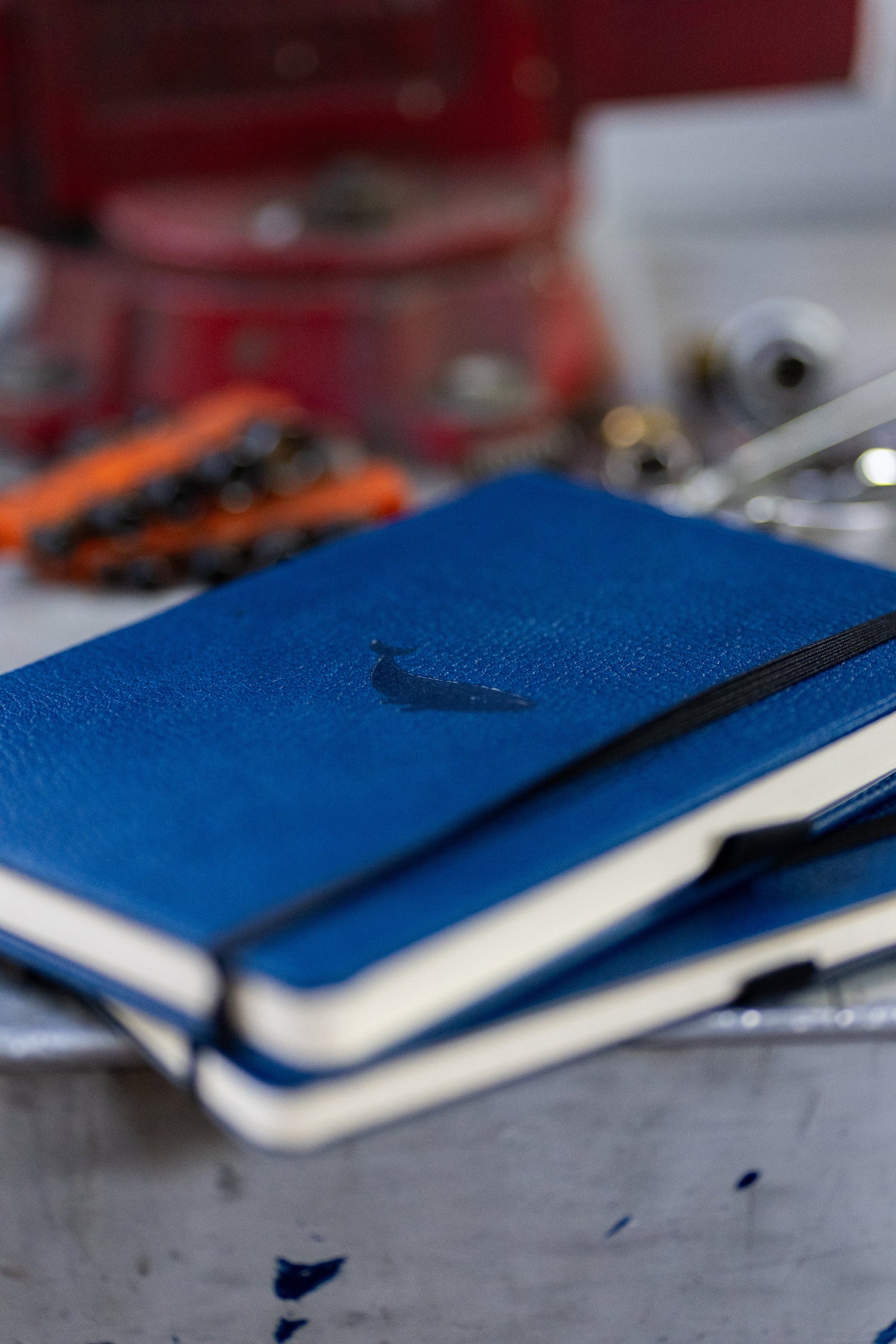
Last updated: July 2026 | A practical guide to storing notebooks, preserving journals, protecting handwritten notes, organizing completed notebooks, and keeping memories safe with Dingbats* notebooks
A finished notebook is more than a stack of used pages.
It is a record of a season: the thoughts you had. The plans you made. The lists you crossed off. The places you went. The ideas you almost forgot. The books you read. The meetings you sat through. The dreams you recorded. The memories you wanted to keep.
Some notebooks are practical. Some are personal. Some become archives without you realizing it. A work notebook may hold decisions, projects, and ideas that shaped your year. A journal may hold thoughts you could not say out loud. A travel notebook may hold the small details photos missed. A baby memory journal or wedding anniversary journal may hold keepsakes you will want to return to years later.
That is why storing notebooks properly matters. If you write in notebooks regularly, you eventually face the same question:
What do I do with them when they are full?
Do you stack them on a shelf? Store them in a box? Label them by year? Keep them somewhere safe? Use them as an archive? Protect them from moisture, sunlight, bending, or everyday damage?
At Dingbats*, we design notebooks to be used, loved, filled, and kept. Whether you use the Wildlife Collection for journaling, the Earth Collection for planning, or the Pro Collection for creative work. A notebook does not end when the final page is filled. Sometimes, that is when it becomes most valuable.
Quick Overview: How to Store and Preserve Notebooks
| What You Want to Protect | What Helps |
|---|---|
| Completed journals | Store upright or flat in a dry, stable place |
| Work notebooks | Label by year, project, or role |
| Memory journals | Keep with photos, cards, and keepsakes |
| Travel notebooks | Store by trip, year, or destination |
| Creative notebooks | Protect from moisture, pressure, and bending |
| Baby and wedding journals | Keep in a memory box or dedicated shelf |
| Old handwritten notes | Avoid damp rooms, direct sunlight, and overstuffed storage |
| Notebook archive | Create a simple labeling and indexing system |
The best storage system is not the most complicated one. It is the one that makes your notebooks easy to protect, find, and return to.
Why Completed Notebooks Are Worth Keeping
It is easy to underestimate a finished notebook.
When you are using it, it may feel ordinary. It holds daily notes, passing thoughts, lists, reminders, sketches, plans, and fragments of life. But later, those pages can become a surprisingly meaningful record of who you were and what you were doing at the time.
A notebook can preserve more than information. It can preserve context: a calendar might tell you what happened. A photo might show you where you were. A notebook can show you what you were thinking.
That is what makes handwritten pages so personal.
What Completed Notebooks Can Preserve
| Notebook Type | What It Can Hold |
|---|---|
| Journal | Thoughts, reflections, emotions, personal growth |
| Work notebook | Meetings, ideas, decisions, projects, strategy |
| Travel notebook | Places, observations, tickets, memories |
| Reading journal | Books read, quotes, reviews, reflections |
| Dream journal | Dream logs, symbols, patterns, moods |
| Baby memory journal | Milestones, firsts, keepsakes, family notes |
| Wedding anniversary journal | Yearly reflections, love notes, photos, cards |
| Creative notebook | Sketches, concepts, layouts, experiments |
A full notebook is not clutter if it still carries meaning. It is an archive.

How to Store Journals Safely
The safest place to store journals and notebooks is somewhere dry, clean, stable, and away from harsh sunlight.
Notebooks are made to be handled, but long-term storage needs a little more care. Moisture, heat, pressure, and direct light can damage covers, pages, ink, and keepsakes over time.
Best Places to Store Notebooks
| Storage Place | Why It Works |
|---|---|
| Bookshelf | Easy to access and display |
| Desk cabinet | Protected but still nearby |
| Storage box | Good for long-term archiving |
| Memory box | Ideal for personal journals and keepsakes |
| Closet shelf | Works if dry and temperature-stable |
| Archive drawer | Good for work notebooks and records |
For most people, a bookshelf or box is enough. The key is to avoid places where notebooks may become damp, crushed, faded, or forgotten.
Where Not to Keep Notebooks
Some storage places can damage notebooks over time. Avoid storing completed journals in places with moisture, extreme temperature changes, heavy pressure, or direct sunlight.
Places to Avoid
| Avoid Storing Notebooks In… | Why |
|---|---|
| Bathrooms | Too much humidity |
| Damp basements | Risk of moisture damage |
| Hot attics | Heat and temperature changes |
| Direct sunlight | Can fade covers and pages |
| Overstuffed drawers | Can bend covers and pages |
| Plastic bags for long periods | Can trap moisture |
| Near radiators | Heat can dry or warp materials |
| On the floor | More exposure to dust, spills, and damage |
If you would not store photos, letters, or important documents there, it is probably not the best place for your notebooks either.
How to Protect Notebooks from Moisture
Moisture is one of the biggest risks for stored notebooks. It can cause pages to warp, covers to change texture, ink to blur, or papers to feel uneven. Even small amounts of humidity over time can affect how a notebook ages.
Moisture Protection Tips
| Tip | Why It Helps |
|---|---|
| Store notebooks in a dry room | Prevents dampness and page warping |
| Keep them off the floor | Protects from spills and humidity |
| Avoid sealed plastic if moisture is present | Prevents trapped condensation |
| Use a breathable storage box | Helps keep air moving |
| Check stored notebooks occasionally | Catches problems early |
| Keep away from bathrooms or laundry rooms | Avoids regular humidity |
If you live in a humid climate, check your stored notebooks every few months. A quick look can help you notice changes before they become permanent.
How to Protect Notebooks from Sunlight and Fading
Sunlight can be beautiful on a desk, but it is not ideal for long-term notebook storage. Direct sunlight can fade covers, weaken materials, and change the appearance of pages over time. If you keep notebooks on an open shelf, choose a place away from constant strong light.
Sunlight Protection Tips
| Tip | Why It Helps |
|---|---|
| Store away from direct windows | Reduces fading |
| Use a shaded shelf | Protects covers and pages |
| Rotate display notebooks | Prevents one notebook from fading more than others |
| Keep memory journals boxed | Adds extra protection |
| Avoid leaving notebooks in cars | Heat and sunlight can damage them |
Your notebooks can still be visible and beautiful. Just give them a spot where they are not sitting in strong sunlight every day.
How to Protect Notebooks from Bending and Pressure
Notebooks can bend, warp, or become misshapen if stored under too much pressure. This often happens when notebooks are pushed into crowded drawers, stacked unevenly, or stored under heavy objects.
How to Avoid Bending
| Storage Method | Best Practice |
|---|---|
| Upright on shelf | Keep notebooks supported like books |
| Flat in a box | Stack evenly, largest at bottom |
| In a drawer | Avoid overpacking |
| In a bag | Remove when not in use for long periods |
| With keepsakes | Avoid bulky objects pressing into pages |
Hardcover notebooks usually handle shelf storage well because they have more structure. Softcover notebooks may benefit from being stored flat or upright with enough support to prevent bending.
The goal is simple: Do not let the notebook carry more weight than it needs to.

Should You Store Notebooks Upright or Flat?
Both can work.
The best choice depends on the notebook format, cover type, size, and how much space you have.
Upright vs Flat Storage
| Storage Style | Best For |
|---|---|
| Upright like books | Hardcover notebooks, easy access, display |
| Flat stacking | Softcover notebooks, large formats, storage boxes |
| Box storage | Long-term archiving and memory journals |
| Drawer storage | Work notebooks and active references |
| Memory box | Guided journals, keepsakes, personal archives |
If storing notebooks upright, avoid leaning them too much. A strongly tilted notebook can slowly bend or curve over time.
If storing notebooks flat, avoid stacking too many heavy items on top.

How to Organize Completed Notebooks
Once you have more than a few completed notebooks, organization becomes helpful.
You do not need a perfect archive. You only need enough structure to find what you want later.
Ways to Organize Old Notebooks
| Method | Best For |
|---|---|
| By year | Journals, planners, work notebooks |
| By topic | Travel, reading, work, dreams, ideas |
| By collection | Wildlife, Earth, Pro, Guided Journals |
| By purpose | Personal, professional, creative, memory |
| By project | Work launches, collaborations, campaigns |
| By life season | University, new job, travel year, family memories |
The easiest system is usually chronological.
For example:
2024 Journal
2025 Work Notes
2026 Reading Journal
Summer 2026 Travel Notes
A simple label can make a notebook much easier to return to later.
Should You Label Your Notebooks?
Yes, especially if you plan to keep them. A label helps future you understand what the notebook contains without having to flip through every page. You can label the inside cover, first page, spine, or a small removable tag.
Useful Notebook Labels
| Label Type | Example |
|---|---|
| Year | 2026 |
| Date range | Jan–June 2026 |
| Purpose | Work Notes |
| Project | Fuji Launch |
| Theme | Reading Journal |
| Life season | Summer Travel |
| Collection | Wildlife A5 Dotted |
| Volume number | Journal Vol. 3 |
For personal journals, a simple first-page label may feel better than an outside label.
For work notebooks, a visible spine or cover label may be more practical.
Simple First Page Label
Notebook: Work Notes
Dates: July–December 2026
Main topics: Campaigns, Amazon, partnerships, product launches
Return to this for: Meeting notes, decisions, ideas, follow-ups
This small habit can make a finished notebook much more useful later.
How to Create a Notebook Archive
A notebook archive sounds formal, but it can be very simple. It is just a place where your completed notebooks live.
That place could be:
- one bookshelf
- one drawer
- one storage box
- one closet shelf
- one memory chest
- one labeled archive box per year
The archive does not need to be big. It just needs to be intentional.
Simple Notebook Archive System
| Step | What to Do |
|---|---|
| 1 | Gather completed notebooks |
| 2 | Sort by year or purpose |
| 3 | Label each notebook |
| 4 | Choose one storage place |
| 5 | Keep personal and work notebooks separate if needed |
| 6 | Review once or twice a year |
This helps prevent notebooks from becoming scattered across desks, drawers, bags, and shelves. A notebook archive gives your writing a home.
How to Store Work Notebooks
Work notebooks can be surprisingly valuable.
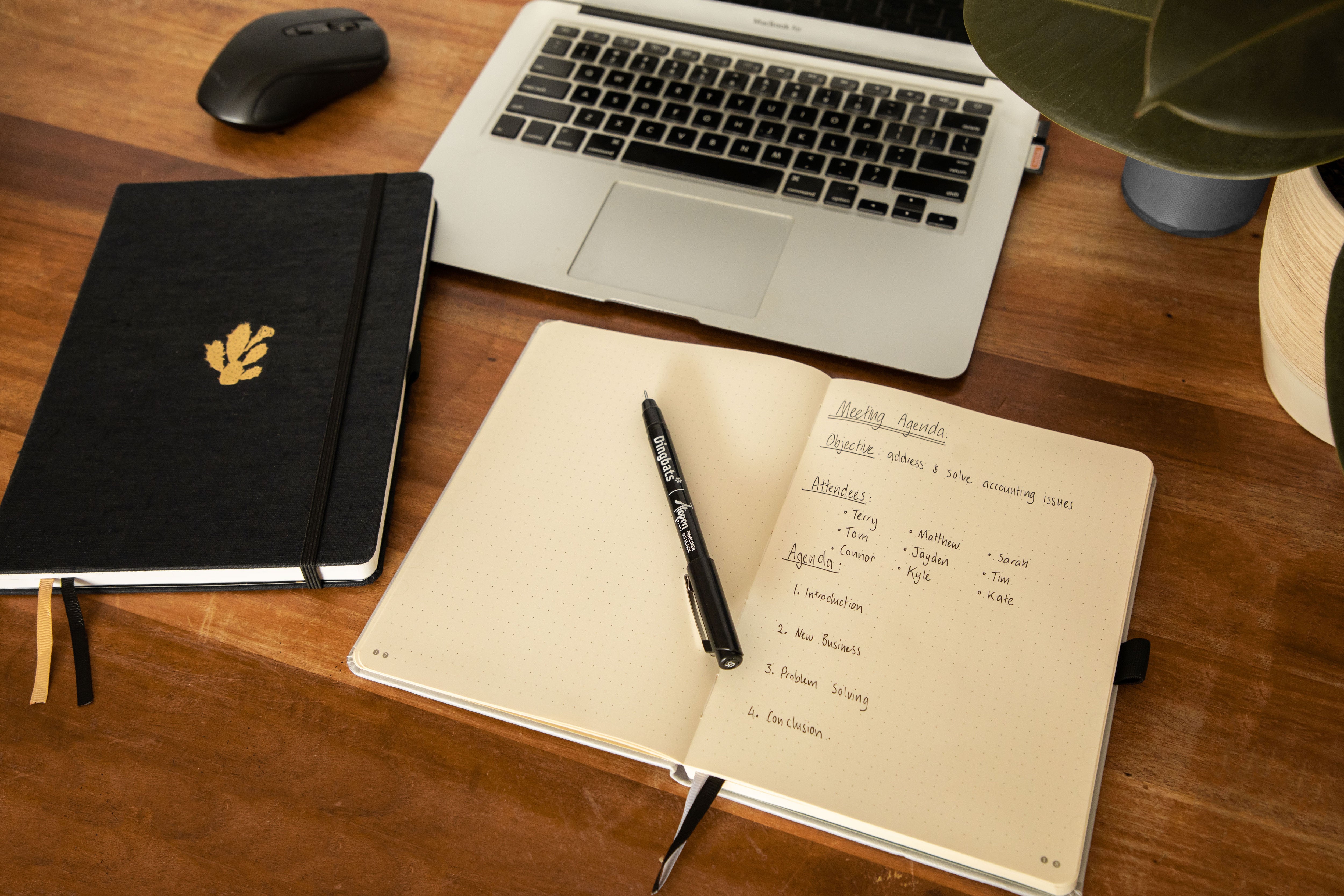
They may include meeting notes, project details, decisions, launch plans, client conversations, ideas, follow-ups, product notes, and strategies. Even when a notebook is full, you may need to reference it later.
Work Notebook Storage Tips
| Tip | Why It Helps |
|---|---|
| Label by date range | Makes it easier to find old notes |
| Add project names | Helps with reference |
| Mark important pages | Speeds up review |
| Keep recent notebooks nearby | Useful for current work |
| Archive older ones separately | Reduces desk clutter |
| Separate confidential notes | Protects sensitive information |
Work Notebook Label Example
Work Notebook Vol. 4
Dates: March–July 2026
Includes: Amazon notes, B2B inquiries, blog planning, product launch ideas
Important pages: 12, 34, 57, 88
This kind of label makes a full work notebook much easier to use as a reference.
How to Store Personal Journals
Personal journals may need a different kind of storage.
They can be private, emotional, reflective, and meaningful. They may not be something you want displayed openly on a shelf.
Choose a storage place that feels safe and respectful.
Personal Journal Storage Ideas
| Storage Option | Best For |
|---|---|
| Closed box | Privacy and protection |
| Closet shelf | Easy access but discreet |
| Bedside drawer | Recent journals |
| Bookshelf | Displaying completed volumes |
| Memory chest | Long-term personal archive |
| Labeled year boxes | Organizing many journals |
You can also decide which journals you want to keep accessible and which ones you want to store more privately.
Not every notebook needs to be treated the same way.

How to Store Memory Journals and Keepsakes
Memory journals deserve extra care because they often contain more than writing.
They may include photos, cards, notes, tickets, envelopes, stickers, baby keepsakes, anniversary letters, or small paper memories.
The Dingbats* Wildlife Notebooks are especially suited to memory keeping because they allow a free space to express yourself without a defined structure.
How to Store Travel Notebooks
Travel notebooks are special because they often hold both writing and physical pieces of a trip.
Tickets, maps, museum cards, receipts, postcards, pressed flowers, hotel notes, and sketches can all become part of the notebook.
Travel Notebook Storage Ideas
| Method | Best For |
|---|---|
| By destination | Italy 2026, Japan 2027, Scotland Road Trip |
| By year | 2026 Travel Notes |
| With photo albums | Keeps visual and written memories together |
| In a travel box | Good for tickets, maps, and notebooks |
| On a shelf | Easy to revisit and display |
Before storing a travel notebook, remove anything that is too bulky, damp, dirty, or likely to damage the pages. Flat paper keepsakes are usually best.
How to Store Creative Notebooks
Creative notebooks may include sketches, layouts, thumbnails, calligraphy, brush pen work, marker tests, collage, light washes, moodboards, and unfinished concepts.
The Dingbats* Pro Collection, with its 160gsm mixed media paper, is made for creative work, but storage still matters.
Creative Notebook Storage Tips
| Tip | Why It Helps |
|---|---|
| Let wet media dry fully before closing | Prevents transfer |
| Store flat if pages are layered | Reduces pressure marks |
| Avoid overstuffing with collage | Keeps binding comfortable |
| Use page markers for important concepts | Makes ideas easier to find |
| Label by project or medium | Helps future reference |
| Keep away from moisture | Protects paper and materials |
Creative notebooks are often idea archives. Even unfinished pages can be useful later.
A sketch that did not work in one season may become the beginning of something new in another.

How to Protect Pages with Keepsakes Inside
Keepsakes can make notebooks more meaningful, but they can also affect storage.
Thick items can create pressure marks. Glossy items can transfer. Some materials may age differently than the paper around them.
Keepsake Storage Tips
| Keepsake | Best Practice |
|---|---|
| Photos | Keep flat and avoid overstuffing |
| Tickets | Store in end pocket or attach lightly |
| Cards | Keep only meaningful ones |
| Receipts | Avoid pressing against important pages |
| Flowers | Make sure fully dried before storing |
| Envelopes | Keep flat and do not overfill |
| Stickers | Avoid covering important text |
| Notes | Store in pockets or attach carefully |
When in doubt, store bulky keepsakes in a separate memory box alongside the notebook.
The notebook can hold the story. The box can hold the objects.
How to Organize Notebooks by Life Season
Sometimes organizing by date is not enough.
A notebook may represent a season of life more than a calendar year.
Life Season Archive Ideas
| Life Season | Notebook Label Ideas |
|---|---|
| New job | First Year at Work |
| Big project | Product Launch Notes |
| Travel season | Summer Trips 2026 |
| New baby | Baby’s First Year |
| Wedding years | Anniversary Journal |
| Creative reset | Sketchbook Vol. 1 |
| Reading year | Books Read in 2026 |
| Personal growth | Journal Vol. 5 |
This kind of labeling makes notebooks feel like chapters. Each one tells part of a larger story.
Should You Keep Every Notebook?
Not necessarily.
Some notebooks are meaningful. Others are temporary. Some are full of important thoughts, while others are mostly lists, rough notes, and everyday clutter.
You can decide what is worth keeping.
Keep the Notebook If…
| Keep It If It Contains… | Why |
|---|---|
| Personal reflections | Emotional or personal value |
| Major work decisions | Useful reference |
| Creative ideas | Future inspiration |
| Travel memories | Memory value |
| Reading notes | Long-term reference |
| Family memories | Keepsake value |
| Important projects | Professional record |
| A meaningful life season | Personal archive |
You May Not Need to Keep It If…
| Let It Go If It Contains… | Why |
|---|---|
| Old grocery lists | No long-term value |
| Random scratch notes | Not useful later |
| Duplicate information | Already saved elsewhere |
| Outdated admin | No longer needed |
| Practice pages only | Unless personally meaningful |
Keeping notebooks should feel intentional, not overwhelming.
Notebook Care Tips Before Storage
Before putting a notebook away, take a few minutes to prepare it.
Before You Store a Finished Notebook
| Step | What to Do |
|---|---|
| 1 | Check for loose papers |
| 2 | Remove anything bulky or damp |
| 3 | Add a date range label |
| 4 | Mark important pages |
| 5 | Close it gently and store flat or upright |
| 6 | Place it in a dry, shaded location |
This small process turns a finished notebook into an organized archive. It also makes the notebook easier to revisit later.
Dingbats* Notebook Care Guide
Dingbats* notebooks are made to be used and kept.
To help them age well, store them with the same care you would give books, letters, photographs, or other meaningful paper items.
Dingbats* Storage Tips
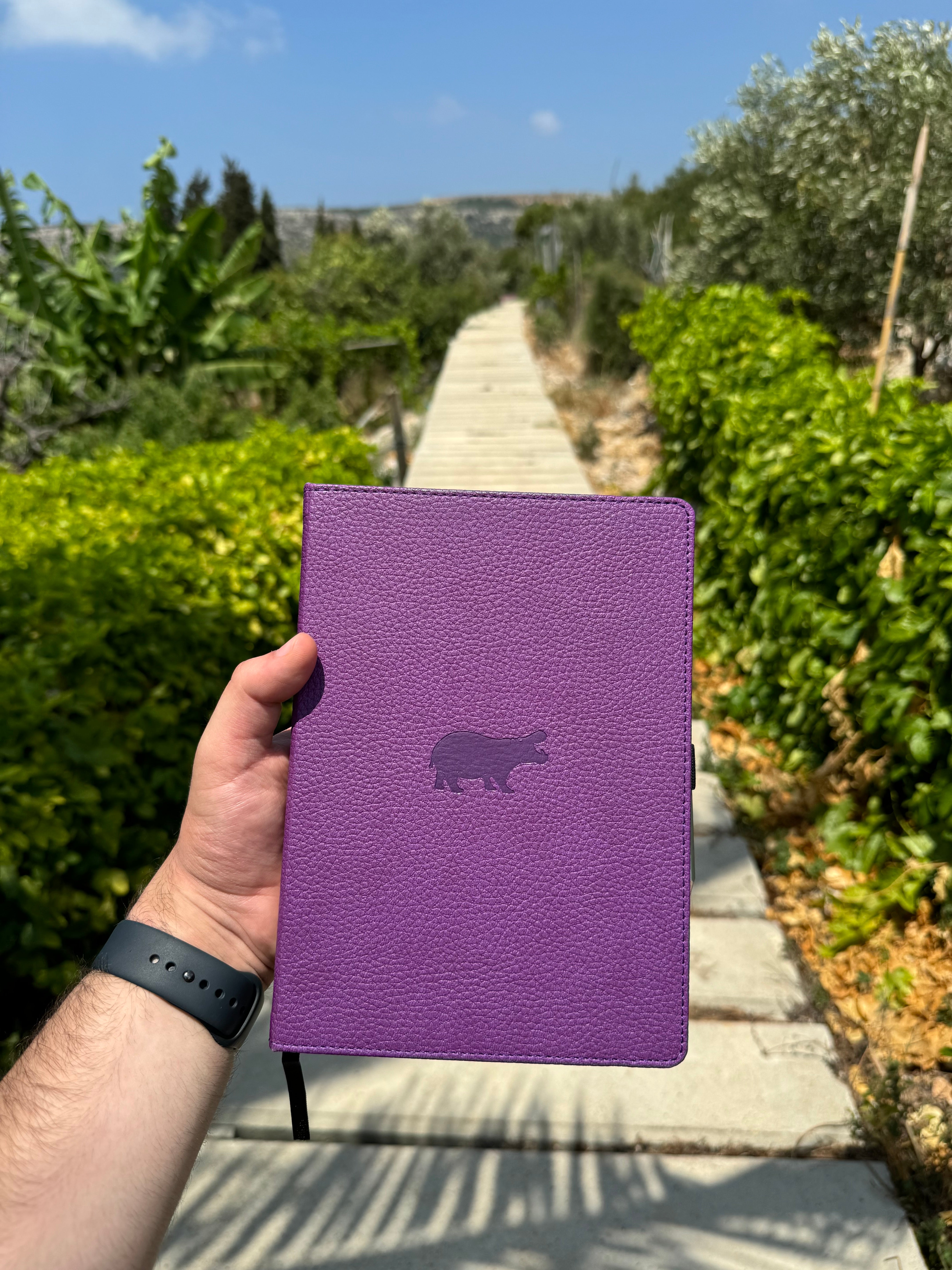
- Wildlife Hardcover: Store upright on a shelf or flat in an archive box
- Wildlife Softcover: Store flat or upright with support
- Earth Collection: Label by date, project, or planning purpose
- Pro Collection: Make sure creative media is dry before closing
The more meaningful the notebook, the more intentional the storage should be.

Frequently Asked Questions
How should I store old journals?
Store old journals in a dry, clean, stable place away from direct sunlight, moisture, and heavy pressure. A bookshelf, archive box, closet shelf, or memory box can all work well.
Is it better to store notebooks upright or flat?
Both can work. Hardcover notebooks often store well upright like books, while softcover or larger notebooks may do better flat. Avoid leaning notebooks too much or stacking too many heavy items on top.
How do I protect notebooks from moisture?
Keep notebooks away from bathrooms, damp basements, laundry rooms, and floors. Store them in a dry room and check them occasionally if you live in a humid climate.
How do I organize completed notebooks?
Organize completed notebooks by year, topic, purpose, project, or life season. Add a simple label with the date range and main contents so you can find things later.
Should I keep all my old notebooks?
You do not have to keep every notebook. Keep the ones with personal, creative, professional, or memory value. Let go of notebooks that only contain outdated lists, duplicate notes, or temporary information.
How do I store memory journals?
Store memory journals in a safe, dry place, ideally with related keepsakes. Baby memory journals, wedding anniversary journals, travel notebooks, and reading journals can be kept in memory boxes, on shelves, or alongside photos and cards.
Can I store keepsakes inside a notebook?
Yes, but avoid overfilling pockets or pressing bulky items between pages. Flat keepsakes like cards, tickets, notes, and photos usually work best. Larger keepsakes can be stored separately in a memory box.
Our Verdict
A notebook does not stop mattering when it is full. Sometimes, that is when it becomes most meaningful.
Dingbats* notebooks are made to be used, filled, and kept. Whether it is a Wildlife journal, Earth planner, or the Pro creative notebook, each one can become part of your personal archive.
A finished notebook is not just something you used. It is something you lived through. Give it a place to stay.

Leave a comment
All comments are moderated before being published.
This site is protected by hCaptcha and the hCaptcha Privacy Policy and Terms of Service apply.