
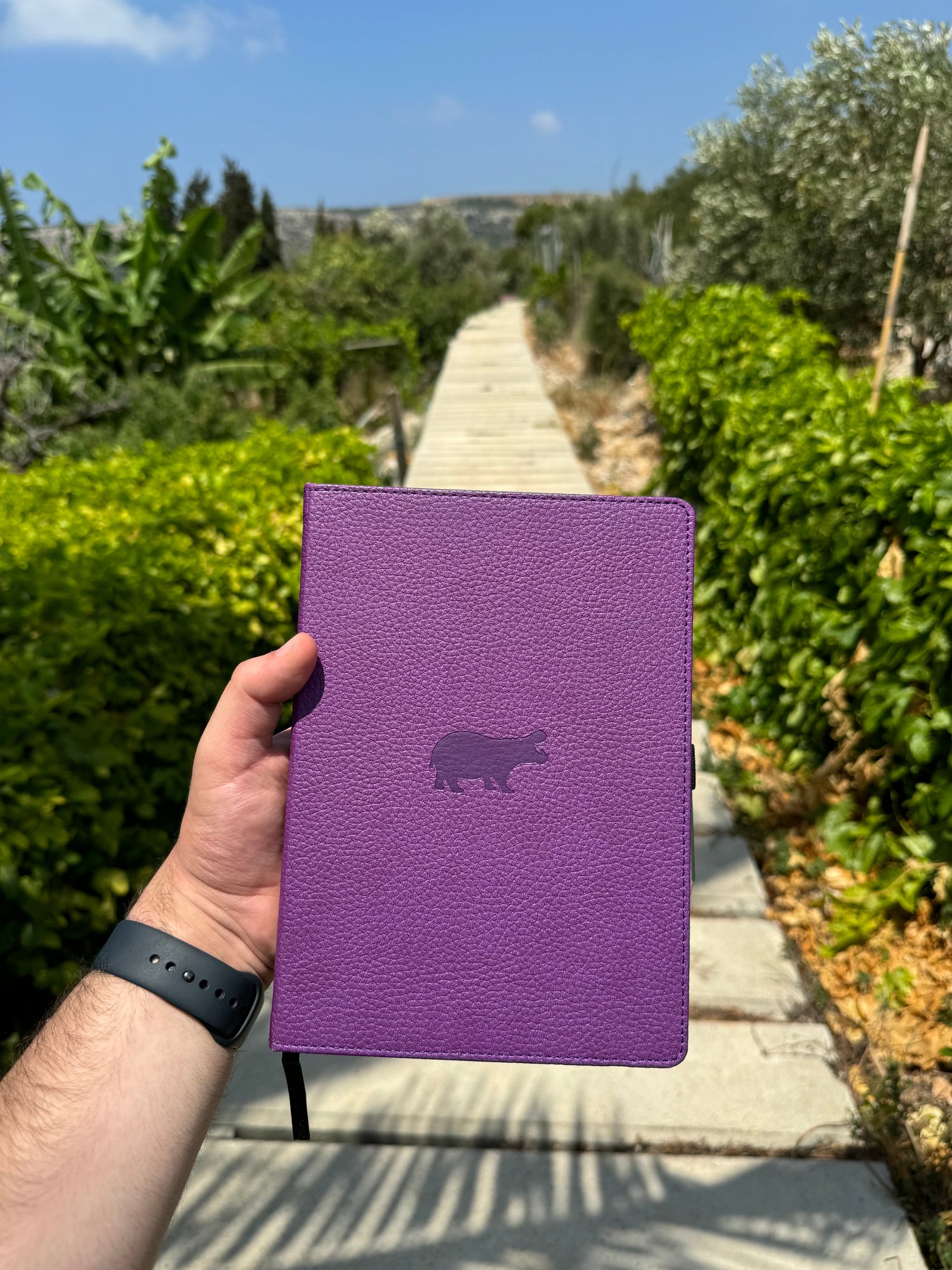
Last updated: July 2026 | A practical guide to left-handed journaling, comfortable writing setups, smudge-free tips, notebook choices, and Dingbats* notebooks for left-handed writers
Being left-handed changes the way writing feels. The page sits differently. The hand moves across fresh ink. The wrist may curl. The pen angle can feel awkward. The notebook spine can get in the way. And sometimes, the side of your hand ends up carrying half the sentence with it.
For left-handed writers, journaling is not only about what goes on the page. It is also about comfort.
A good writing setup can make the difference between a page that feels frustrating and a page that feels calm, smooth, and enjoyable. The right notebook, pen, page angle, paper texture, and writing rhythm can help reduce smudging, ease hand tension, and make daily writing feel more natural.
At Dingbats*, we believe everyone deserves a notebook that feels good to use. Whether you are journaling, planning, taking notes, sketching, or writing on the go, your notebook should support the way your hand actually moves.
For left-handed writers, that means choosing paper that feels smooth, a format that opens comfortably, and a writing style that does not fight against the page.
Quick Overview: Left-Handed Journaling Tips
| Left-Handed Writing Challenge | What Helps |
|---|---|
| Ink smudging | Faster-drying pens, lighter pressure, careful page angle |
| Hand dragging across the page | Adjust notebook position |
| Wrist discomfort | Relax grip and avoid over-hooking |
| Notebook spine getting in the way | Choose a comfortable format and page layout |
| Uneven handwriting | Slow rhythm and smoother paper |
| Messy journal pages | Leave space, use headings, and avoid rushing |
| Pen skipping or dragging | Try smoother paper and consistent ink flow |
| Creative writing or lettering | Use heavier paper and test tools first |
Why Left-Handed Writing Feels Different
Most writing systems move from left to right. That means right-handed writers naturally move away from the words they have just written, while left-handed writers often move across them. This can lead to smudging, hand tension, awkward wrist positions, or a feeling that the page is working against you.
This does not mean left-handed writing has to be uncomfortable. It simply means the setup matters more. Small changes can make a big difference:
| Adjustment | Why It Helps |
| Tilting the notebook | Gives your hand a better path across the page |
| Choosing smoother paper | Helps the pen move with less resistance |
| Using the right pen | Reduces smudging and skipping |
| Writing with lighter pressure | Prevents hand fatigue |
| Leaving more space | Makes pages feel cleaner |
| Testing ink drying time | Helps avoid smears |
| Choosing the right notebook format | Makes long writing sessions easier |
Also, choosing a lay-flat notebooks (just like Dingbats* Notebooks) is the ultimate sweet spot for comfortable writing.

The Smudging Problem
Smudging is one of the most common frustrations for left-handed writers.
You write a sentence, move your hand across the line, and suddenly the ink has blurred. Sometimes the page smears. Sometimes your hand gets stained. Sometimes the words become harder to read.
Smudging usually depends on three things:
| Factor | Why It Matters |
| Ink drying time | Some inks stay wet longer |
| Hand position | Your hand may pass directly over fresh writing |
| Paper surface | Some papers absorb ink differently |
The solution is not always to stop using your favorite pens. Sometimes it is about adjusting how you write.
Try writing with a slightly lighter hand, tilting the notebook, leaving more space between lines, or using pens that dry faster. If you love fountain pens, gel pens, or markers, test them on the back page of your notebook before committing to a long entry. A small pen test can save an entire page.
Page Angle: The Small Change That Helps Most
One of the simplest left-handed journaling tips is to rotate the notebook. Many left-handed writers benefit from angling the notebook slightly clockwise, so the hand moves more naturally beneath or beside the writing instead of directly across it.
There is no perfect angle for everyone. Try a few positions:
| Notebook Position | What It May Help With |
| Straight | Good for short notes |
| Slight clockwise tilt | Can reduce wrist strain |
| Stronger clockwise tilt | May help avoid smudging |
| Notebook moved to the left | Gives the arm more space |
| Page lower on the desk | May relax the shoulder |
The right position should make writing feel easier, not more controlled. If your wrist feels tense, adjust the page before adjusting your handwriting. With the lay-flat feature that Dingbats* has in their notebooks, this may not be an issue.
Grip and Pressure for Left-Handed Writers
A tight grip can make writing harder. Many left-handed writers press firmly to control the pen, especially if the pen angle feels awkward. But heavy pressure can lead to darker marks, slower movement, tired fingers, and more hand tension.
Try loosening your grip slightly. The pen should feel guided, not squeezed.
Pressure Check
Write the same sentence three times:
This page should feel easy to write on.
First, write normally. Second, write with very light pressure. Third, write somewhere in between.
Notice which version feels most comfortable and which one looks clearest. For many people, the middle version is best.
Choosing the Right Pen
Left-handed writers often need to think more carefully about pens.
A pen that feels perfect for someone else may smudge too easily for you. A very wet ink may look beautiful but take too long to dry. A scratchy pen may make you press harder. A pen with poor flow may make handwriting feel uneven.
What to Look For in a Pen
| Pen Feature | Why It Helps |
| Comfortable grip | Reduces hand tension |
| Consistent ink flow | Makes handwriting smoother |
| Faster drying ink | Helps reduce smudging |
| Smooth tip | Prevents dragging |
| Not too wet | Reduces ink sitting on the page |
| Works with your paper | Improves the whole writing experience |
Before using a pen for a full journal entry, test it. Write a few lines, wait a few seconds, then gently pass the side of your hand over the writing. If it smudges badly, it may not be the best choice for long left-handed writing sessions.

Paper Matters More Than You Think
For left-handed writers, paper can change the whole writing experience.
Paper that feels too rough can make the pen drag. Paper that does not handle ink well can cause feathering, smudging, or bleed-through. Paper that feels smooth can make writing more comfortable and controlled.
Dingbats* notebooks are designed with writing comfort in mind.
The Wildlife Collection and Earth Collection use smooth 100gsm fountain-pen-friendly paper, making them a strong choice for journaling, planning, notes, and everyday writing. The paper feels smooth under the pen, which can help reduce friction and make handwriting feel easier.
For more creative tools, the Pro Collection uses 160gsm mixed media paper, making it better suited for brush pens, markers, calligraphy, sketches, light washes, and visual journaling.
Hardcover or Softcover for Left-Handed Journaling?
The best format depends on how you write. A hardcover notebook gives more structure and support, which can feel helpful when journaling at a desk or writing for longer sessions. A softcover notebook feels lighter and more flexible, which can be easier for travel, everyday carry, and casual notes.
For left-handed writers, the most important thing is comfort. Try to notice whether the cover helps the page stay stable or whether flexibility makes writing easier for your hand.

Left-Handed Journaling Setup
A good setup makes journaling feel easier before you even start writing.
Simple Setup
| Step | What to Do |
| 1 | Place your notebook slightly to the left |
| 2 | Rotate it clockwise until your wrist feels relaxed |
| 3 | Choose a pen that dries quickly enough for your hand |
| 4 | Write with lighter pressure |
| 5 | Leave a little more space between lines |
| 6 | Pause before turning the page or closing the notebook |
These changes may sound small, but together they make writing feel less forced. The page should support your hand, not fight it.
Left-Handed Journal Page Ideas
Left-handed journaling does not need to be limited to long paragraphs.
If smudging or hand fatigue makes long writing sessions difficult, try page styles that give your hand more space.
How to Keep Pages Clean
Left-handed writers often worry about pages looking messy because of smudging, uneven spacing, or hand drag.
A few layout choices can help.
Clean Page Tips
| Tip | Why It Helps |
| Use headings | Gives the page structure |
| Leave margins | Keeps the page from feeling crowded |
| Write in shorter blocks | Reduces hand drag |
| Skip a line between sections | Gives ink more time to dry |
| Use symbols or bullets | Keeps notes clear |
| Test pens first | Avoids surprise smudging |
| Avoid rushing | Gives ink and handwriting more control |
A clean page is not about perfection. It is about making the journal easier to read and more pleasant to return to.
Best Dingbats* Notebooks for Left-Handed Writers
Different left-handed writers need different things. Some want a smooth everyday journal. Some want structure. Some want a portable notebook. Some want heavier paper for creative tools.
Dingbats* Recommendations
| Need | Best Dingbats* Notebook |
| Everyday journaling | Wildlife Collection |
| Work notes and meetings | Wildlife Hardcover or Earth Collection |
| Planning and trackers | Earth Collection |
| Travel journaling | Wildlife Softcover |
| Creative lettering | Pro Collection |
| Brush pens and markers | Pro Collection |
| Guided memory keeping | Guided Journals |
| Gift for a left-handed writer | Wildlife Hardcover |
The best notebook for a left-handed writer is not only about the cover or ruling.
It is about how comfortably the page lets your hand move.
Left-Handed Writing Mistakes to Avoid
These are common habits that can make writing harder than it needs to be.
| Mistake | Better Approach |
| Pressing too hard | Use lighter pressure |
| Keeping the notebook completely straight | Try a slight clockwise tilt |
| Using very wet ink without testing | Test drying time first |
| Writing too fast | Slow down slightly |
| Crowding the page | Leave more spacing |
| Ignoring hand comfort | Adjust position early |
| Choosing paper only by appearance | Consider smoothness and pen feel |
| Forcing a handwriting style | Work with your natural movement |
Left-handed writing is not wrong or awkward. It just needs a setup that respects how your hand moves across the page.
Left-Handed Journaling Prompts
Use these prompts to make your journal feel personal and easy to start.
| Prompt | Notes |
| What felt easy today? | |
| What do I want to remember from this week? | |
| What small thing made my day better? | |
| What am I learning about myself? | |
| What do I want to slow down for? | |
| What is one thought I want to keep? | |
| What did I notice that I usually miss? | |
| What do I need more space for? |
These prompts work well because they do not require a perfect page. They simply invite you to begin.
Frequently Asked Questions
What is the best notebook for left-handed writers?
The best notebook for left-handed writers is one that feels smooth, comfortable, and easy to position. Dingbats* Wildlife and Earth notebooks are strong choices for everyday writing because they use smooth 100gsm fountain-pen-friendly paper. The Pro Collection is better for brush pens, markers, lettering, and creative tools.
How can left-handed writers stop smudging ink?
Try using faster-drying pens, writing with lighter pressure, rotating the notebook slightly clockwise, leaving more space between lines, and testing pens before writing a full page.
Is lined or dotted paper better for left-handed writers?
Both can work. Lined paper helps with structure and handwriting consistency. Dotted paper gives guidance while feeling more flexible. The best choice depends on whether you prefer clear lines or a more open layout.
Are hardcover notebooks good for left-handed people?
Yes. Hardcover notebooks can be comfortable for left-handed writers because they provide a stable writing surface, especially since the Dingbats* notebooks lay-flat. Softcover notebooks may feel better for travel or flexible everyday carry.
What pen is best for left-handed journaling?
A comfortable pen with consistent ink flow and faster drying time is usually best. Left-handed writers should test pens on their notebook paper to see how quickly the ink dries and whether it smudges.
Can left-handed people use fountain pens?
Yes, many left-handed writers use fountain pens. The key is to test nibs, ink drying time, paper, and writing angle to find a combination that feels comfortable and reduces smudging.
Our Verdict
Left-handed journaling should not feel like working against the page.
With the right setup, writing can feel smoother, cleaner, and more comfortable. A small notebook angle change, a better pen, lighter pressure, more spacing, and smoother paper can make a noticeable difference. Dingbats* notebooks are made for people who love writing by hand, including left-handed writers who need the page to feel comfortable and reliable.

Leave a comment
All comments are moderated before being published.
This site is protected by hCaptcha and the hCaptcha Privacy Policy and Terms of Service apply.