
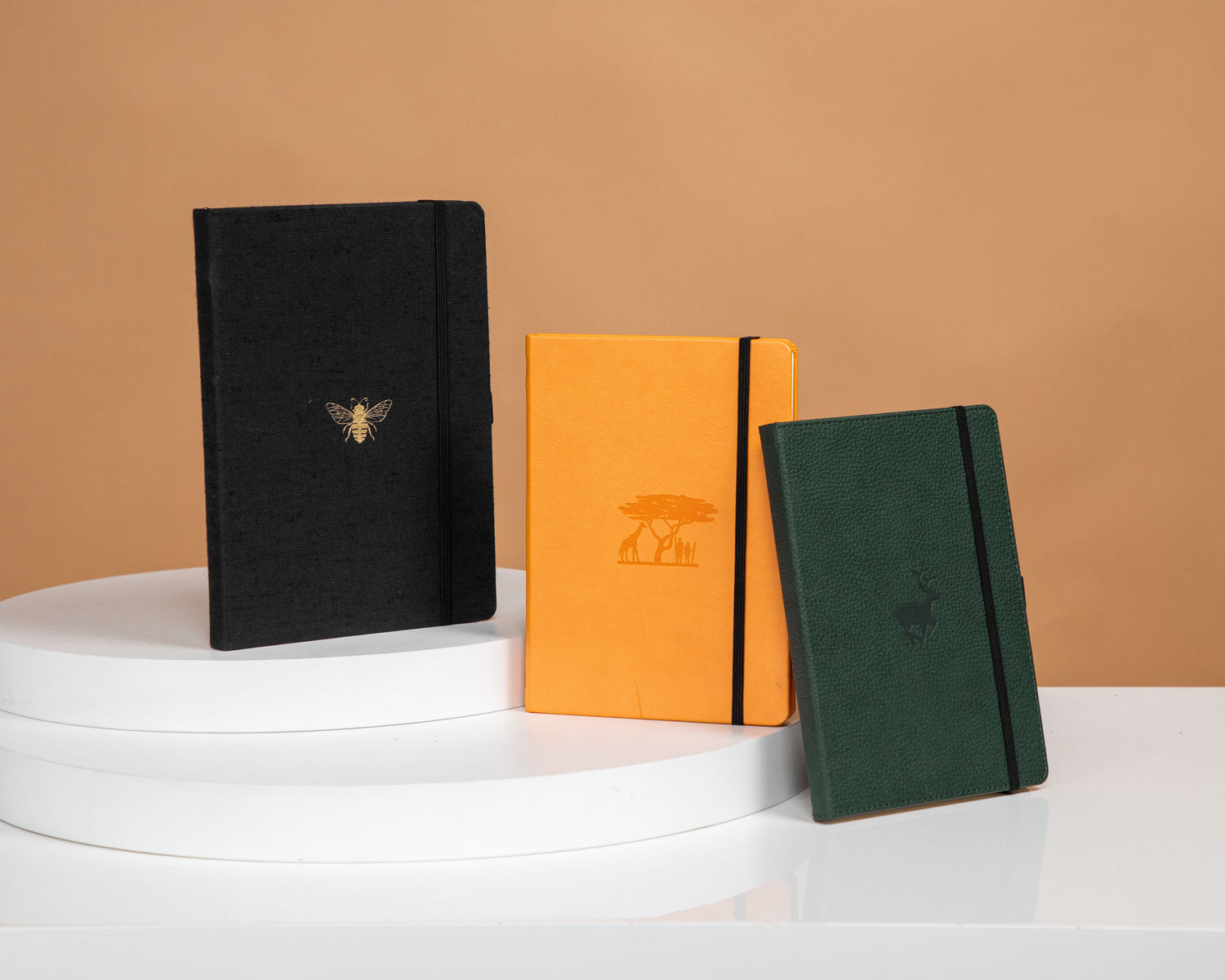
Last updated: June 2026 | A practical guide to notebook sizes, including A5, A5+, B5, A6, A6+ Reporter, A4+, and how to choose the best notebook size for journaling, planning, work, study, travel, and creative projects
Choosing a notebook sounds simple until you start comparing sizes.
A5. A5+. A6. B5. A4+. Reporter format. Pocket size. Desk size. Travel size. Creative size.
Suddenly, the question is not just which notebook do I like?
It becomes:
Which notebook size will I actually use?
That is the part that matters most. The right notebook size can change how often you reach for it, how comfortably you write in it, how easily it fits into your bag, and whether it feels right for the kind of pages you want to create.
A notebook that is too small may feel limiting.
A notebook that is too large may stay on your desk and never leave the house.
A notebook that is just right becomes part of your day.
At Dingbats*, we design notebooks in different sizes because people use notebooks in different ways. Some need a compact notebook for thoughts on the go. Some want an everyday journal that feels portable but spacious. Some need room for planning, project notes, or creative work. Others want a larger format for sketching, mixed media, or visual thinking.
This guide explains the most common notebook sizes, what they are best for, and how to choose the right Dingbats* notebook for the way you write, plan, think, and create.
Quick Notebook Size Comparison
| Size | Approx. Dimensions | Best For | Dingbats* Fit |
|---|---|---|---|
| A6 | 9.5 × 14.5 cm | Pocket notes, quick lists, travel, everyday carry | Wildlife Collection |
| A6+ Reporter | 15.5 × 11 cm | On-the-go notes, interviews, field notes, lists | Wildlife Collection |
| A5+ | 15.5 × 21.5 cm | Journaling, notes, planning, everyday writing | Wildlife & Earth Collections |
| B5 | 17.6 × 24.8 cm | Creative work, larger notes, sketching, mixed media | Pro Collection |
| A4+ | 21.5 × 30 cm | Large creative pages, desk work, visual planning | Wildlife Collection |
Dingbats* notebook sizes vary by collection, but these are the core formats you will commonly see across the range.
Why Notebook Size Matters More Than You Think
Notebook size affects more than the way a notebook looks.
It changes how you use it.
A smaller notebook feels easy to carry, but you may write less per page. A larger notebook gives you space, but it may not feel as convenient for everyday use. A medium notebook is often the safest choice because it balances portability and writing room.
The right size depends on the way you use your notebook.
Do you write long journal entries?
Do you plan your week?
Do you take notes in meetings or classes?
Do you sketch?
Do you use fountain pens?
Do you travel with your notebook?
Do you want something for your desk or your bag?
A notebook should match your real life, not just your ideal routine.
A6 Notebook: Small, Portable, and Easy to Carry
An A6 notebook is one of the most portable notebook sizes.
It is small enough to carry in many bags and easy to use for quick notes, lists, reminders, travel observations, or thoughts you want to capture before they disappear.
At Dingbats*, A6 is listed at approximately 9.5 × 14.5 cm.
Best Uses for A6 Notebooks
| Use | Why A6 Works |
| Quick notes | Easy to open and write in quickly |
| Travel notes | Small enough to carry while exploring |
| Lists | Great for shopping lists, packing lists, reminders |
| Daily thoughts | Useful for short reflections |
| Field notes | Portable for observations outside |
| Everyday carry | Less bulky than larger notebooks |
An A6 notebook is best if you want something light, compact, and low-pressure.
It is not the best choice if you write long pages every day or need large layouts, but it is excellent for capturing small things as they happen.
Choose A6 if…
You want a notebook you can carry often, use casually, and open without feeling like you need to write a full page.

A6+ Reporter Notebook: Compact, Practical, and Great for Notes on the Go
The A6+ Reporter format is slightly different because of its shape.
At Dingbats*, the A6+ Reporter is listed at 15.5 × 11 cm. Its format makes it especially useful for quick notes, interviews, lists, field observations, and writing while moving through the day.
Best Uses for A6+ Reporter Notebooks
| Use | Why A6+ Reporter Works |
| Interviews | Easy to hold and write in |
| Field notes | Practical for observations outside |
| Work notes | Useful for quick points and reminders |
| Travel logs | Compact but more open than standard A6 |
| Shopping lists | Easy to carry and reference |
| On-the-go ideas | Good for fast capture |
The reporter format has a different feel from a standard journal. It is more practical, quick, and mobile.
Choose A6+ Reporter if…
You want a notebook that feels functional, portable, and easy to use while standing, walking, working, travelling, or taking quick notes.

A5+ Notebook: The Everyday Notebook Size
If you are unsure which notebook size to choose, A5+ is often the safest and most versatile option.
It is large enough for journaling, planning, meeting notes, class notes, lists, reflections, and daily writing, but still compact enough to carry in most bags.
At Dingbats*, A5+ is listed at 15.5 × 21.5 cm.
Best Uses for A5+ Notebooks
| Use | Why A5+ Works |
| Journaling | Enough room for longer thoughts |
| Planning | Good for weekly layouts and lists |
| Work notes | Spacious without feeling too large |
| Study notes | Comfortable for structured writing |
| Bullet journal-style pages | Enough page space for trackers and layouts |
| Everyday writing | Balanced size for daily use |
| Travel journaling | More spacious than A6 but still portable |
The A5+ format is especially strong because it gives you slightly more space than standard A5 while remaining practical for everyday use.
Choose A5+ if…
You want one notebook that can do almost everything: journaling, planning, note-taking, lists, reflections, and everyday writing.

B5 Notebook: More Space for Ideas, Notes, and Creative Work
A B5 notebook is larger than A5 but smaller than A4, which makes it a strong choice for people who want more room without moving into a full desk-sized notebook.
B5 is listed at 17.6 × 24.8 cm. In the Dingbats* range, the Pro Collection is available in B5.
This size is especially useful for creative work, wider notes, sketching, planning, mind maps, moodboards, visual thinking, and mixed media pages.
Best Uses for B5 Notebooks
| Use | Why B5 Works |
| Sketching | More room for drawing and visual ideas |
| Creative journaling | Spacious pages for layouts and mixed media |
| Project notes | More horizontal space for planning |
| Mind maps | Enough room for branches and connections |
| Visual thinking | Better for diagrams and layouts |
| Study notes | More writing room per page |
| Design concepts | Useful for moodboards and idea development |
The Dingbats* Pro Collection is a strong B5 option because it uses 160gsm mixed media paper, making it ideal for sketching, collage, brush pens, markers, calligraphy, visual notes, light washes, and layered pages.
Choose B5 if…
You want more room than A5+ and plan to use your notebook for creative work, larger notes, layouts, sketches, or visual thinking.

A4+ Notebook: Big Pages for Big Ideas
An A4+ notebook gives you the most space.
At Dingbats*, A4+ is listed at 21.5 × 30 cm. This is a large format that works best when you want room to spread out.
It is not usually the most portable option, but it is excellent for desk work, project planning, large sketches, design notes, moodboards, study pages, and visual organization.
Best Uses for A4+ Notebooks
| Use | Why A4+ Works |
| Desk notes | Lots of room for writing and structure |
| Large sketches | Better surface for bigger drawings |
| Project planning | Room for timelines, diagrams, and layouts |
| Study layouts | Useful for detailed notes |
| Creative pages | Space for collage, maps, and visual planning |
| Big-picture thinking | Good for seeing everything on one page |
Choose A4+ if…
You want maximum page space and mostly use your notebook at a desk, studio, office, or study space.

A5 vs A5+: What Is the Difference?
Standard A5 is usually 14.8 × 21.0 cm. Dingbats* often uses A5+, which is slightly larger, listed at around 15.5 × 21.5 cm.
That small difference can feel more useful than it sounds.
A5+ gives you a little more room on the page while still keeping the notebook portable and familiar.
A5 vs A5+
| Size | Approx. Dimensions | Feel |
| A5 | 14.8 × 21.0 cm | Classic everyday notebook size |
| A5+ | 15.5 × 21.5 cm | Slightly more spacious, still portable |
Choose A5+ if…
You like the feel of an A5 notebook but want a little more writing space.
A5+ vs B5: Which One Should You Choose?
This is one of the most useful comparisons.
A5+ is better for everyday writing, journaling, planning, and carrying around.
A5+ vs B5
| Feature | A5+ | B5 |
| Portability | Easier to carry | Larger, more desk-friendly |
| Writing space | Good everyday space | More spacious |
| Best for | Journaling, planning, notes | Creative work, study notes, sketches |
| Bag-friendly | Yes | Depends on bag size |
| Layouts | Good | Better for larger layouts |
| Dingbats* fit | Wildlife & Earth | Pro Collection |
Choose A5+ if…
You want a notebook for daily writing, planning, journaling, and general use.
Choose B5 if…
You want more room and plan to use your notebook for creative work, visual pages, or larger notes.

A6 vs A5+: Which One Should You Choose?
The choice between A6 and A5+ comes down to portability versus space.
A6 is for quick, portable writing.
A5+ is for fuller pages and everyday use.
A6 vs A5+
| Feature | A6 | A5+ |
| Portability | Very high | Good |
| Writing space | Limited | Comfortable |
| Best for | Quick notes, lists, travel | Journaling, planning, daily notes |
| Long writing | Less ideal | Better |
| Bag-friendly | Very easy | Still easy |
| Dingbats* fit | Wildlife | Wildlife & Earth |
Choose A6 if…
You want something small for quick notes and everyday carry.
Choose A5+ if…
You want a notebook you can use for longer writing, planning, and more complete pages.
Best Notebook Size for Journaling
For journaling, A5+ is usually the best choice.
It gives enough room for full thoughts without feeling too large. You can write a short entry, a long reflection, a list, a gratitude page, or a daily recap comfortably.
The Dingbats* Wildlife Collection in A5+ is ideal for flexible journaling because it offers everyday writing space and comes in different rulings such as lined, dotted, grid, and plain, depending on availability.
Best Journaling Size
| Journaling Style | Best Size |
| Long daily entries | A5+ |
| Short reflections | A6 or A5+ |
| Prompt journaling | A5+ |
| Visual journaling | B5 (Pro Collection) |
| Travel journaling | A6, A6+ Reporter, or A5+ |
Best Notebook Size for Planning
For planning, A5+ and B5 are both strong options.
A5+ works well for weekly plans, to-do lists, goals, and habit trackers. B5 gives you more room for bigger layouts, project planning, or visual organization.
The Earth Collection is the best Dingbats* choice for structured planning because it is designed for organized pages, trackers, goals, routines, and bullet journal-style use.
Best Planning Size
| Planning Need | Best Size |
| Weekly planning | A5+ |
| Habit trackers | A5+ |
| Project planning | A5+ or B5 |
| Large visual planning | B5 or A4+ |
| Portable planning | A6+ Reporter or A5+ |
Best Notebook Size for Work and Study Notes
For work and study, the best size depends on how much you write.
A5+ is excellent for meetings, daily notes, and structured study pages. B5 is better for longer notes, diagrams, mind maps, and subjects that need more space.
Best Work and Study Size
| Use | Best Size |
| Meeting notes | A5+ |
| Class notes | A5+ or B5 |
| Mind maps | B5 or A4+ |
| Project notes | A5+ or B5 |
| Desk study notes | B5 or A4+ |
| Quick work reminders | A6 or A6+ Reporter |
If you often feel cramped on the page, move up to B5.
If you want something that travels easily between home, work, school, and cafés, A5+ is usually the better choice.

Best Notebook Size for Sketching and Creative Pages
For sketching and creative pages, size matters because visual ideas need room.
The B5 Pro Collection is especially useful because it offers more page space than A5+ and uses 160gsm mixed media paper.
Best Creative Size
| Creative Use | Best Size |
| Sketching | B5 or A4+ |
| Collage | B5 or A4+ |
| Moodboards | B5 or A4+ |
| Hand lettering | B5 |
| Visual notes | B5 |
| Mixed media | B5 Pro Collection |
| Quick doodles | A5+ or A6 |
Choose B5 if you want a balance between space and manageability. Choose A4+ if you want the largest surface for desk-based creative work.
Best Notebook Size for Travel
For travel, portability matters.
A6 is best for quick notes and compact travel writing. A6+ Reporter works well for field notes, lists, routes, and observations. A5+ is better if you want a fuller travel journal with daily entries, ticket pages, and more detailed memories.
Best Travel Size
| Travel Use | Best Size |
| Quick notes | A6 |
| Field notes | A6+ Reporter |
| Travel journal | A5+ |
| Packing lists | A6+ Reporter or A5+ |
| Sketching trips | B5 or A5+ |
| Ticket and receipt pages | A5+ or Pro Collection |
If you want one travel notebook, A5+ is the most versatile. If you want something small to carry everywhere, choose A6 or A6+ Reporter.
Best Notebook Size for Fountain Pen Users
Notebook size matters less than paper quality for fountain pen users, but size still affects comfort.
If you write long entries with a fountain pen, A5+ gives you comfortable room. If you sketch, letter, or use heavier creative tools, B5 Pro gives you more space and thicker 160gsm paper.
The Dingbats* Wildlife Collection uses 100gsm paper, while the Pro Collection uses 160gsm mixed media paper. Both are strong options depending on whether you are writing or creating.
Best Fountain Pen Use by Size
| Use | Best Size |
| Daily fountain pen journaling | A5+ |
| Portable fountain pen notes | A6 |
| Long-form writing | A5+ |
| Ink testing | B5 Pro |
| Creative lettering | B5 Pro |
| Visual pages | B5 Pro |
Which Dingbats* Notebook Size Should You Choose?
| If You Want… | Choose | Collection |
| A compact everyday notebook | A6 | Wildlife |
| A quick note-taking format | A6+ Reporter | Wildlife |
| One notebook for almost everything | A5+ | Wildlife or Earth |
| A structured planning notebook | A5+ | Earth |
| A flexible journaling notebook | A5+ | Wildlife |
| A creative mixed media notebook | B5 | Pro |
| A larger desk notebook | A4+ | Wildlife |
| More room than A5 without going huge | B5 | Pro |
| Maximum page space | A4+ | Wildlife |
Frequently Asked Questions
What is the best notebook size for everyday use?
A5+ is usually the best notebook size for everyday use because it balances writing space and portability. It is large enough for journaling, planning, and notes, but still easy to carry in most bags.
Is A5 or B5 better for journaling?
A5 or A5+ is usually better for journaling because it feels comfortable and portable. B5 is better if you want more space for creative journaling, sketches, large layouts, or visual pages.
Is A6 too small for journaling?
A6 is not too small for short journaling, quick thoughts, lists, or travel notes. However, if you write long entries, A5+ will usually feel more comfortable.
What is B5 notebook size good for?
B5 is good for creative work, sketching, study notes, mind maps, project planning, visual notes, and layouts that need more space than A5.
What is A5+ notebook size?
A5+ is slightly larger than standard A5. Dingbats* A5+ notebooks are listed at 15.5 × 21.5 cm, giving you a little more space while still feeling portable.
What size is the Dingbats* Pro Collection?
The Dingbats* Pro Collection is available in B5, listed at 17.6 × 24.8 cm. It uses 160gsm mixed media paper, making it ideal for sketching, collage, visual notes, and creative work.
What size notebook is best for travel?
A6 and A6+ Reporter are best for compact travel notes, while A5+ is better for fuller travel journaling. If you want to add sketches, tickets, or visual pages, A5+ or B5 may be more useful.
What size notebook is best for students?
A5+ is a strong size for everyday class notes because it is portable and comfortable. B5 is better for students who need more space for diagrams, longer notes, mind maps, or visual study layouts.
Our Verdict
The best notebook size is not always the biggest, smallest, or most popular one.
It is the size you will actually use.
If you want something compact and easy to carry, choose A6 or A6+ Reporter.
If you want one notebook for journaling, planning, notes, and everyday writing, choose A5+.
If you want more space for creativity, sketching, visual notes, or mixed media, choose B5.
If you want large desk pages for big ideas, choose A4+.
The right size should make the page feel inviting, check them out here.

Leave a comment
All comments are moderated before being published.
This site is protected by hCaptcha and the hCaptcha Privacy Policy and Terms of Service apply.