

Last updated: June 2026 | A thoughtful guide to slow morning routine ideas, no-rush rituals, morning planning, quiet starts, and using a Dingbats* notebook to begin the day with more intention
Most mornings do not begin gently.
They begin with an alarm. A screen. A message. A rush. A list of things already waiting.
A body that is awake before the mind has caught up.
Before the day even starts, it can feel like you are already behind.
That is why the idea of a slower morning feels so appealing.
Not a perfect morning.
Not a five-step routine that looks good online.
Not a 5am transformation plan.
Just a morning that gives you a little more room before the world starts asking for things.
A slow morning is not about doing less with your life. It is about beginning with less noise. It is the difference between being pulled straight into the day and choosing how you enter it.
It might be ten minutes with coffee before checking your phone.
A few lines in a notebook.
A short walk.
A page of reading.
A quiet breakfast.
A simple plan for the day.
A moment of light before the laptop opens.
At Dingbats*, we believe paper belongs beautifully in this kind of morning. A notebook gives the day a soft place to begin. It lets you write before you react, plan before you rush, and notice what matters before everything becomes urgent.
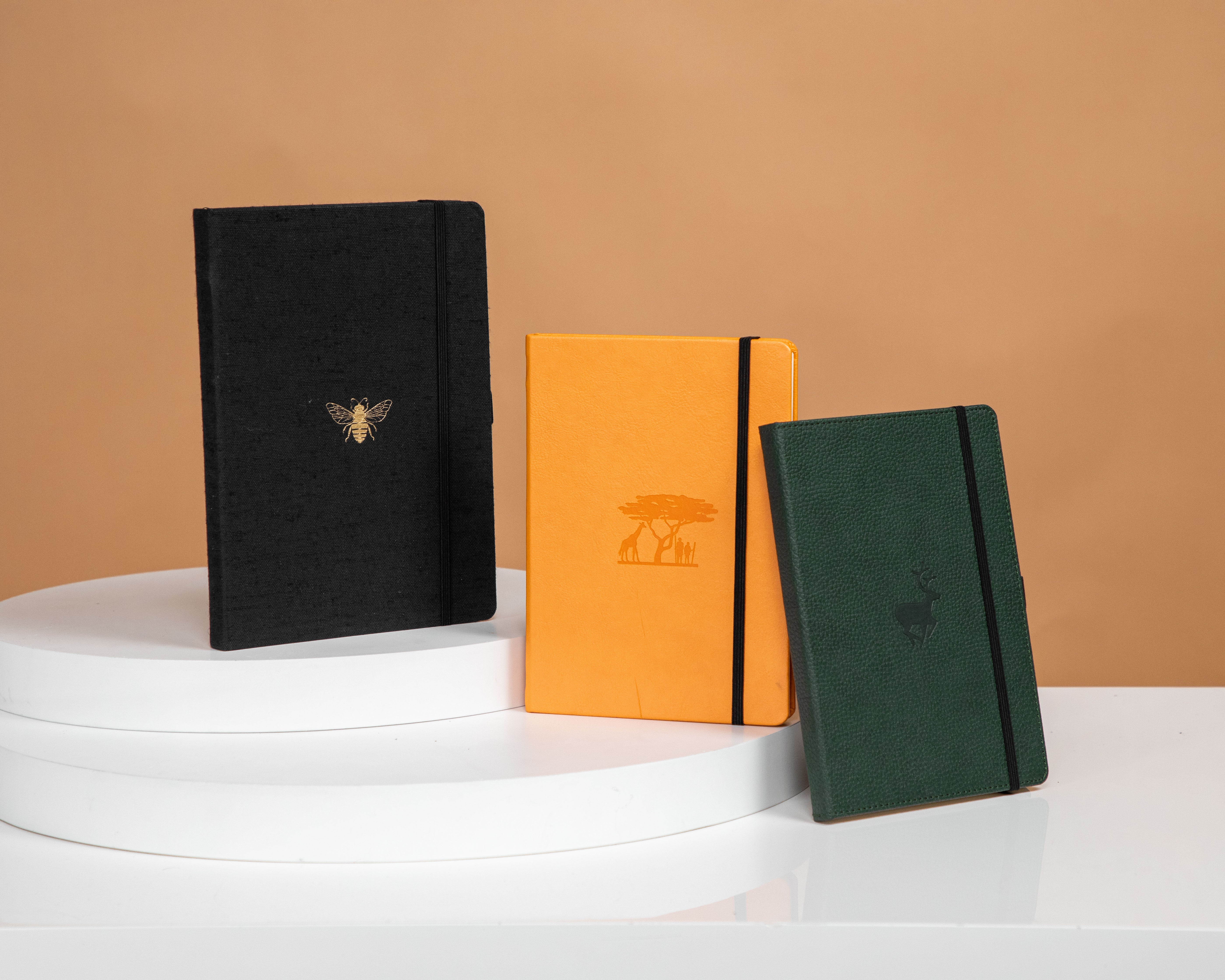
The Wildlife Collection is ideal for morning thoughts, reflections, notes, and quiet writing. The Earth Collection works beautifully for planning the day, setting priorities, creating routines, and tracking habits. The Pro Collection gives creative mornings room for sketching, visual notes, color, collage, and slow creative starts.
A slower morning does not need to change your whole life. It only needs to change the first few minutes.
Quick Overview: Slow Morning Ideas and the Best Dingbats* Fit
| Morning Need | What to Try | Best Dingbats* Fit |
|---|---|---|
| Less chaos | Write the first thoughts of the day | Wildlife Collection |
| More structure | Plan top priorities before the rush | Earth Collection |
| A creative start | Sketch, color, or make a visual note | Pro Collection |
| Better focus | Start on paper before screens | Wildlife or Earth Collection |
| Weekend calm | Create a no-rush morning ritual | Wildlife Collection |
| Less overwhelm | Brain dump before checking messages | Earth or Wildlife Collection |
| A softer routine | Coffee, notebook, light, one intention | Wildlife Collection |
The best slow morning routine is not the most impressive one. It is the one you can actually return to.
Why Mornings Feel So Rushed Now
Mornings used to have more edges.
You woke up. You got ready. You left the house. The world arrived gradually.
Now, the world can arrive before your feet touch the floor.
A phone can bring messages, work updates, news, social posts, reminders, group chats, emails, and other people’s lives into the first minute of your day. Even if nothing is urgent, the feeling of urgency appears quickly.
That is the problem with rushed mornings. They do not always rush the body first. Sometimes they rush the mind.
You start reacting before you know how you feel. You answer before you have checked in. You scroll before you have thought. You absorb other people’s priorities before choosing your own.
A slower morning creates a small pause before that happens.
It gives you time to ask:
What do I need today?
What matters first?
What can wait?
What kind of pace do I want to carry into the day?
Those questions are simple, but they can change how the whole day feels.
What Is a No-Rush Morning?
A no-rush morning is not a morning with nothing to do.
It is a morning that includes a little space before the doing begins.
It does not need to be long. It does not need to be aesthetic. It does not need to include meditation, an elaborate breakfast, a sunrise walk, or a perfectly clean kitchen.
A no-rush morning can be as small as:
- five quiet minutes before checking your phone
- writing three lines in a notebook
- making coffee without multitasking
- choosing your top three priorities
- opening a window
- reading one page
- stretching for two minutes
- sitting in natural light
- planning the day on paper
The point is not to create an idealized morning. The point is to stop letting the day begin without you.

Slow Mornings Do Not Need to Be Perfect
One reason people give up on morning routines is that they make them too complicated.
They imagine a version of themselves who wakes up early, exercises, journals, reads, stretches, drinks water, prepares breakfast, plans the day, and somehow does all of it calmly.
That version may be inspiring, but it may not be realistic.
A slow morning should fit your real life.
If you have twenty minutes, use twenty.
If you have ten, use ten.
If you have three, use three well.
The goal is not to complete a perfect routine. The goal is to create a softer entry into the day.
Perfect Morning vs. Real Slow Morning
| Perfect Morning | Real Slow Morning |
| Long and idealized | Short and repeatable |
| Built around many steps | Built around one or two anchors |
| Easy to fail | Easy to return to |
| Looks impressive | Feels supportive |
| Requires motivation | Reduces friction |
| Often unrealistic | Works with your actual day |
A slow morning becomes powerful when it is simple enough to survive busy days.
The 10-Minute Morning Reset
You do not need an hour to change the tone of your morning.
Ten minutes is enough.
The 10-minute morning reset is a small ritual that helps you arrive in the day before the day takes over.
10-Minute Morning Reset
| Minute | What to Do |
| 1–2 | Make a drink or sit somewhere quiet |
| 3–5 | Write a quick brain dump |
| 6–7 | Choose your top three priorities |
| 8–9 | Write one thing you need today |
| 10 | Close the notebook and begin |
This works especially well in the Earth Collection if you want structure, or the Wildlife Collection if you prefer a looser, more reflective start.
Simple Morning Page
| Prompt | Notes |
| What is on my mind? | |
| What matters today? | |
| What can wait? | |
| What do I need more of? | |
| One thing I will begin with |
This page is not meant to solve your whole life before breakfast.
It is meant to make the first step clearer.
Coffee, Paper, Light: The Simplest Morning Ritual
A slow morning does not need many tools. Sometimes the best ritual is almost too simple:
A drink.
A notebook.
A pen.
A little light.
That combination works because it gives the morning a shape.
The drink slows you down.
The notebook gives your thoughts somewhere to go.
The pen makes the ritual physical.
The light reminds your body that the day has started.
You can do this at a kitchen table, desk, balcony, café, bedside table, or even by an open window.
The Wildlife Collection fits this kind of morning beautifully because it does not demand structure. You can write a few lines, make a list, note a dream, capture an idea, or simply write the date and one thought.
Morning Coffee Page Ideas
| Page Idea | What to Write |
| First thought | The first thing on your mind |
| Today’s pace | How you want the day to feel |
| One sentence journal | A single line before the day begins |
| Coffee note | Where you are, what you notice |
| Mind clearing list | Everything you want out of your head |
| Intention page | One thing you want to remember today |
The ritual is not about the coffee. It is about giving yourself a beginning.
Starting on Paper Before Screens
One of the simplest ways to create a slower morning is to start on paper before screens.
Not forever. Not as a strict rule. Just for the first few minutes.
When you start with a screen, you often begin with input: messages, news, posts, updates, tasks, other people’s thoughts.
When you start with paper, you begin with output: your own thoughts, your own priorities, your own words.
That difference matters.
Paper lets the morning begin from the inside out.
Before Screens, Try Writing:
| Prompt | Why It Helps |
| What am I thinking about? | Clears mental noise |
| What do I need to do today? | Creates direction |
| What do I want to feel less rushed about? | Reduces pressure |
| What is one thing I can do first? | Builds momentum |
| What can wait until later? | Creates boundaries |
The Earth Collection works well if you want to turn this into a planning habit. The Wildlife Collection works well if you want it to feel more like a private check-in.
You do not need to avoid your phone all morning.
Just let your own thoughts arrive first.

Morning Pages Without Pressure
Morning pages are often described as long, free-flowing writing done first thing in the morning.
That can be useful, but it can also feel intimidating.
You do not need to write three pages every morning for the practice to matter.
You can write half a page.
A paragraph.
A list.
A few words.
A messy thought.
A sentence you do not understand yet.
The point is not volume.
The point is honesty.
Low-Pressure Morning Page Ideas
| Page Type | How to Use It |
| One-line morning | Write one sentence about how you feel |
| Three thoughts | Write the first three things on your mind |
| Clear the noise | Brain dump what feels cluttered |
| Today I need | Write what would support you today |
| One small focus | Choose one thing to begin with |
| Weather inside / outside | Note the day and your mood |
| Dream fragment | Capture anything you remember |
The Wildlife Collection is ideal for this because it gives you flexible space without forcing a layout.
Morning writing should not feel like homework.
It should feel like opening a window.
Planning Your Day Before It Plans You
Some days become overwhelming because everything feels equally important.
A slower morning can help you choose what actually matters before the day fills itself.
This is where the Earth Collection is especially useful. Its structured feel makes it a natural home for priorities, trackers, routines, goals, and weekly layouts.
A simple planning page can include:
| Section | Notes |
| Top 3 priorities | |
| Appointments / fixed plans | |
| Small tasks | |
| Something for myself | |
| One thing that can wait |
The last line matters.
A good morning plan is not only about what you will do. It is also about what you are allowed not to do yet.
The Top Three Rule
Instead of writing a huge list, choose three priorities. Not twenty. Not twelve. Three.
Ask:
What needs to happen today?
What would make the day feel successful?
What can I realistically complete?
The page becomes less about pressure and more about direction.
The Slow Weekend Morning
Weekends are where slow mornings can become a real ritual.
A weekday morning may only give you ten minutes. A weekend morning may give you more space to build something you look forward to.
A slow weekend morning might include:
- coffee or tea
- reading
- writing in a notebook
- making breakfast slowly
- a walk
- planning the week without rushing
- sketching
- sitting outside
- visiting a café
- writing a letter
- reviewing the past week
The Pro Collection is especially lovely for creative weekend mornings. Its 160gsm mixed media paper supports sketching, collage, visual notes, brush pens, markers, light washes, moodboards, and creative pages.
Weekend Morning Page Ideas
| Page Idea | Best Dingbats* Fit |
| Weekly reflection | Wildlife Collection |
| Next week overview | Earth Collection |
| Sketch the morning | Pro Collection |
| Café notes | Wildlife Collection |
| Creative warm-up | Pro Collection |
| Slow breakfast memory | Wildlife Collection |
| Moodboard for the week | Pro Collection |
A slow weekend morning is not about doing something impressive.
It is about remembering that time can feel different when you stop rushing through it.
Creative Mornings With the Pro Collection
Not every morning has to begin with words.
Sometimes the best way to start slowly is through something visual.
A sketch.
A color palette.
A moodboard.
A small collage.
A hand-lettered phrase.
A page of shapes.
A visual plan for the week.
Creative mornings are not only for artists. They are for anyone who wants to begin the day by making something before consuming something.
The Dingbats* Pro Collection is made for this kind of ritual because its 160gsm mixed media paper supports sketching, collage, brush pens, markers, visual notes, light washes, lettering, and layered pages.
Creative Morning Ideas
| Idea | What to Do |
| Color of the morning | Create a small palette from the sky, outfit, room, or mood |
| One object sketch | Draw your mug, lamp, plant, window, or book |
| Morning moodboard | Add words, colors, scraps, and shapes |
| Visual to-do list | Turn priorities into boxes, arrows, and icons |
| Hand-lettered intention | Write one phrase slowly |
| Window sketch | Draw what you can see outside |
| Creative warm-up | Fill a page with lines, marks, or patterns |
A creative morning does not need to produce finished work.
It just needs to help your mind arrive gently.
Slow Morning Ideas for Different Lives
A slow morning should adapt to your life, not the other way around.
If You Have 5 Minutes
| Try | Why It Helps |
| Write one sentence | Creates a pause |
| Choose one priority | Reduces overwhelm |
| Drink coffee without scrolling | Makes the morning feel calmer |
| Write what can wait | Creates space |
| Open the window | Signals the day has started |
If You Have 15 Minutes
| Try | Why It Helps |
| Brain dump | Clears mental clutter |
| Plan top three priorities | Gives direction |
| Read a page | Starts with focus |
| Stretch and write one note | Connects body and mind |
| Sit outside with a notebook | Adds calm and presence |
If You Have 30 Minutes
| Try | Why It Helps |
| Slow breakfast and journaling | Turns morning into a ritual |
| Weekly planning | Creates structure |
| Creative page | Starts the day with making |
| Walk and write afterward | Helps thoughts settle |
| Read, reflect, plan | Combines calm and direction |
The length of the ritual matters less than whether it helps.
How to Build a Slow Morning Routine You Will Actually Keep
The secret to a lasting morning routine is not discipline. It is ease.
Make the routine so simple that it feels natural to return to.
How to Keep It Simple
| Step | Example |
| Choose one anchor | Coffee, notebook, walk, reading |
| Keep tools visible | Leave notebook and pen ready |
| Make it short | Start with five or ten minutes |
| Avoid too many rules | Let the routine change when needed |
| Repeat what works | Keep the parts that feel useful |
| Drop what feels performative | The routine should serve you |
The notebook is useful because it gives the ritual a center.
You do not need to wonder where to begin. You open the page, write the date, and start with one line.
How Dingbats* Fits Into a Slower Morning
Different mornings need different kinds of pages.
| Morning Style | Choose | Why |
| Reflective morning | Wildlife Collection | Flexible for thoughts, notes, and journaling |
| Planning morning | Earth Collection | Ideal for priorities, routines, trackers, and structure |
| Creative morning | Pro Collection | 160gsm mixed media paper supports sketching and visual pages |
| Quick morning | A6 or A6+ Reporter | Compact for short notes and on-the-go thoughts |
| Everyday morning | A5+ Wildlife or Earth | Spacious but still practical |
| Weekend ritual | Wildlife or Pro | Writing, sketching, reading notes, or visual reflection |
A notebook does not make a morning slow by itself. But it gives the slowness somewhere to happen.
Frequently Asked Questions
What is a slow morning routine?
A slow morning routine is a simple way of beginning the day with less rush and more intention. It can include coffee, writing, planning, reading, walking, stretching, or a few quiet minutes before checking your phone.
How do I start a slow morning routine?
Start with one small habit. Keep your notebook and pen visible, write one line, choose one priority, or spend five minutes without screens. The routine should feel easy enough to repeat.
Do I need to wake up early for a slow morning?
No. A slow morning does not have to be long. Even five or ten minutes can change the tone of the day if you use them intentionally.
What should I write in a morning notebook?
You can write your first thoughts, top priorities, a brain dump, one intention, what you need today, what can wait, or a short reflection about how you want the day to feel.
Which Dingbats notebook* is best for morning routines?
The Wildlife Collection is best for reflective morning writing. The Earth Collection is best for morning planning, priorities, and routines. The Pro Collection is best for creative mornings, sketching, visual notes, and moodboards.
How can I stop checking my phone first thing in the morning?
Place your notebook somewhere visible and make it the first object you reach for. Start with a small rule, such as writing one sentence before checking your phone.
Our Verdict
A slower morning does not have to be perfect.
It does not have to be long.
It does not have to look beautiful.
It does not have to include everything.
It only needs to give you a little space before the day begins making demands.
Your Dingbats* Notebook can help create that space. It gives your first thoughts somewhere to go. It helps you choose what matters. It lets you begin with your own words before the world gets loud.

Leave a comment
All comments are moderated before being published.
This site is protected by hCaptcha and the hCaptcha Privacy Policy and Terms of Service apply.