
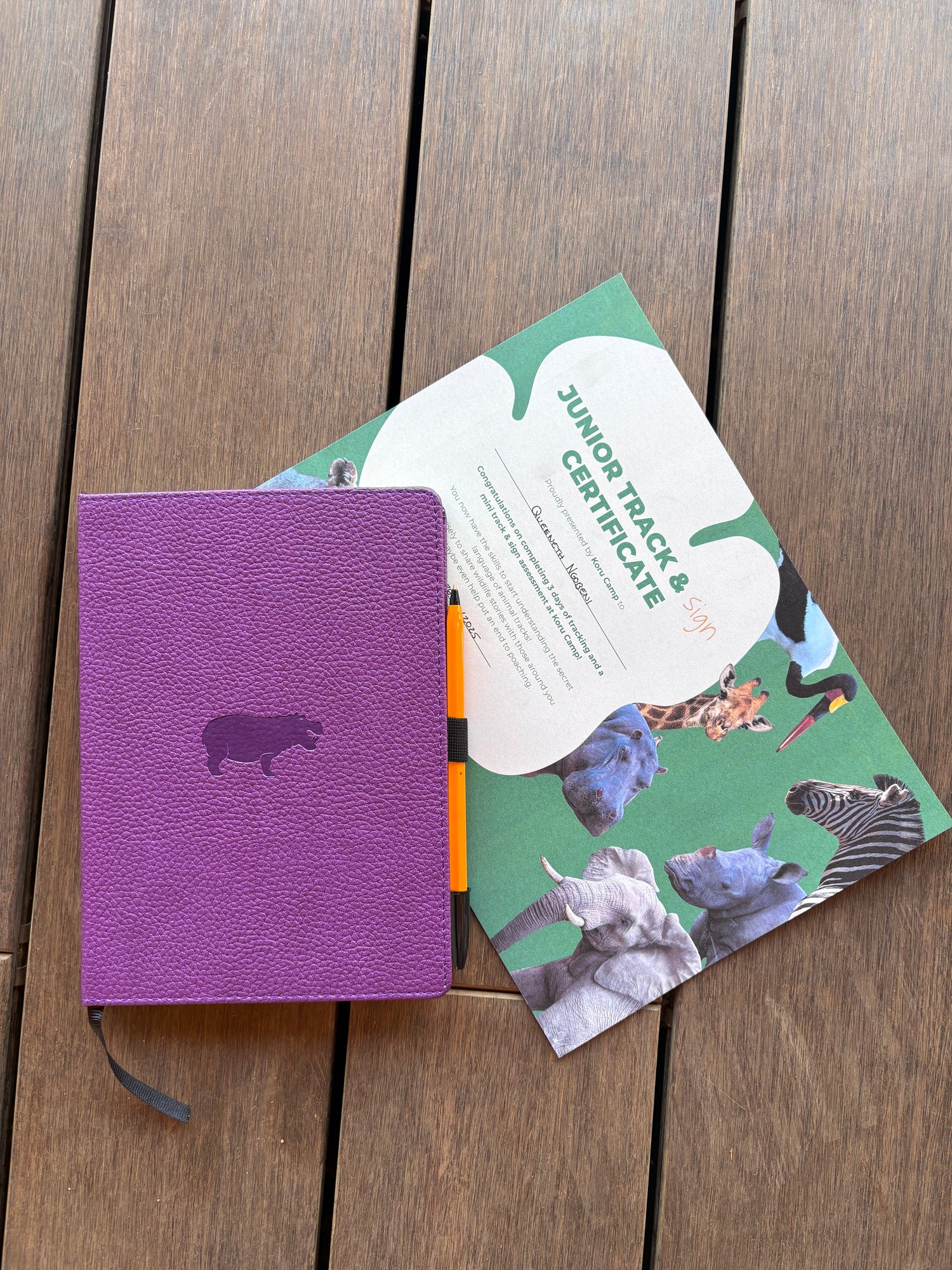
Last updated: August 2026 | A guide to marginalia, reading notes, commonplace books, notebooks, annotation, personal thinking, and Dingbats* notebooks
Before notes apps, highlights, screenshots, saved posts, and digital bookmarks, people had margins.
The side of a page was not empty space.
It was a place to argue.
To agree.
To underline.
To remember.
To ask questions.
To leave evidence of a thought in the exact place it appeared.
This is marginalia: the notes, marks, symbols, comments, reactions, and fragments written in the margins of books and documents. For centuries, readers wrote beside the text they were reading. They copied passages into commonplace books. They kept notebooks beside books. They used blank spaces to respond to ideas, save useful lines, track arguments, and leave behind traces of how they thought.
Today, we often think of writing in a book as damage. But historically, marginalia tells a different story. It shows that reading was never meant to be passive. The margin was where the reader became part of the page. And maybe that is why the habit still matters. Because whether we write in a book, keep a reading notebook, build a commonplace book, or carry a journal, we are still doing something very old: giving our thoughts a place to meet the words that shaped them.
At Dingbats*, we believe paper is not only for finished ideas. It is for thoughts while they are happening. A notebook can become a modern margin: a place for reading notes, reflections, questions, quotes, lists, reactions, sketches, and fragments that might otherwise disappear.
The margin was never really empty. It was waiting for a response.
Quick Overview: What Is Marginalia?
| Term | Meaning |
|---|---|
| Marginalia | Notes, symbols, comments, marks, or drawings made in the margins of a book or document |
| Annotation | The act of marking or commenting on a text |
| Commonplace book | A notebook used to collect quotes, ideas, passages, observations, and useful knowledge |
| Reading notebook | A notebook used to record thoughts, reactions, quotes, and reflections from reading |
| Modern margin | Any physical place where thoughts are captured beside or after reading |
| Dingbats* fit | Wildlife for personal notes, Earth for organized reading systems, Pro for visual thinking and creative responses |
Marginalia is not just writing in the margins. It is evidence that a person was thinking with the page.
What Is Marginalia?
Marginalia refers to the marks people make in the margins of books, manuscripts, printed pages, and documents. It can be as simple as a line beside a sentence. Or it can be a full conversation with the text. A reader might write:
“I agree.”
“Why?”
“Important.”
“Use this later.”
“Wrong.”
“Beautiful.”
“Remember this.”
“This reminds me of…”
A date.
A name.
A symbol.
A question.
A reaction they could not leave unrecorded.
Marginalia can be neat or messy, serious or funny, private or meant for someone else to find. Some marginal notes are scholarly. Some are emotional. Some are practical. Some are nothing more than proof that a sentence mattered enough to stop the reader.
Common Types of Marginalia
| Type | Example |
|---|---|
| Reaction | “I love this” or “I disagree” |
| Question | “What does this mean?” |
| Summary | A short note explaining the paragraph |
| Cross-reference | “See page 42” or “This connects to…” |
| Personal memory | “This reminds me of my grandfather” |
| Symbol | Star, arrow, underline, bracket, exclamation mark |
| Correction | Fixing an error or adding missing context |
| Argument | Responding directly to the author |
| Creative spark | A line that becomes an idea for something else |
Marginalia is where reading becomes active. The reader is no longer just receiving the text. They are answering it.

Why Humans Have Always Written Beside What They Read
Humans write in margins because thinking rarely happens in a straight line.
A book gives you the author’s words. The margin gives you your own. When something makes us pause, we want to keep the pause. When a sentence feels important, we want to mark it. When an idea connects to something else, we want to capture the connection before it disappears. That impulse is ancient.
People have always needed somewhere to put the thought that arrives while reading, listening, studying, learning, or observing. Sometimes that place was a book margin. Sometimes it was a notebook. Sometimes it was a commonplace book. Sometimes it was a letter, diary, field note, sketchbook, or loose piece of paper.
The form changes. The instinct stays the same.
Why Marginalia Exists
| Human Need | How Marginalia Helps |
|---|---|
| To remember | Marks the parts worth returning to |
| To understand | Turns reading into active processing |
| To argue | Gives the reader space to respond |
| To connect | Links one idea to another |
| To preserve | Keeps a thought from disappearing |
| To personalize | Makes the text part of the reader’s life |
| To create | Turns reading into the beginning of new writing |
Marginalia is not only about books. It is about the human need to leave a trace of thought.
The Margin as a Conversation
A margin can feel like a conversation across time. The author writes. The reader responds. A future reader sees both.
This is one of the most interesting things about marginalia. A marked-up book does not only contain the printed text. It contains layers of attention. Someone’s questions. Someone’s frustration. Someone’s admiration. Someone’s correction. Someone’s memory. A clean copy shows the text. An annotated copy shows a relationship with the text.
What Marginalia Can Reveal
| Marginal Note | What It Shows |
|---|---|
| Underlining | What felt important |
| Questions | What confused or challenged the reader |
| Exclamation marks | What surprised them |
| Corrections | What they knew or believed |
| Dates | When the reading happened |
| Personal references | How the text connected to life |
| Cross-references | How ideas linked together |
| Long notes | Where reading became thinking |
This is why old marginalia can feel intimate. You are not only seeing what someone read. You are seeing where their mind stopped.
Marginalia and the History of Thinking on Paper
Marginalia belongs to a much larger history of thinking on paper. People have long used notebooks, diaries, commonplace books, manuscripts, letters, and reading notes to collect ideas. These were not always polished forms of writing. They were working spaces.
A diary might record daily life. A notebook might hold fragments. A commonplace book might collect quotes and useful passages. A margin might capture an immediate response. Together, these forms show that writing has always been a way of processing the world.
Different Forms of Thinking on Paper
| Form | Purpose |
|---|---|
| Marginalia | Respond directly beside the text |
| Commonplace book | Collect quotes, passages, and useful knowledge |
| Diary | Record daily life and personal experience |
| Notebook | Capture ideas, drafts, lists, and observations |
| Field notes | Record what is seen in the world |
| Letter | Think through a message to another person |
| Sketchbook | Process ideas visually |
A notebook is not separate from this history. It is one of its most flexible forms.

What Is a Commonplace Book?
A commonplace book is a notebook used to collect knowledge. Historically, people copied passages, quotes, observations, facts, poems, arguments, and ideas into a notebook so they could return to them later. A commonplace book was not a diary exactly, and it was not a planner. It was more like a personal library of useful thoughts.
Today, a commonplace book can include:
- quotes from books
- lines from articles
- ideas from conversations
- words you want to remember
- references for future projects
- questions you keep returning to
- personal observations
- lists, fragments, and notes
It is one of the closest relatives of marginalia because both habits come from the same impulse: do not let a good thought vanish.
Marginalia vs Commonplace Book
| Marginalia | Commonplace Book |
|---|---|
| Written directly in the book or document | Written in a separate notebook |
| Responds to a specific page | Collects ideas from many places |
| Often immediate and spontaneous | Often more organized or curated |
| Stays attached to the original text | Becomes part of a personal knowledge system |
| Good for direct annotation | Good for long-term memory and reuse |
A margin captures the thought where it happens. A commonplace book gives that thought a place to live.
Why We Stopped Writing in the Margins
Many people no longer write in the margins of books.
Sometimes because the book is borrowed.
Sometimes because it feels too precious.
Sometimes because resale value matters.
Sometimes because we read digitally.
Sometimes because school taught us to keep books clean.
Sometimes because we think a finished page should stay untouched.
There are good reasons to avoid writing in certain books, especially library books, rare books, borrowed books, or editions you want to preserve. But when we stopped writing in margins, we also lost something useful: the habit of responding physically to what we read. The solution is not necessarily to mark every book. The solution is to create a new margin. That margin can be a Dingbats* Notebook.
Why a Notebook Makes a Good Modern Margin
| Reason | Why It Helps |
|---|---|
| Keeps books clean | Good for borrowed, rare, or special books |
| Holds notes from many sources | Books, podcasts, films, conversations, articles |
| Gives more space | No tiny margin limits |
| Supports organization | Add headings, dates, indexes, and sections |
| Encourages reflection | Notes can expand beyond a quick reaction |
| Becomes searchable by memory | You remember where you wrote it |
| Turns reading into a record | Your thoughts collect over time |
A notebook lets you keep the spirit of marginalia without needing to write directly inside every book.
The Notebook as a Modern Margin
Your Dingbats* Notebook can become a margin for your whole life. Not just for books.
For articles. Meetings. Conversations. Ideas. Trips. Projects. Films. Dreams. Plans. Questions. Moments.
Anything that makes you pause deserves a margin. That is what a notebook gives you: space beside life.
Modern Marginalia Can Look Like
| Source | Notebook Response |
|---|---|
| Book | Quote, reaction, question, theme |
| Podcast | One idea worth keeping |
| Film | Scene, line, feeling, visual note |
| Meeting | Key decision, action, thought |
| Conversation | Phrase, memory, follow-up |
| Travel | Observation, sketch, ticket, route |
| Work project | Lesson, idea, direction |
| Personal life | Reflection, list, small detail |
A margin is not only the side of a printed page. It is any space where your mind answers the world.
Why Marginalia Makes Reading More Active
Reading can be passive. You move through the words. You understand them. You finish the chapter. Then a week later, most of it is gone. Marginalia changes that.
When you mark a sentence, write a question, copy a quote, or summarize an argument in your own words, you slow down. You are not only reading. You are processing.
That makes the reading more personal and more memorable.
How Marginalia Improves Reading
| Habit | What It Does |
|---|---|
| Underlining | Identifies what matters |
| Writing questions | Reveals what you do not yet understand |
| Summarizing | Turns someone else’s words into your own understanding |
| Copying quotes | Preserves language worth returning to |
| Making connections | Links ideas across books and experiences |
| Writing reactions | Shows how your thinking changed |
| Dating notes | Gives context to your response |
You do not need to annotate everything. In fact, you should not. The best marginalia is selective. It shows where your attention became sharper.
What to Write in the Margins
Good marginalia does not need to be complicated. It can be practical, emotional, critical, creative, or personal. The best notes are the ones that help you return to the idea later and understand why it mattered.
Marginalia Prompts
| Prompt | Example |
|---|---|
| What is the main idea here? | “The author is arguing that memory needs physical anchors.” |
| What do I agree with? | “Yes — this explains why handwritten notes feel different.” |
| What do I disagree with? | “Too simple. This ignores habit and context.” |
| What does this remind me of? | “Similar to the meeting we had about product storytelling.” |
| What should I use this for? | “Blog idea / email intro / campaign angle.” |
| What question does this raise? | “Is nostalgia always useful?” |
| What line is worth keeping? | Copy the sentence into your notebook |
| What does this make me feel? | “Strangely comforting.” |
A margin does not need a full paragraph. Sometimes one word is enough.
Symbols for Marginalia and Reading Notes
Symbols are useful because they make annotation faster. You can use them in a book margin, in a notebook, or in a reading journal.
Simple Annotation Symbols
| Symbol | Meaning |
|---|---|
| ★ | Important |
| ? | Question |
| ! | Surprising |
| → | Connects to another idea |
| ✕ | Disagree |
| ✓ | Agree |
| “ ” | Quote worth copying |
| ⏳ | Remember for later |
| 💡 | Idea sparked |
| 📌 | Use in a project |
You can create your own system. The point is not to make the page look clever. The point is to make your thinking easier to find.
How to Start a Marginalia Notebook
A marginalia notebook is a notebook you keep beside what you read, watch, hear, or notice. It can be simple. You do not need a complicated setup. You only need a few repeatable sections. The Dingbats* Wildlife Collection is perfect here!
Simple Marginalia Notebook Setup
| Section | What to Include |
|---|---|
| Source | Book, article, podcast, film, conversation, meeting |
| Date | When the note was made |
| Quote or idea | The line, phrase, or concept that caught your attention |
| Your response | What you thought, felt, questioned, or connected |
| Use later | How you might return to it |
| Page or reference | Where to find the original again |
A page might look like this:
Source: Book title / article / podcast
Date: August 27, 2026
Idea: “The margin is where the reader becomes visible.”
My response: This could become a blog introduction. It makes reading feel active, not decorative.
Use later: Content idea / product storytelling / newsletter line
That is enough. The value comes from returning to it.

Marginalia Notebook Page Ideas
A marginalia notebook does not need to be only about books. It can become a living archive of what your mind reacts to.
Page Ideas
| Page Idea | What to Include |
|---|---|
| Reading reactions | Notes from books, essays, articles, and poems |
| Quote bank | Lines worth keeping |
| Question page | Questions you keep returning to |
| Argument page | Ideas you disagree with and why |
| Connection map | How one idea links to another |
| Vocabulary page | Words that feel useful or beautiful |
| Project sparks | Ideas that might become work later |
| Conversation notes | Things people said that stayed with you |
| Film or podcast notes | Lines, themes, references, reactions |
| “Use this later” page | Ideas for writing, work, art, or planning |
The margin can be intellectual. But it can also be deeply personal.
Marginalia for Readers
For readers, marginalia is a way to make books part of your thinking life. It helps you remember what you read, but more importantly, it helps you remember who you were when you read it.
The same book can mean something different at different times. A note written at 19 may feel different when you read it at 29. A line you underlined during a difficult week may mean something else years later.
That is the beauty of reading notes. They preserve the conversation between the book and that version of you. This is where the Dingbats* Reading Journal comes in handy!
Reading Note Ideas
| Page Type | What to Write |
|---|---|
| Favorite lines | Quotes you want to keep |
| Character notes | People, motives, relationships |
| Theme page | Ideas that repeat throughout the book |
| Personal response | What the book made you remember |
| Disagreement page | Where you pushed back |
| Book-to-life connection | How the book connects to your own experience |
| Final impression | What stayed after finishing |
| Rereading notes | How your response changed later |
A good reading notebook does not only summarize the book. It records your relationship with it.

Marginalia for Work and Ideas
Marginalia is not only for literature. It is useful for work, strategy, creative thinking, and problem-solving. Every project has its own margins: side notes, questions, rough ideas, rejected directions, small observations, and thoughts that do not fit neatly into the final document. A notebook gives those thoughts a place to go.
Work Marginalia Ideas
| Situation | What to Write |
|---|---|
| Meeting | Questions, reactions, decisions, follow-ups |
| Campaign | Lines, angles, audience insights, rejected ideas |
| Product development | Observations, feature notes, user comments |
| Research | Quotes, facts, sources, questions |
| Design review | What works, what feels off, what to test |
| Brainstorming | Half-ideas before they become plans |
| Feedback | Comments you want to revisit |
| Post-launch | Lessons, results, future improvements |
The most useful work ideas often begin as side notes. A margin keeps them from getting lost.
Marginalia for Creative People
Creative work often begins in the margins.
A line beside a sentence.
A sketch beside a meeting note.
A question beside a reference.
A phrase copied down quickly.
A color combination.
A half-formed title.
A visual idea that does not belong anywhere yet.
A creative notebook is a margin for unfinished things. That matters because finished work depends on unfinished notes.
Creative Marginalia Ideas
| Creative Use | Notebook Response |
|---|---|
| Moodboard | Collect colors, textures, phrases, references |
| Sketch | Draw the visual idea before it disappears |
| Title bank | Save possible names and headings |
| Line bank | Collect phrases that might become copy or poetry |
| Visual notes | Combine words, arrows, layouts, and symbols |
| Draft fragments | Save the beginning of an idea |
| Material tests | Swatches, pens, paper, textures |
| Inspiration log | Where the idea came from |
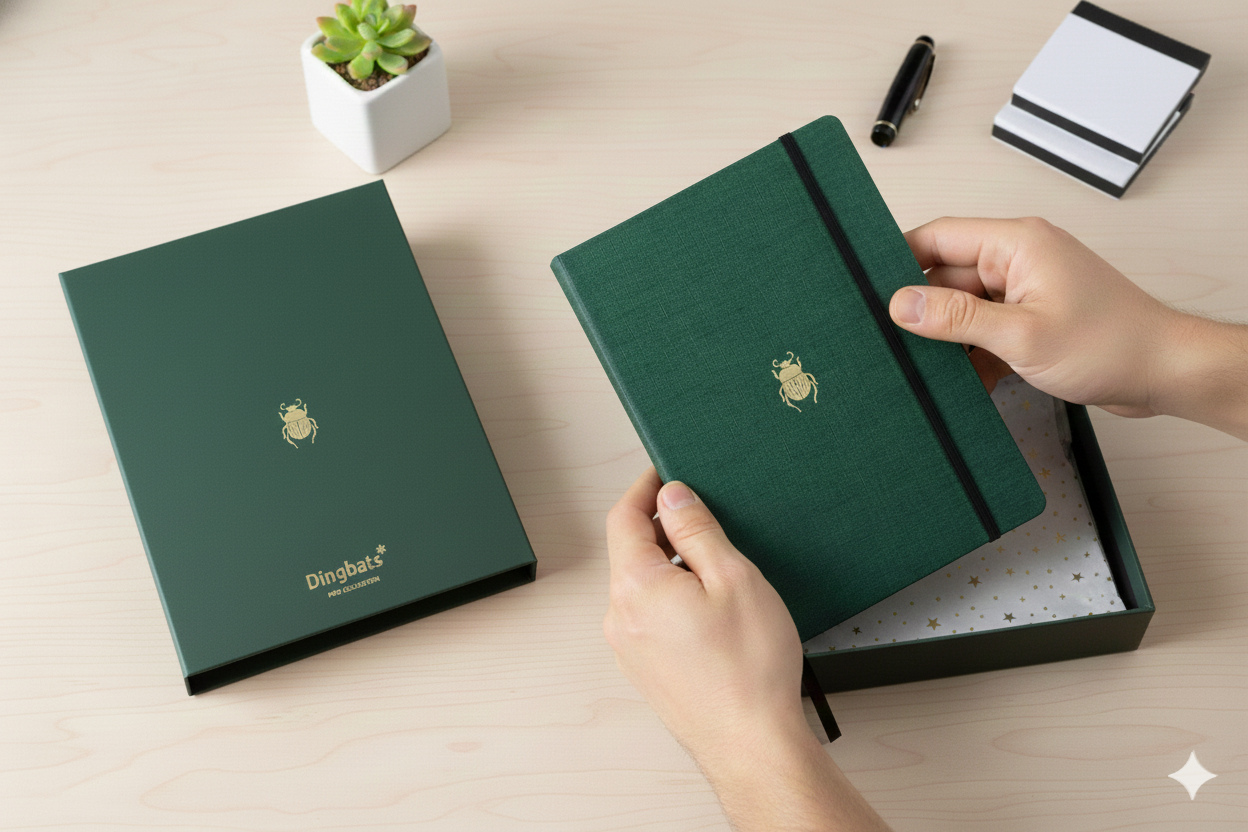
The Dingbats* Pro Collection is especially suited to this kind of creative marginalia because its 160gsm mixed media paper supports sketches, brush pens, markers, visual notes, moodboards, and light washes. Some thoughts do not arrive as sentences. They arrive as shapes.

Marginalia for Everyday Life
Life has margins too.
The few minutes before a meeting.
The back of a receipt.
The corner of a page.
The note you write while waiting.
The thought that comes during a walk.
The phrase someone says in passing.
Not everything needs a full journal entry. Some things only need to be caught.
Everyday Marginalia Ideas
| Moment | What to Capture |
|---|---|
| During a walk | What you noticed |
| After a conversation | A phrase or feeling |
| While traveling | A detail, route, ticket, or memory |
| During a meal | A place, dish, or person |
| At work | A small lesson or idea |
| Before sleep | A thought that keeps returning |
| While reading | A line that connects to life |
| At the end of the week | What mattered more than expected |
A notebook is useful because life rarely gives you clean categories. It gives you fragments.
Which Dingbats* Notebook Works Best for Marginalia?
Different kinds of marginalia need different kinds of notebooks.
Some people want a simple everyday notebook. Some want structure. Some want creative space. Some want a reading companion. Some want a place for quotes, notes, sketches, and scraps.
Dingbats* has different collections for different ways of thinking on paper.
Dingbats* Notebook Guide for Marginalia
| Collection | Best For |
|---|---|
| Wildlife Collection | Personal reading notes, everyday thoughts, letters, reflections, travel notes |
| Earth Collection | Organized reading systems, indexes, collections, trackers, structured notes |
| Pro Collection | Visual notes, sketches, creative responses, moodboards, mixed media pages |
| Reading Journal | Reading logs, reviews, quotes, book notes, structured reading reflections |
The best notebook is not necessarily the most formal one. It is the one that matches how your thoughts naturally appear.
The Wildlife Collection as a Personal Margin
The Dingbats* Wildlife Collection works well as a personal marginalia notebook because it feels expressive, portable, and suitable for everyday writing.
Animal covers give the notebook character. The 100gsm cream paper supports longhand notes, reflections, quotes, lists, and daily thoughts. Practical features such as bookmarks, pockets, elastic closures, and pen loops across relevant formats make it easier to keep the notebook close.
Use Wildlife For
| Use | Why It Works |
|---|---|
| Book notes | A personal place for quotes and reactions |
| Daily observations | Easy to carry and return to |
| Travel marginalia | Capture thoughts beside movement and place |
| Letters and drafts | Personal writing feels at home |
| Conversation notes | Save phrases, memories, and ideas |
| Reflection | Cream paper gives a warm writing experience |
Wildlife is the notebook for thoughts that feel personal. The ones that belong to your life as much as your reading.

The Earth Collection as an Organized Margin
The Dingbats* Earth Collection works well for people who want their marginalia to become a system.
It is useful for readers, planners, researchers, and thinkers who like indexes, numbered pages, collections, and structured layouts.
Instead of letting notes scatter, Earth helps organize them.
Use Earth For
| Use | Why It Works |
|---|---|
| Quote index | Find important lines later |
| Reading collections | Organize books, themes, and notes |
| Research notes | Keep sources and thoughts together |
| Idea tracking | Follow concepts across time |
| Habit and reading trackers | Connect reading with routine |
| Project notes | Turn side thoughts into action |
Earth turns marginalia into a personal knowledge system. It is the notebook for people who want their side notes to become searchable.

The Pro Collection as a Visual Margin
The Dingbats* Pro Collection works best when your marginalia is not only written.
Some ideas need images, color, arrows, diagrams, lettering, swatches, and visual structure. Pro gives those ideas more room because of its larger B5 format and 160gsm mixed media paper.
Use Pro For
| Use | Why It Works |
|---|---|
| Visual reading notes | Combine quotes, symbols, sketches, and diagrams |
| Moodboards | Build visual responses to books, projects, or ideas |
| Creative research | Collect references, textures, and fragments |
| Sketch notes | Turn thoughts into images |
| Calligraphy and lettering | Make words visual |
| Mixed media responses | Add light washes, collage, and layered pages |
Pro is the margin for visual thinkers. The people who need more than lines.

How to Build a Reading Notes System
A reading notes system should be simple enough that you keep using it. You do not need to write pages of analysis after every chapter. You only need a repeatable way to capture what mattered.
Simple Reading Notes System
| Step | What to Do |
|---|---|
| 1. Write the source | Title, author, date started |
| 2. Copy key lines | Only the ones that truly matter |
| 3. Add your response | Why did this line stop you? |
| 4. Create a symbol system | Star, question mark, arrow, exclamation mark |
| 5. Add page references | So you can find the original |
| 6. Summarize after finishing | What stayed with you? |
| 7. Index important ideas | Build a map of recurring themes |
This creates a notebook that is more useful than a list of books read. It becomes a record of what those books did to your thinking.
How to Annotate Without Ruining a Book
Not every book should be marked. Library books, borrowed books, rare books, special editions, and books you want to keep clean should stay unmarked. But you can still annotate around them.
Clean Annotation Alternatives
| Method | How It Works |
|---|---|
| Notebook notes | Write quotes, page numbers, and reactions separately |
| Sticky notes | Mark temporary thoughts without writing on the page |
| Index cards | Keep one card per chapter or idea |
| Reading log | Summarize thoughts after each session |
| Quote bank | Copy lines into a notebook |
| Symbol key | Use removable tabs or marks |
| Chapter pages | Give each chapter its own notebook section |
A notebook lets you keep the thought without changing the book. That is the modern compromise.
Marginalia Prompts for Your Notebook
When you do not know what to write, use a prompt. The best prompts help you move from passive reading to active thinking.
Reading Marginalia Prompts
| Prompt | Use It For |
|---|---|
| What is the strongest sentence on this page? | Finding what matters |
| What do I agree with? | Clarifying your position |
| What do I disagree with? | Building your own argument |
| What does this remind me of? | Connecting text to life |
| What question does this raise? | Keeping curiosity active |
| What would I tell someone about this? | Summarizing simply |
| Where could I use this idea? | Turning reading into action |
| What changed in my thinking? | Tracking growth |
| What would I ask the author? | Creating dialogue |
| What do I want to remember in one year? | Saving lasting value |
The goal is not to produce perfect notes. The goal is to leave yourself something worth returning to.
Marginalia and Memory
Writing in the margins is partly about memory. A mark says: this mattered. But a notebook goes further. It says: this mattered enough to keep.
Memory is not only about storing information. It is about creating meaning. When you copy a quote, write a reaction, or summarize a passage, you are choosing what belongs in your mental archive.
How Marginalia Helps Memory
| Action | Memory Benefit |
|---|---|
| Underlining | Identifies importance |
| Copying | Slows down attention |
| Summarizing | Improves understanding |
| Questioning | Creates active engagement |
| Connecting | Links new ideas to old ones |
| Reviewing | Makes thoughts easier to return to |
| Indexing | Helps ideas become findable |
A thought written down has a better chance of becoming part of you.
Marginalia and Personal Style
Marginalia is also a form of personal style. Not in the fashion sense. In the thinking sense.
The way you mark a page reveals how you read. Some people underline. Some write long notes. Some draw arrows. Some use symbols. Some copy quotes. Some write emotional reactions. Some build systems. Some keep things messy.
Your marginalia does not have to look like anyone else’s.
Different Marginalia Styles
| Style | What It Looks Like |
|---|---|
| Minimal | Stars, lines, page numbers |
| Academic | Summaries, arguments, questions |
| Emotional | Personal reactions and memories |
| Creative | Sketches, symbols, layouts |
| Practical | Ideas to use later |
| Collector | Quotes, vocabulary, references |
| Reflective | Connections to life and experience |
A notebook gives your style room to develop. Over time, your notes become recognizable as yours.
Why the Most Interesting Notes Are Often Unfinished
Margins are full of unfinished thoughts. That is part of their charm.
A question without an answer.
A sentence that trails off.
A phrase circled three times.
A note that only makes sense to the person who wrote it.
A connection that might become useful later.
Not every note needs to become something. Some notes are valuable because they capture thinking while it is still alive.
Why Unfinished Notes Matter
| Unfinished Note | Why It Has Value |
|---|---|
| Half idea | Could become a project later |
| Question | Keeps curiosity open |
| Fragment | Preserves a feeling or insight |
| Sketch | Captures visual thinking quickly |
| Crossed-out line | Shows the thought process |
| Messy page | Records reality, not performance |
The notebook is not only for finished thoughts. It is for thinking in progress.
Frequently Asked Questions
What does marginalia mean?
Marginalia means the notes, comments, symbols, marks, or drawings written in the margins of a book, manuscript, or document.
Why do people write in the margins?
People write in the margins to remember, question, respond, argue, connect ideas, summarize, and make reading more active.
What is the difference between marginalia and annotation?
Annotation is the broader act of marking or commenting on a text. Marginalia specifically refers to notes or marks made in the margins.
What is a commonplace book?
A commonplace book is a notebook used to collect quotes, ideas, passages, observations, and useful knowledge from reading and life.
How do I start a marginalia notebook?
Start by writing the source, date, quote or idea, your response, and how you might use the thought later. Keep it simple so the habit is easy to continue.
Which Dingbats* notebook is best for reading notes?
The Dingbats* Wildlife Collection works well for personal reading notes and reflections. The Earth Collection works well for organized indexes and structured note systems. The Pro Collection works well for visual notes, sketches, and creative responses.


Leave a comment
All comments are moderated before being published.
This site is protected by hCaptcha and the hCaptcha Privacy Policy and Terms of Service apply.