
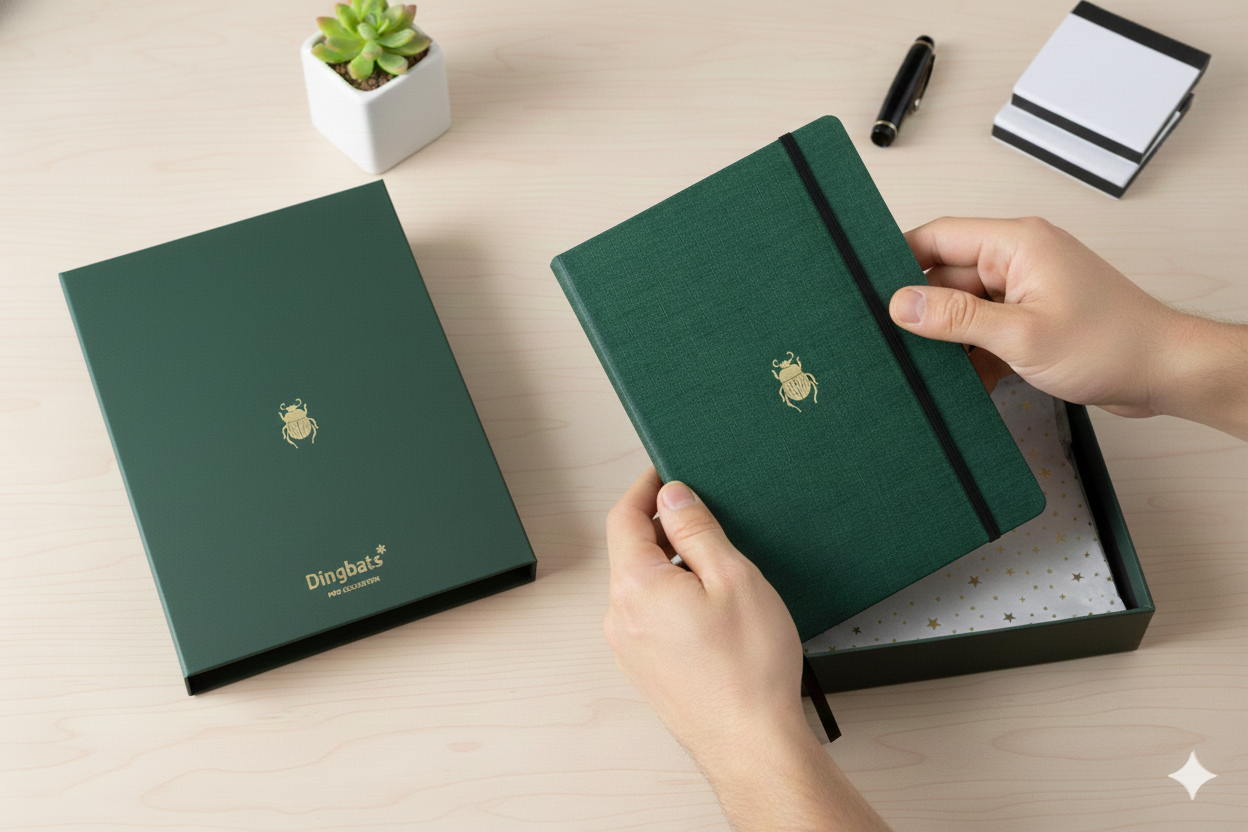
Last updated: August 2026 | A guide to the history of writing things down, notebooks, memory, record keeping, personal notes, paper rituals, and Dingbats* notebooks
Humans have always needed somewhere to put things.
Not only objects.
Thoughts.
Names.
Numbers.
Stories.
Promises.
Lists.
Questions.
Memories.
Proof that something happened.
Long before the modern notebook, people pressed marks into clay, carved symbols into stone, wrote on papyrus, filled manuscripts, kept ledgers, copied passages into commonplace books, recorded discoveries in field notes, wrote diaries, and carried notebooks full of unfinished thoughts.
The tools changed. The need did not.
Writing things down is one of the oldest human habits because life has always been too full to hold entirely in the mind. We write to remember. We write to understand. We write to keep track. We write to pass things on. We write because a thought becomes more real once it has somewhere to live.
A notebook is part of that long history.
It may look simple: a cover, pages, paper, a binding, a bookmark, maybe a pocket, maybe a pen loop. But the purpose is ancient. A notebook gives human thought a physical place.
At Dingbats*, this idea matters. Our notebooks are made for daily writing, planning, sketching, journaling, reflecting, remembering, and collecting the small pieces of life that become meaningful over time. From the Wildlife Collection to the Earth Collection to the Pro Collection, every Dingbats* notebook is built around a very old human instinct:
Write it down before it disappears.
Quick Overview: Why Humans Write Things Down
| Reason | Why It Matters |
|---|---|
| To remember | Writing gives memory a physical anchor |
| To organize | Lists, ledgers, notes, and plans help make life manageable |
| To communicate | Writing lets ideas move across distance and time |
| To preserve | Records, diaries, letters, and notebooks keep evidence of what happened |
| To think | Writing helps people process ideas more clearly |
| To create | Stories, sketches, poems, plans, and designs often begin on paper |
| To pass things on | Written words can outlive the person who wrote them |
| Dingbats* fit | Modern notebooks continue this long tradition of thought, memory, and record keeping |
Writing things down is not just a productivity habit. It is one of the ways humans make life visible.
The First Reason Humans Wrote Things Down
One of the earliest reasons humans developed writing was practical.
People needed to keep records.
Food supplies.
Trade.
Land.
Goods.
Rations.
Ownership.
Labor.
Payments.
Temples.
Cities.
Harvests.
Before writing became literature, poetry, philosophy, or personal reflection, it was a way to keep track of real things in the world. That may sound ordinary, but it is powerful.
The first written marks were not only about beauty. They were about memory. They helped communities remember what had been counted, stored, promised, exchanged, owed, or received.
Early Writing Was Often Used For
| Use | Why It Was Important |
|---|---|
| Counting goods | Helped people track supplies and trade |
| Recording rations | Made distribution clearer |
| Managing cities | Supported administration and organization |
| Tracking ownership | Created a record of who had what |
| Preserving agreements | Made promises more durable |
| Passing information | Allowed details to move beyond one person’s memory |
Writing began because memory needed help. That is still true today. A grocery list, meeting note, project plan, reading log, journal page, packing list, or idea notebook is a modern version of the same impulse: life is easier when important things are written down.
Writing Is a Technology of Memory
Memory is powerful, but it is not perfect.
We forget details.
We change stories.
We lose track.
We confuse dates.
We remember the feeling but not the exact words.
We think we will remember something later, and then we do not.
Writing gives memory somewhere to rest. It turns something temporary into something that can be returned to. This is why writing has always mattered. It helps humans carry more than the mind can hold alone.
What Writing Helps Us Remember
| Type of Memory | Example |
|---|---|
| Practical memory | Tasks, dates, names, numbers, instructions |
| Personal memory | Feelings, moments, conversations, milestones |
| Cultural memory | Stories, traditions, histories, beliefs |
| Creative memory | Ideas, sketches, drafts, phrases, concepts |
| Social memory | Promises, letters, messages, agreements |
| Learning memory | Notes, quotes, summaries, discoveries |
A notebook is one of the most personal forms of memory technology. It does not only store information. It stores the way your mind moved through it.

Why Writing Feels Different From Simply Remembering
A thought inside your head can feel complete. Then you try to write it down and realize it is still forming. That is part of the value.
Writing makes thought visible. It shows gaps, patterns, repetitions, questions, and connections. It gives you something to look at, edit, rearrange, cross out, underline, and return to. In this way, writing is not only storage. It is thinking.
How Writing Changes Thought
| Before Writing | After Writing |
|---|---|
| Thought feels vague | Thought becomes visible |
| Idea feels complete | Gaps become clearer |
| Memory feels certain | Details can be checked |
| Feeling feels overwhelming | Words give it shape |
| Plan feels abstract | Steps become concrete |
| Idea feels temporary | It becomes easier to revisit |
This is why notebooks are still useful even when the idea is not finished. Especially then. A notebook does not require a perfect thought. It gives the thought somewhere to become clearer.
From Clay Tablets to Paper Pages
The history of writing is also the history of surfaces. Humans have written on clay, stone, wax, papyrus, parchment, paper, scraps, ledgers, letters, margins, cards, journals, and notebooks. Each surface shaped the writing that happened on it.
Clay tablets made records durable.
Stone inscriptions made public words last.
Papyrus and parchment made writing more portable.
Paper made writing more flexible.
Notebooks made personal thought easier to collect.
The surface matters because writing is physical. A thought changes when it is pressed, carved, inked, folded, carried, bookmarked, saved, or kept in a pocket.
Writing Surfaces Through Time
| Surface | What It Made Possible |
|---|---|
| Clay tablets | Durable records and administration |
| Stone | Public inscriptions and long-lasting messages |
| Papyrus | More portable written communication |
| Parchment | Manuscripts, books, and formal documents |
| Paper | Wider access to writing and copying |
| Margins | Reader responses and annotations |
| Notebooks | Personal, flexible, ongoing thought |
| Journals | Private reflection and daily records |
A modern notebook feels simple because it is familiar. But it belongs to a very long line of human tools for keeping thought alive.

The Notebook as a Private Archive
Not all writing is meant for an audience. Some writing is private.
A note to yourself.
A draft nobody sees.
A list that only matters today.
A thought you are not ready to say out loud.
A page of questions.
A plan in progress.
A memory you want to keep.
A sentence that might become something later.
This is one of the most important roles of a notebook. It creates a private archive. Not an archive in the formal sense. Not a museum. Not a public record. A personal one. A place where your life collects itself.
What a Notebook Can Archive
| Archive Type | Examples |
|---|---|
| Thoughts | Reflections, questions, ideas, worries |
| Work | Meeting notes, projects, decisions, feedback |
| Creativity | Sketches, titles, drafts, concepts |
| Reading | Quotes, book notes, reactions, themes |
| Life | Routines, memories, conversations, milestones |
| Travel | Tickets, maps, routes, impressions |
| Taste | Favorite songs, books, meals, places, colors |
| Growth | Lessons, goals, mistakes, progress |
A filled notebook becomes valuable because it holds a version of your mind and life that no longer exists in exactly the same way. That is why old notebooks are so hard to throw away.
Why Lists Are One of the Oldest Forms of Writing
Lists may seem ordinary, but they are one of the most important ways humans organize life. A list turns chaos into sequence.
Things to do.
Things to buy.
Things to remember.
Things to count.
Things to pack.
Things to repair.
People to invite.
Books to read.
Ideas to revisit.
Lists are powerful because they reduce mental weight. You do not have to hold everything at once. The page holds it for you.
Why Lists Work
| List Type | What It Does |
|---|---|
| To-do list | Turns intention into action |
| Packing list | Prevents forgetting |
| Shopping list | Organizes practical needs |
| Reading list | Captures future curiosity |
| Idea list | Keeps unfinished thoughts alive |
| Gratitude list | Makes small positives visible |
| Project list | Breaks big work into smaller parts |
| Memory list | Preserves details before they fade |
A notebook is useful because it welcomes lists without judgment. A list does not need to be beautiful. It needs to hold what your mind is tired of carrying.
Why Humans Write to Make Promises More Real
Writing has always been connected to trust.
A spoken promise can disappear.
A written promise stays.
A written record can be checked.
A written agreement can be shared.
A written plan can be returned to.
This is why written words often feel more serious than spoken ones. Writing gives commitment a form. In everyday life, this still matters. When you write down a goal, deadline, appointment, routine, or promise to yourself, it feels different. The page makes the intention visible.
What Writing Makes More Concrete
| Intention | Written Form |
|---|---|
| “I should do this” | To-do list |
| “I want to change this” | Goal page |
| “I need to remember this” | Note |
| “I will be there” | Date and time |
| “This matters to me” | Journal entry |
| “This idea could work” | Project outline |
| “I learned something” | Reflection page |
Writing does not guarantee action. But it gives action a starting point.
Why Humans Write Stories Down
Not everything written down is practical. Humans also write stories. Stories explain where we came from, what we value, what we fear, what we hope for, and how we make meaning from experience. A story can be epic or ordinary.
A myth.
A family memory.
A travel entry.
A childhood story.
A lesson learned.
A funny moment.
A page about a person you love.
A note about a place you never want to forget.
Stories are how humans turn events into meaning.
Why Written Stories Matter
| Story Type | Why It Matters |
|---|---|
| Family stories | Preserve identity and connection |
| Travel stories | Capture place and perspective |
| Personal stories | Help you understand your own life |
| Cultural stories | Pass values across generations |
| Creative stories | Turn imagination into form |
| Work stories | Record lessons, projects, and decisions |
| Everyday stories | Make ordinary moments memorable |
A notebook is one of the easiest places to begin a story because it does not ask for a finished version. It only asks for the first line.

Why Diaries and Journals Matter
Diaries and journals are proof that ordinary days matter.
They are not only for dramatic events. In fact, some of the most interesting diary entries are about the everyday: weather, meals, moods, work, errands, letters, conversations, small worries, small joys. A diary preserves what official history often misses. The texture of a life.
What Journals Preserve
| Detail | Why It Becomes Valuable |
|---|---|
| Weather | Places a memory in a physical day |
| Routine | Shows how life was actually lived |
| Mood | Captures an emotional state |
| Conversation | Preserves someone’s voice |
| Work | Records effort and process |
| Food | Makes a day more vivid |
| Worries | Shows what mattered then |
| Hopes | Shows what the future felt like |
A journal page may feel small while you are writing it. Later, it can become a time capsule.
Why Creative People Keep Notebooks
Creative people often keep notebooks because ideas rarely arrive fully formed. They arrive as fragments.
A line.
A sketch.
A color.
A question.
A phrase.
A shape.
A title.
A connection.
A half-thought that might become useful later.
A notebook gives those fragments somewhere to wait.
What Creative Notebooks Hold
| Creative Fragment | Example |
|---|---|
| Words | Titles, lines, phrases, names |
| Images | Sketches, symbols, shapes, diagrams |
| Color | Palettes, swatches, mood references |
| Structure | Outlines, maps, sequences |
| Research | Quotes, notes, observations |
| Experiments | Layouts, tests, mistakes |
| Questions | Problems to solve later |
| Inspiration | Things seen, heard, read, or felt |
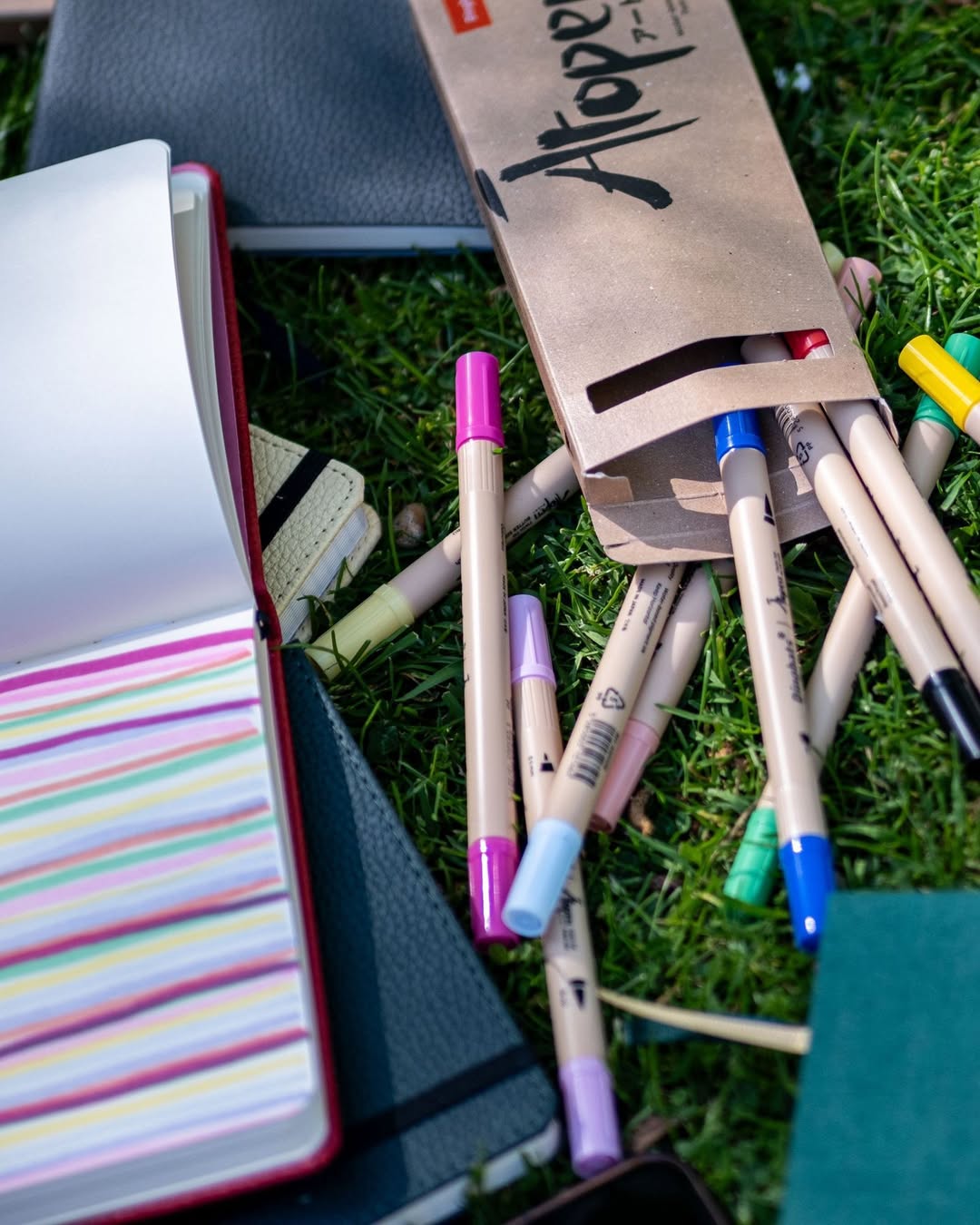
The Dingbats* Pro Collection fits this kind of writing especially well because its 160gsm mixed media paper supports sketches, visual notes, brush pens, markers, calligraphy, moodboards, and light washes. Some ideas need words. Some need space.

Why Writing Things Down Helps Us Notice More
The habit of writing things down changes how you move through the world. When you carry a notebook, you start noticing differently.
A sentence in a book.
A color on a wall.
A phrase someone says.
A bird outside a window.
A pattern in your week.
A small detail from a trip.
A thought that would have passed quickly.
Writing encourages attention. It tells the mind: this could matter.
Things You Notice More When You Write
| Category | Examples |
|---|---|
| Language | Phrases, quotes, names, words |
| Place | Streets, rooms, weather, light |
| People | Gestures, expressions, conversations |
| Patterns | Habits, moods, routines, repetitions |
| Ideas | Connections, questions, solutions |
| Memory | Moments worth keeping |
| Beauty | Small details that would otherwise pass unnoticed |
A notebook does not only record life. It trains you to see it.

Writing as a Way to Understand Yourself
Sometimes we do not know what we think until we write. A feeling can be confusing inside the mind. On the page, it begins to take shape. A decision can feel impossible until the options are written down. A problem can feel tangled until it is broken into sentences.
Writing gives the self a mirror. Not a perfect one. A useful one.
How Writing Supports Self-Understanding
| Writing Practice | What It Reveals |
|---|---|
| Freewriting | What is underneath the surface |
| Lists | What you keep returning to |
| Reflection | What changed and why |
| Goal pages | What you want next |
| Decision notes | What matters most |
| Pattern tracking | What repeats over time |
| Letters to yourself | What you need to say clearly |
A notebook can become a place where you meet yourself more honestly.
Not because the page has answers. Because it gives you room to ask better questions.
Why Paper Still Feels Personal
Paper has presence. It can be held, folded, marked, saved, damaged, repaired, tucked into a pocket, placed on a desk, left open, closed with an elastic band, and returned to years later. That physical presence is why paper still feels personal.
A notebook carries marks of use. The pressure of handwriting. Crossed-out lines. Coffee stains. Folded corners. Loose notes in the pocket. Pages that open more easily because they were returned to often. These details are not flaws. They are evidence.
Why Paper Feels Personal
| Paper Quality | Why It Matters |
|---|---|
| Physical | It exists outside the mind |
| Tactile | You feel the surface as you write |
| Visible | Progress builds page by page |
| Imperfect | Cross-outs and marks become part of the record |
| Durable | A filled notebook can be kept |
| Private | It can hold thoughts not meant for everyone |
| Personal | Handwriting makes the page unmistakably yours |
A notebook becomes more valuable as it is used. That is rare.
The Dingbats* Wildlife Collection: Writing With Character
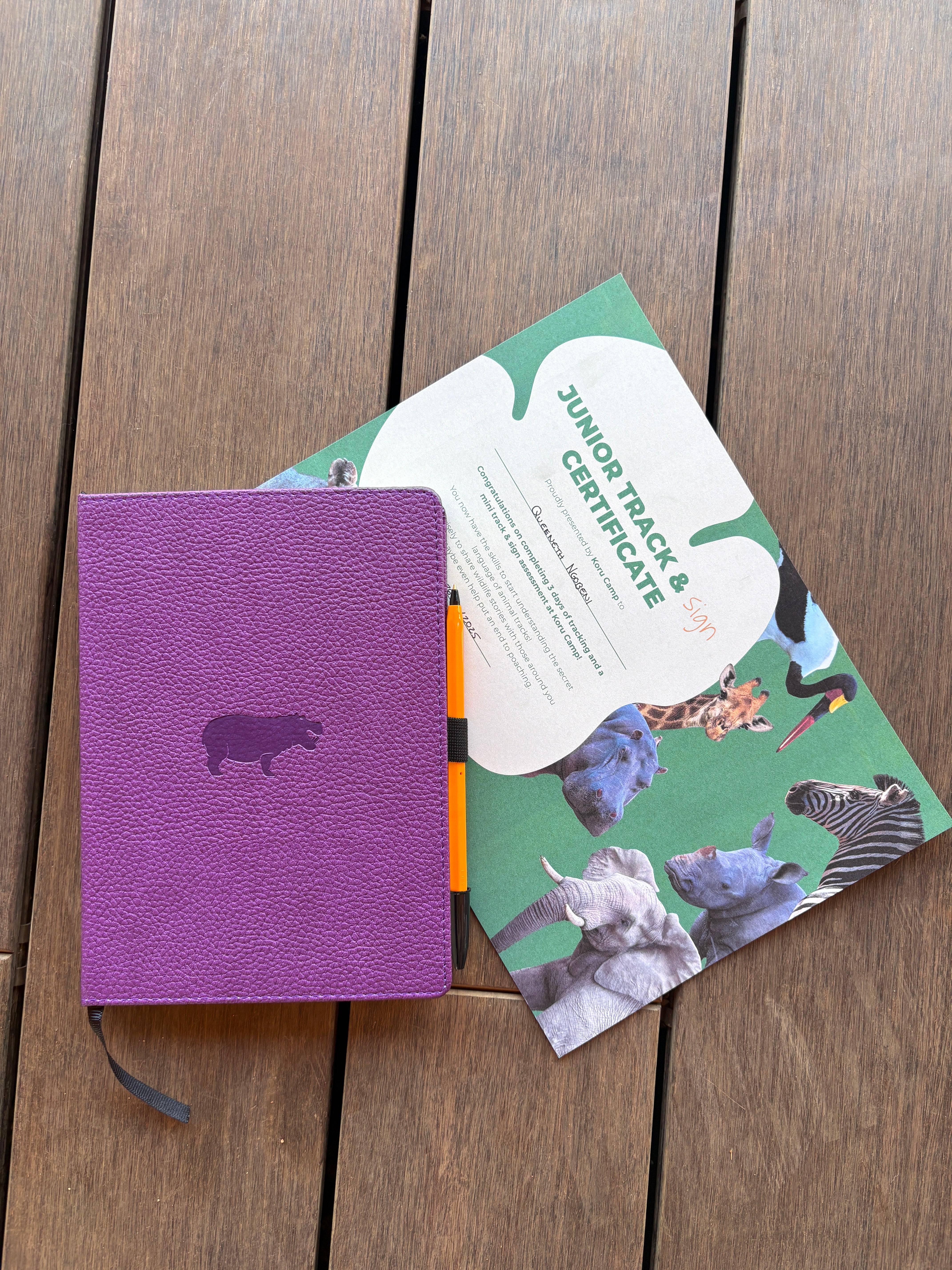
The Dingbats* Wildlife Collection connects naturally to the oldest reasons humans write things down: memory, observation, reflection, and daily record keeping. Its animal-inspired covers give each notebook a sense of character before the first page is filled. A whale, elephant, tiger, duck, deer, bear, or other wildlife motif can make the notebook feel more personal, more expressive, and more connected to the natural world.
Use Wildlife For
| Use | Why It Works |
|---|---|
| Everyday notes | A personal notebook for daily thoughts |
| Journaling | Smooth paper supports longhand reflection |
| Travel notes | Animal covers connect naturally to observation and place |
| Reading notes | Capture quotes, reactions, and ideas |
| Letters | Draft personal messages and unsent thoughts |
| Lists | Keep practical life organized |
| Memory keeping | Record small moments before they fade |
Wildlife is for writing that feels lived in. The kind of writing that becomes more meaningful over time.

The Dingbats* Earth Collection: Writing With Structure
The Dingbats* Earth Collection connects to the organizing side of writing.
Humans have always written things down to keep track, plan, count, arrange, remember, and make sense of time. Earth supports that instinct through structured features that help turn scattered thoughts into systems.
Use Earth For
| Use | Why It Works |
|---|---|
| Planning | Organize days, weeks, and goals |
| Trackers | Record habits, routines, and progress |
| Indexes | Find important notes later |
| Collections | Group ideas, lists, quotes, and memories |
| Project notes | Keep work and creative plans together |
| Monthly reviews | Make time visible |
| Future logs | Record what is coming next |
Earth is for people who want the page to help create order. It turns writing things down into a clearer system.

The Dingbats* Pro Collection: Writing Beyond Words
The Dingbats* Pro Collection connects to the creative side of written history.
Not all records are made of sentences. Some are made of sketches, diagrams, maps, marks, colors, layouts, and visual notes.
Pro gives more room for that kind of thinking. With 160gsm mixed media paper, it supports creative work that moves between writing and image.
Use Pro For
| Use | Why It Works |
|---|---|
| Sketching | Capture visual ideas quickly |
| Moodboards | Build creative direction on paper |
| Visual notes | Combine words, arrows, symbols, and drawings |
| Calligraphy | Practice expressive lettering |
| Light washes | Add color to creative pages |
| Creative planning | Shape projects from early ideas |
| Mixed media | Layer different tools and textures |
Pro is for the part of writing that becomes visual. Because humans do not only think in words.

The Small Things Worth Writing Down
You do not need a historic event to use a notebook. The best writing often begins with small details.
Things Worth Writing Down
| Category | Examples |
|---|---|
| Daily life | What happened today, what mattered, what changed |
| Work | Ideas, decisions, feedback, questions |
| Creativity | Sketches, titles, drafts, experiments |
| Reading | Quotes, reactions, themes, questions |
| Travel | Places, tickets, routes, meals, observations |
| People | Conversations, advice, memories, phrases |
| Personal growth | Lessons, goals, patterns, progress |
| Taste | Songs, colors, books, meals, objects, places |
| Plans | Appointments, priorities, routines, next steps |
| Memories | Small moments that might otherwise fade |
A notebook does not need a dramatic purpose. It only needs to be nearby when something is worth keeping.
How to Build a “Write It Down” Habit
Writing things down does not need to become complicated. In fact, the simpler the habit, the more likely it is to last.
Simple Ways to Start
| Habit | How to Do It |
|---|---|
| Keep one notebook visible | Place it on your desk, nightstand, or in your bag |
| Use one pen | Reduce friction |
| Date the page | Give every note context |
| Write imperfectly | Do not wait for perfect wording |
| Capture fragments | A phrase or bullet is enough |
| Use headings | Make pages easier to return to |
| Add page markers | Bookmark important notes |
| Review weekly | Revisit what you wrote |
| Keep scraps | Use the pocket for loose notes, tickets, or ideas |
| Finish the notebook | Let it become a complete record |
The goal is not to write everything down. The goal is to write down what your future self will be glad you kept.
A Simple “Write It Down” Page Template
A blank page can feel too open. Use a simple structure when you do not know where to begin.
Daily Page Template
| Prompt | Your Notes |
|---|---|
| Date | |
| What happened today? | |
| What do I need to remember? | |
| What did I notice? | |
| What idea came up? | |
| What should I do next? | |
| What is worth keeping from today? |
This page can be used for work, journaling, travel, planning, or personal reflection. It is simple because writing things down should not require too much preparation.
A Simple “Ideas Worth Keeping” Template
Ideas often disappear because we do not capture them quickly enough. This template helps give them a place.
| Prompt | Your Notes |
|---|---|
| Idea | |
| Where it came from | |
| Why it matters | |
| Possible use | |
| Related thoughts | |
| Next step |
A notebook turns passing thoughts into something you can return to. That is the beginning of creative work.
A Simple “Memory Record” Template
For memories, context matters. Write enough detail that the memory can return later.
| Prompt | Your Notes |
|---|---|
| Date | |
| Place | |
| People | |
| What happened | |
| Small details | |
| Why it mattered | |
| Object or scrap to keep |
A memory does not need to be long. It needs enough detail to bring you back.
Why a Filled Notebook Becomes Valuable
An empty notebook has potential. A filled notebook has evidence.
Evidence of what you were thinking.
What you were building.
What you were worried about.
What you were learning.
What you noticed.
What you loved.
What you tried.
What changed.
That is why filled notebooks become hard to discard. They are no longer stationery. They are records.
What a Filled Notebook Shows
| It Shows | Why It Matters |
|---|---|
| Your thoughts | What occupied your mind |
| Your routines | How your days were shaped |
| Your progress | What changed over time |
| Your ideas | What might have become something later |
| Your handwriting | A physical trace of you |
| Your memories | Details that would have faded |
| Your effort | Work before the finished version |
| Your life | Small evidence of being here |
A filled notebook becomes meaningful because it is specific. No one else could have made the same one.
Frequently Asked Questions
Why do humans write things down?
Humans write things down to remember, organize, communicate, preserve, think, create, and pass information across time. Writing helps make thoughts, records, memories, and plans more visible and durable.
What was writing first used for?
Some of the earliest writing systems were used for practical record keeping, including tracking goods, supplies, rations, trade, and administration.
Why is writing things down better than trying to remember?
Writing gives memory a physical place. It reduces mental load, helps clarify thoughts, and makes details easier to return to later.
Why do notebooks still matter?
Notebooks matter because they give thoughts, plans, memories, sketches, lists, and ideas a flexible physical space. They are useful for both practical organization and personal reflection.
What should I write down in a notebook?
You can write down daily notes, ideas, lists, plans, memories, quotes, sketches, travel details, goals, lessons, conversations, and anything you want to remember or understand better.
Which Dingbats* notebook is best for writing things down?
The Dingbats* Wildlife Collection works well for everyday notes, journaling, and personal writing. The Earth Collection works well for planning, tracking, and organized notes. The Pro Collection works well for visual thinking, sketching, and creative projects.

Leave a comment
All comments are moderated before being published.
This site is protected by hCaptcha and the hCaptcha Privacy Policy and Terms of Service apply.