
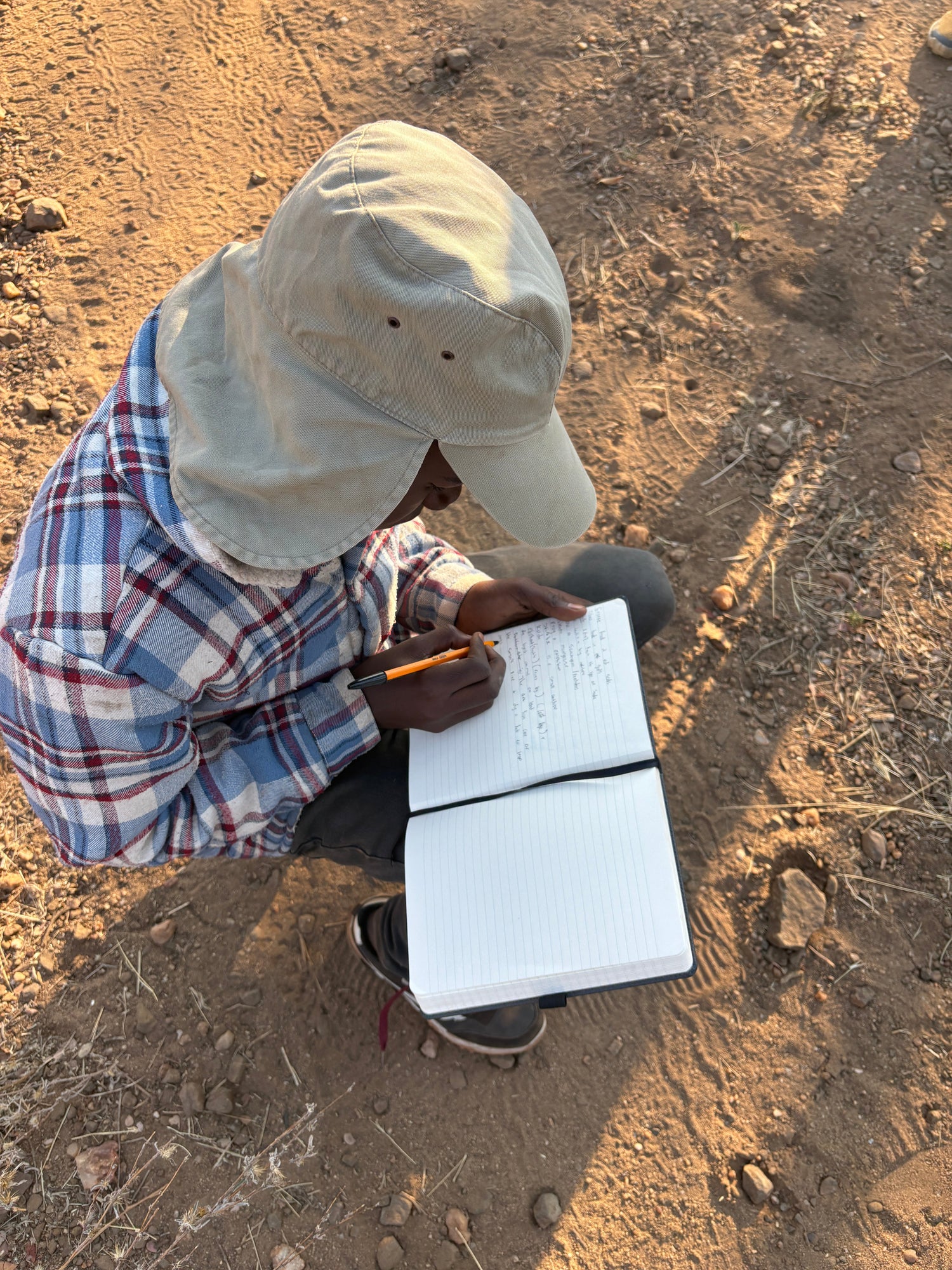
The Morning Deep-Dive: How to Manage Your Dopamine and Reclaim Your First Hour
In the professional landscape of 2026, the battle for your attention begins the millisecond you wake up. For years, the "digital-first" morning was the norm, checking notifications, scrolling headlines, and reacting to emails before your feet even hit the floor.
However, a new neuro-productivity movement is taking over. From LinkedIn to TikTok, the most successful individuals are practicing what is known as "The Analog Morning Deep-Dive." This isn't just about avoiding your phone; it’s about managing your Dopamine Baseline and using a Dingbats* Wildlife Collection notebook to prime your brain for high-resolution thinking.
1. The Neuroscience of the "Dopamine Spike"
To understand why the first hour of your day is so critical, we have to look at the Dopamine System. Dopamine is not just a reward chemical; it is the molecule of motivation and pursuit.
The Digital Trap
When you check your phone first thing in the morning, you subject your brain to a "Variable Reward Schedule." Every like, email, or headline provides a micro-spike of dopamine.
- The Consequence: This creates a "cheap" dopamine high that crashes quickly, leaving you in a "Dopamine Deficit State" for the rest of the day. This is why you feel unmotivated or "foggy" by 11:00 AM.
- The Solution: By delaying digital consumption, you protect your Baseline Dopamine. Instead of "spending" your motivation on a social media feed, you "invest" it into your own thoughts using a physical medium.
2. Analog Priming: Why Writing Beats Scrolling
The "Morning Deep-Dive" relies on a concept called Analog Priming. This is the practice of using a physical notebook to bridge the gap between sleep and deep work.
The Hippocampus and Memory Encoding
Research from the Norwegian University of Science and Technology (2025) has proven that the complex, tactile act of writing on paper triggers the Hippocampus and the Prefrontal Cortex more effectively than typing.
- Spatial Memory: When you write in your Wildlife Collection notebook, your brain "tags" the information with a physical location. You remember the top-left corner of the page where you wrote your primary goal. This creates a "Spatial Scaffold" for your day.
- Cognitive Pacing: Typing is fast, but thinking is slow. Writing by hand forces you to slow down your motor output to match your cognitive processing. This prevents the "rushed" feeling that causes morning anxiety.

3. The Framework: The 3-Tiered Morning Reset
How do you actually implement the Morning Deep-Dive? In 2026, the trend is the 3-Tiered Reset, utilizing the specific features of the Dingbats* collections.
Tier 1: The Sensory Grounding (2 Minutes)
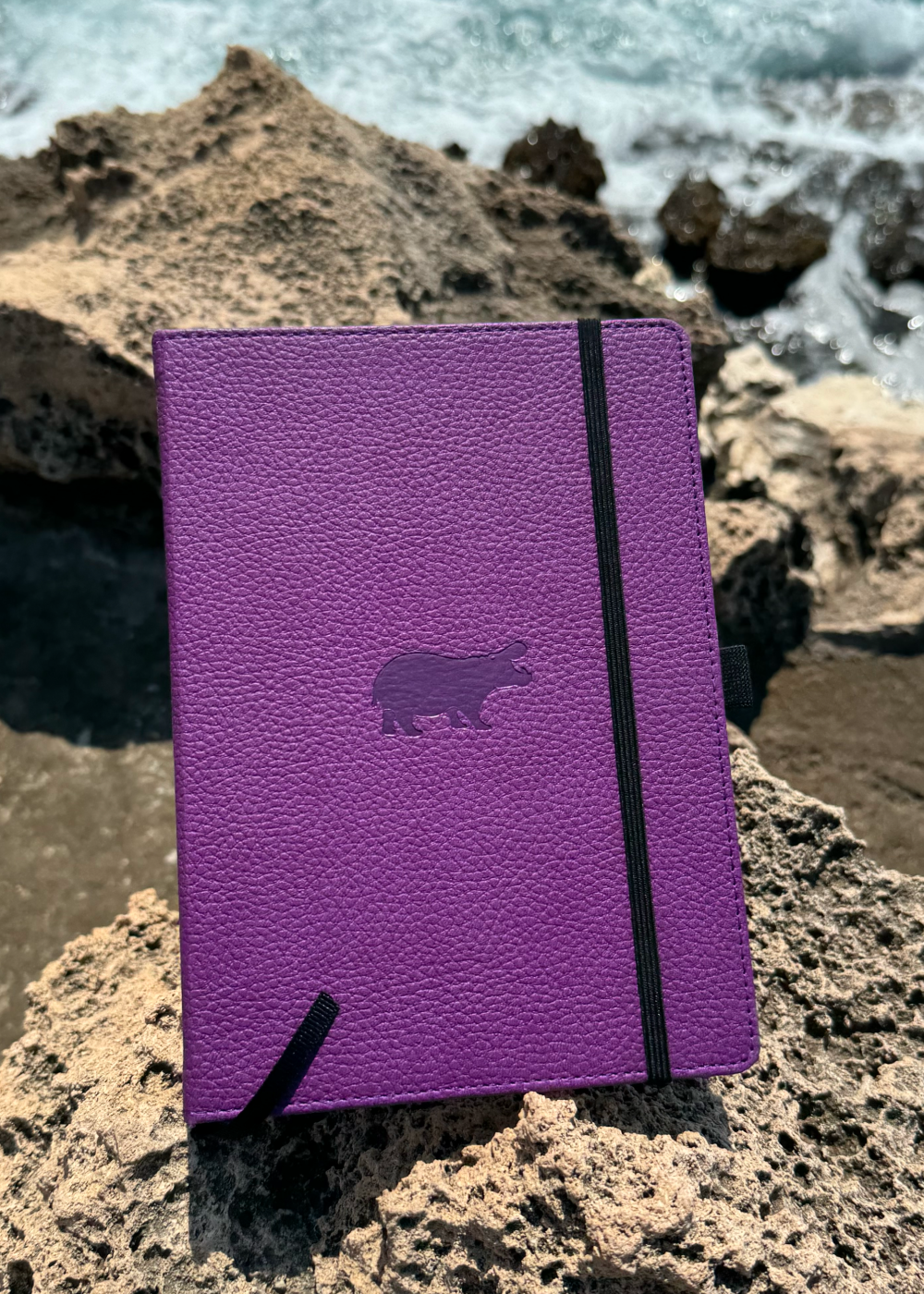
Start with your Wildlife Softcover. Because it is 100% vegan-certified and made with FSC-certified paper, it offers a "biophilic" tactile experience
- The Action: Simply run your hand over the cover and the 100gsm silk paper. This tactile feedback signals "safety" to the Somatosensory Cortex, lowering cortisol levels and transitioning your brain from the Delta/Theta waves of sleep into the Alpha waves of focus.
Tier 2: The Logic Flow (10 Minutes)
Use the 5mm dotted grid to map out your "Big Three."
- Don't use a list; use a flow. Draw circles around your main objectives and use lines to connect them to the "Why" behind them.
- Why it works: Lists are "linear," but the brain is "associative." By using the grid to draw a Mind Map, you are mirroring how your brain naturally stores information.
Tier 3: The "Dopamine Deposit"
Write down one thing you are genuinely curious about solving today. This creates a "Healthy Dopamine Loop." Instead of seeking external rewards from a screen, you are seeking the internal reward of problem-solving.

4. Real-World Inspiration: The Modern "Analog" Routine
What does this look like in the lives of 2026 professionals?
- The Executive: A CEO in Silicon Valley uses her Earth Collection Notebook to "Index" her morning reflections. By numbering her pages, she can look back at her May 7th entry and see exactly where her headspace was a year ago.
- The Designer: A UI/UX designer uses the Pro B5 format for his morning deep-dive. The larger 160gsm canvas allows him to "sketch-note" his subconscious ideas before they are filtered by the constraints of design software.
- The Student: A medical student uses the Wildlife Collection to perform "Active Recall" of the previous night’s study, ensuring the information is moved from short-term to long-term memory before the digital distractions of the day begin.
5. The "Quiet Luxury" of Sustainability
In 2026, high-performance is no longer just about output; it's about alignment. You cannot have a clear mind if your tools are produced unethically.
- FSC Certification: This ensures that every page of your morning routine supports global biodiversity.
- Carbon Neutrality: Every Dingbats* notebook is carbon neutral, meaning your personal growth contributes to planetary health.
- V-Label Vegan Certification: Our commitment to cruelty-free materials ensures that your "Sanctuary of Focus" is built on ethical grounds.

6. Managing the Transition: Going Hybrid
We are not suggesting you abandon the digital world. The Morning Deep-Dive is about Intentional Re-Entry.
Once you have completed your 15–30 minute analog session:
- Close the notebook.
- Take a deep breath.
- Enter your digital workspace with a plan.
Because you have already "encoded" your priorities in your Earth, Wildlife, or Pro notebook, you are now "Notification-Proof." When you see that urgent email, you can measure it against the "Logic Flow" you drew earlier this morning. You are no longer reacting to the world; you are responding to it.
Reclaim Your Intellectual Sovereignty
The Morning Deep-Dive is the most powerful "low-tech" hack of 2026. By choosing a Dingbats* Notebook, you aren't just buying a notebook; you are investing in the "Hardware" of your mind.
Stop letting the algorithm dictate your morning. Pick up your pen, open your notebook, and reclaim your first hour.
Optimize Your Morning Architecture:
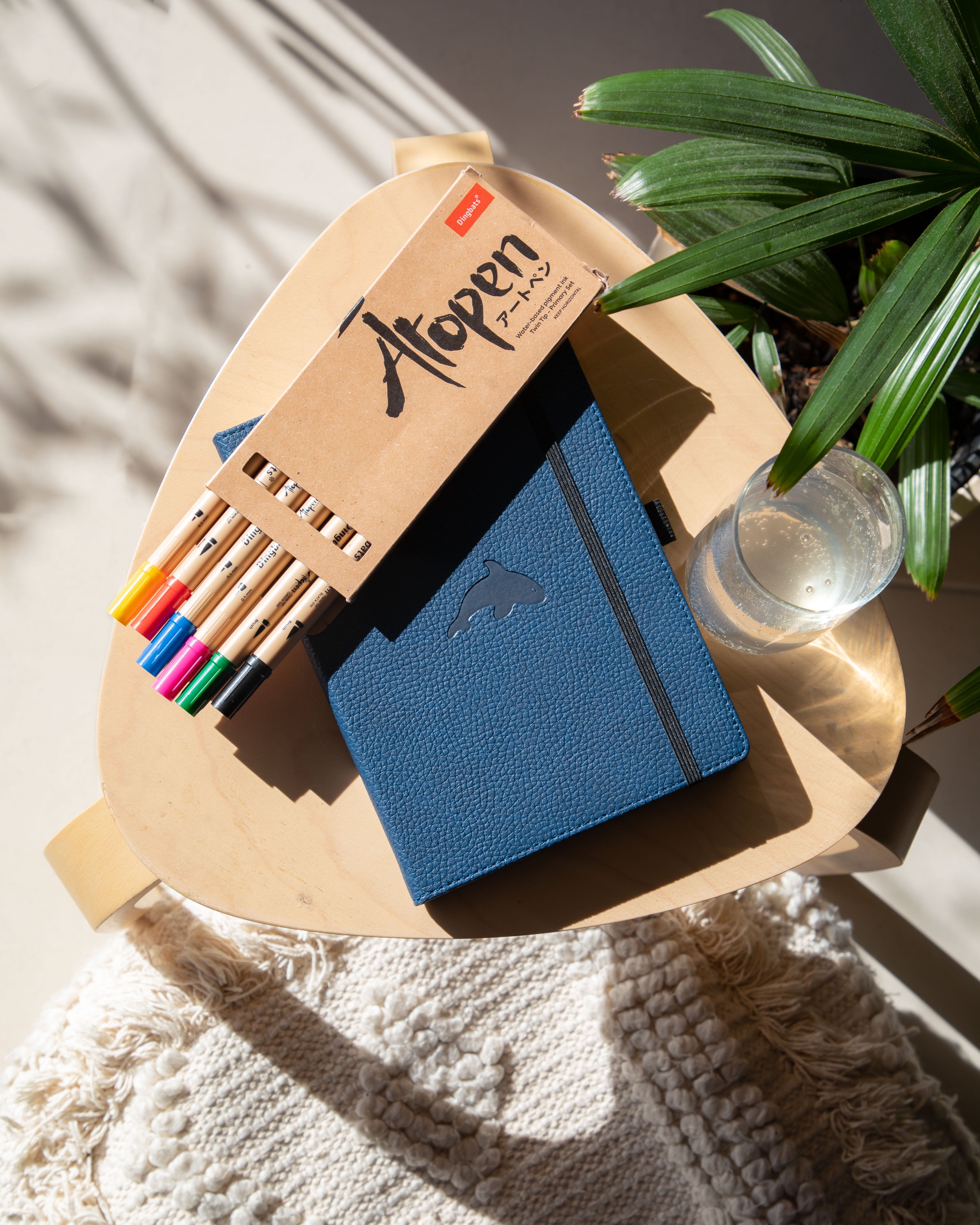
- Shop the Wildlife Collection: The portable companion for your morning reset.
- Explore the Earth Collection: Archival-grade strategy for your 12-week sprints.
- The Pro B5 Collection: The heavy-duty canvas for visual deep-dives.

Leave a comment
All comments are moderated before being published.
This site is protected by hCaptcha and the hCaptcha Privacy Policy and Terms of Service apply.