
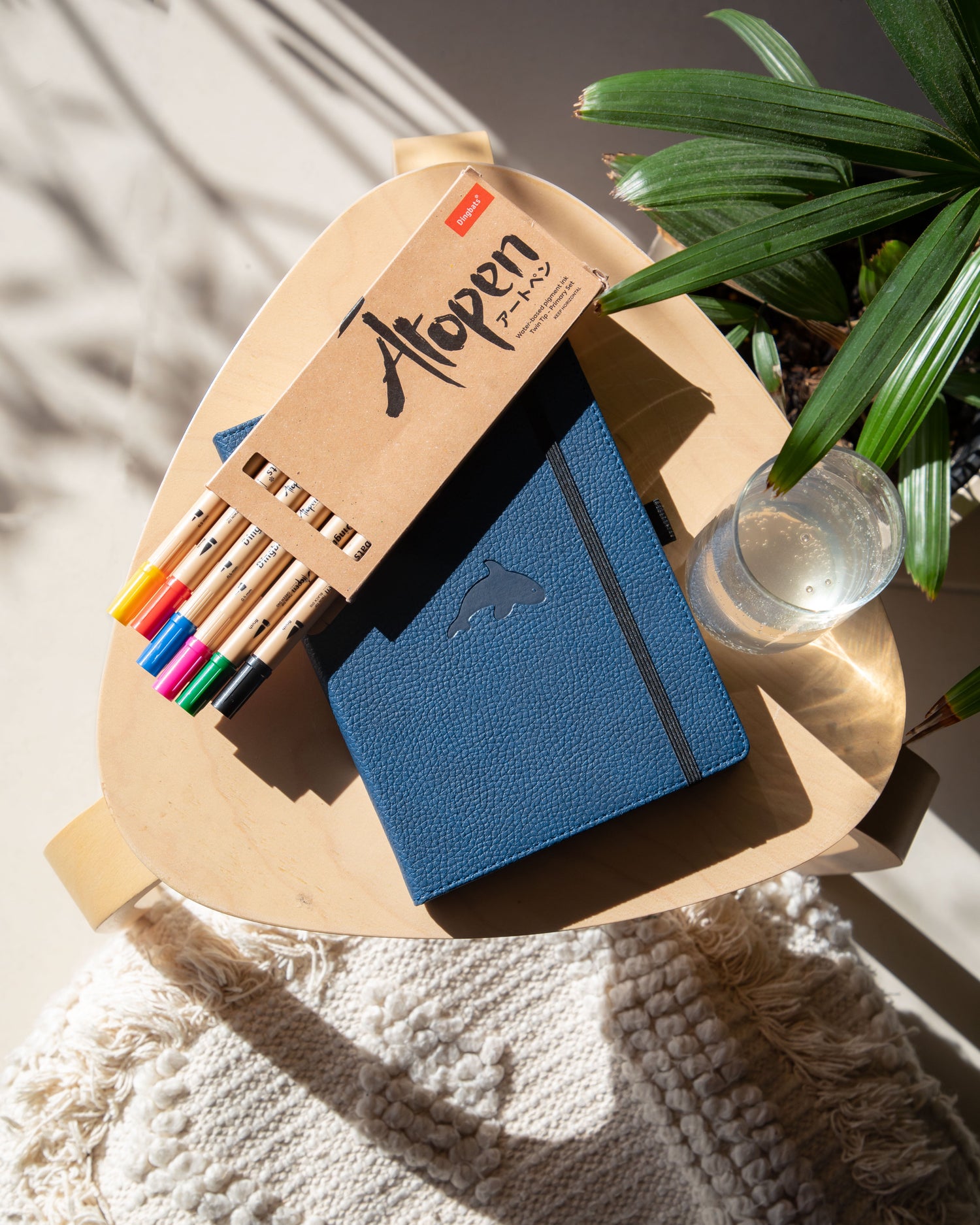
Why Most Notebooks Fail (And What Actually Makes One Worth Using in 2026)
Last updated: May 2026 | A practical guide to choosing a notebook you’ll actually use every day
Most notebooks don’t get finished.
Not because people lack discipline, but because the notebook itself creates friction. Ink bleeds through the page, the paper feels thin, the binding resists staying open, and over time, the experience becomes frustrating rather than effortless. What starts as a tool quickly becomes something you avoid using.
We looked at what actually causes people to abandon notebooks in real-life use, from paper performance to durability, and compared what separates a notebook that gets used daily from one that gets left behind.
Our conclusion: performance matters far more than appearance.
Quick Comparison: What Makes a Notebook Work vs Fail
| Feature | Low-Quality Notebook | High-Quality Notebook (e.g. Dingbats*) |
|---|---|---|
| Paper Weight | 70–80gsm | 100gsm+ (or 160gsm for creative use) |
| Ink Bleed | Frequent | Minimal to none |
| Writing Feel | Rough / inconsistent | Smooth, controlled |
| Binding | Stiff, won’t stay open | Lay-flat |
| Durability | Wears quickly | Built for daily use |
| Versatility | Limited | Multiple rulings & uses |
Why Most Notebooks Fail in Real Use
The problem with most notebooks is not how they look, but how they behave after a few days of use. Thin paper is often the first issue people notice. When ink bleeds through or highlighters leave visible marks on the other side of the page, it limits how the notebook can be used. Over time, this makes writing feel restrictive rather than fluid.
Binding is another overlooked factor. A notebook that doesn’t open flat forces you to hold it down while writing, which may seem minor at first but becomes frustrating when repeated daily. In environments like meetings, lectures, or quick note-taking moments, that friction is enough to discourage use altogether.
Durability also plays a significant role. A notebook that bends easily, wears down in a bag, or loses its structure within weeks begins to feel temporary. When something feels disposable, people treat it that way. They stop investing in it, and eventually stop using it.
Finally, most notebooks fail because they are built with a single use in mind, while real usage is far less structured. A single notebook often becomes a mix of notes, ideas, lists, and sketches. When the format doesn’t support that flexibility, it creates another layer of friction.
What to Look for in a Notebook (2026 Standard)
A notebook that works consistently is one that removes these points of friction rather than adding to them. Paper quality is the most immediate factor. A minimum of 100gsm ensures that ink sits cleanly on the page, allowing you to write on both sides without distraction, this includes both the Earth and Wildlife Dingbats Collections. For more demanding use, such as sketching, and working with markers or mixed media, 160gsm paper provides the thickness and stability required to handle heavier applications, the Dingbats* Pro Collection is the perfect match for this.

Binding should allow the notebook to open fully and remain flat without effort. This enables a more natural writing experience and makes the notebook usable in a wider range of situations, from desks to on-the-go use. All Dingbats* Notebooks are thread-bound, allowing the lay-flat feature to be viable for every notebook!
Structure is equally important, but it depends on the individual. Some people benefit from guided layouts with numbered pages and planning systems (just like our Earth Collection), while others prefer a more open format that allows thoughts to develop freely (including our Wildlife and Pro Collections). The key is not choosing the “best” format, but choosing the one that aligns with how you think.
Durability completes the picture. A well-constructed notebook with a strong cover and reliable binding maintains its integrity over time, allowing it to be used consistently without degradation in performance.
Paper Comparison: 100gsm vs 160gsm
| Paper Type | Best For | Performance |
|---|---|---|
| 100gsm FP Paper (Wildlife and Earth Collections) | Writing, journaling, planning | Smooth, no bleed-through, everyday use |
| 160gsm Mixed Media (Pro Collection) | Sketching, markers, layering | Handles heavy ink, no warping |
In practice, the difference between these paper types becomes clear quickly. For everyday writing, 100gsm paper offers a balance between smoothness and practicality, supporting a wide range of pens without compromising the page. For more creative work, 160gsm paper allows for layering, shading, and the use of heavier tools without damaging the surface.
This distinction is reflected in how Dingbats* structures its collections. The Wildlife and Earth collections are built around 100gsm fountain-pen-friendly paper for daily use, while the Pro Collection uses 160gsm paper designed for mixed media and creative work.
Real-Life Use Cases: Choosing the Right Notebook
The way a notebook is used varies significantly depending on the context. For everyday notes and journaling, flexibility is key. A notebook that allows different types of content to coexist, from lists to reflections, is more likely to be used consistently.
For planning and organization, a more structured format can provide clarity. Features such as numbered pages and predefined layouts help create a system that supports long-term use without requiring additional setup. Check out the Dingbats* Earth Collection!
Creative work places different demands on a notebook altogether. In these cases, paper quality becomes the primary concern, as the ability to handle different media directly impacts what can be created on the page.

Comparison Table: What You Actually Get
| Feature | Cheap Notebook | Premium Notebook (Dingbats*) |
|---|---|---|
| Paper | 70–80gsm | 100gsm / 160gsm |
| Writing Experience | Inconsistent | Smooth, controlled |
| Durability | Short-term | Long-term |
| Usability | Limited | Multi-purpose |
| Cost Over Time | Repeated purchases | One notebook lasts |
Why Price Isn’t the Real Cost
The difference between a low-cost notebook and a higher-quality one is not just the upfront price, but how it performs over time. A cheaper notebook may need to be replaced multiple times, or may never be fully used due to its limitations. This creates a higher cost in both money and usability.
A well-made notebook, on the other hand, is more likely to be used consistently and last longer. It becomes something you rely on, rather than something you replace.
Frequently Asked Questions
Why do most notebooks bleed through?
Most notebooks use paper below 80gsm, which cannot properly contain ink, especially from gel pens, markers, or fountain pens. That is why Dingbats* chooses to use 100gsm and 160gsm paper to enhance your journaling experience.
What paper weight should I choose?
100gsm is suitable for everyday writing, while 160gsm is better suited for creative or heavy ink use.
Does lay-flat binding really matter?
Yes. It directly affects usability and determines whether a notebook feels effortless or frustrating to write in. Check out Dingbats* lay-flat notebooks!
Can one notebook work for everything?
Yes, provided it offers sufficient versatility in format and paper quality.

Our Verdict
Most notebooks fail because they are not designed for real use. They prioritize appearance over performance, which leads to small but consistent points of friction that discourage long-term use.
A notebook that works well does the opposite. It removes obstacles, supports different types of thinking, and maintains its quality over time.
Dingbats* notebooks are built around this principle. Not to be used perfectly, but to be used consistently.


Leave a comment
All comments are moderated before being published.
This site is protected by hCaptcha and the hCaptcha Privacy Policy and Terms of Service apply.