
Last updated: September 2026 | A guide to collecting, sentimental objects, memory, identity, keepsakes, personal archives, and Dingbats* notebooks
Some things are valuable without being worth much money.
A notebook from a certain year.
A ticket from a trip.
A receipt from a meal you still remember.
A postcard you never sent.
A pen you used through a project.
A shell from a beach.
A birthday card with someone’s handwriting.
A finished journal you cannot bring yourself to throw away.
To someone else, these objects may look ordinary. To you, they hold a story. That is the psychology of collecting. People do not only collect rare, expensive, or impressive things. They collect objects that help them remember, express who they are, make sense of time, feel connected to people and places, and preserve pieces of life that might otherwise disappear.
A collection can be a shelf of books.
A box of letters.
A drawer of tickets.
A stack of filled notebooks.
A folder of postcards.
A pocket full of paper scraps.
A group of objects that quietly says: this mattered enough to keep.
At Dingbats*, this feels especially true of notebooks. A notebook begins as something useful, but after it is filled, it becomes something else. It becomes a record of thoughts, lists, plans, memories, sketches, routines, projects, and handwriting from a version of yourself that no longer exists in exactly the same way. That is why a notebook can become part of a collection. Not because it is unused and perfect. Because it was used, and now it holds meaning.
Quick Overview: Why People Collect Things
| Reason | What It Means |
|---|---|
| Memory | Objects help preserve people, places, moments, and phases of life |
| Identity | Collections reflect taste, values, interests, and personal history |
| Storytelling | Objects give life stories a physical form |
| Comfort | Familiar things can feel grounding and reassuring |
| Order | Collections help organize experience into something visible |
| Connection | Objects can link us to people, communities, cultures, and places |
| Continuity | Collections create a bridge between past, present, and future |
| Creativity | Collecting can inspire writing, design, journaling, and visual thinking |
Collecting is not always about ownership. Often, it is about meaning.
Why Do We Collect Things?
Collecting is one of the ways people make meaning from the world.
A collection says, “I noticed this.”
“I chose this.”
“I kept this.”
“This belongs to a story.”
“This connects to who I am.”
Some collections are organized and intentional. Others happen slowly, almost by accident. You may not think you are collecting until you realize you have kept every concert ticket, every notebook you filled, every postcard from a certain city, or every animal-themed notebook from a collection you love.
Collecting can begin with taste, memory, curiosity, identity, or emotion. Sometimes it begins with one object that feels too meaningful to let go.
Common Reasons People Collect
| Reason | Example |
|---|---|
| Personal memory | Keeping tickets, receipts, notebooks, or letters |
| Taste | Collecting objects in a certain color, style, or theme |
| Identity | Keeping items connected to hobbies, work, travel, or creativity |
| Nostalgia | Saving objects from childhood or a past phase |
| Completion | Wanting the full set of something |
| Beauty | Choosing objects because they feel visually pleasing |
| Use | Keeping tools, notebooks, pens, or materials you return to often |
| Story | Saving items because each one has meaning |
A collection does not need to be impressive to matter. It only needs to carry meaning for the person keeping it.
The Difference Between Collecting and Clutter
Collecting and clutter can look similar from the outside. Both involve things. But emotionally, they feel different.
A collection has meaning, intention, or connection. It may be small or large, but the objects inside it tell a story. Clutter often feels accidental, stressful, or unresolved. It may include things you do not know why you kept, things you feel guilty about, or things that no longer connect to your life.
The difference is not always the object itself. It is the relationship you have with it.
Collecting vs Clutter
| Collecting | Clutter |
|---|---|
| Chosen intentionally | Accumulated without thought |
| Holds meaning | Feels unclear or disconnected |
| Creates connection | Creates stress |
| Has a story | Has no obvious reason for staying |
| Reflects identity or memory | Feels like visual or emotional noise |
| Can be organized | Often feels hard to manage |
| Feels worth keeping | Feels like something you should deal with |
A notebook can help with this distinction. When you write the story behind an object, you learn whether it still means something. If you cannot explain why you kept it, it may be clutter. If one sentence brings back a whole memory, it may be part of your personal archive.
Why Objects Hold Memory
Objects hold memory because they give the past a physical anchor. A memory inside the mind can fade, shift, or blur. But an object can bring it back with surprising force.
A ticket can return you to a train platform.
A notebook can return you to a certain year.
A recipe card can return you to someone’s kitchen.
A receipt can return you to a conversation.
A postcard can return you to a place.
A pen can return you to a project you worked hard to finish.
Objects do not remember in a literal sense. But they help us remember.
How Objects Anchor Memory
| Object | Memory It Can Hold |
|---|---|
| Notebook | Thoughts, handwriting, plans, ideas, routines |
| Ticket | Journey, event, person, date, place |
| Letter | Voice, relationship, emotion, handwriting |
| Receipt | Meal, city, conversation, ordinary day |
| Postcard | Place, message, travel, connection |
| Pen | Work, project, habit, writing phase |
| Book | Reading memory, marginalia, quotes, ideas |
| Photograph | Visual moment, people, setting |
A collection of objects can become a collection of memory anchors. Together, they tell a story that no single object could tell alone.

Why We Keep Things That Have No Monetary Value
Some objects have little financial value but enormous personal value.
That is because value is not only economic.
There is emotional value.
Memory value.
Identity value.
Relationship value.
Creative value.
Historical value.
Symbolic value.
A filled notebook may not be worth anything to someone else, but to the person who wrote it, it can hold months or years of thought. A ticket may be worthless after the event, but it can preserve the memory of being there. A handwritten note may be just paper, but the handwriting makes it irreplaceable.
Types of Non-Monetary Value
| Value Type | What It Means |
|---|---|
| Emotional value | The object carries feeling |
| Memory value | The object helps you remember |
| Identity value | The object reflects who you are or were |
| Relationship value | The object connects to someone |
| Place value | The object links to a specific location |
| Time value | The object belongs to a phase of life |
| Creative value | The object inspires future work |
| Story value | The object holds a narrative |
This is why people keep things that would look worthless in a resale listing. The value lives in the story.
Collections as Personal Archives
A collection can become a personal archive.
Not in the formal museum sense.
Not necessarily labeled, cataloged, and stored perfectly.
But still an archive.
A group of objects can preserve a version of your life: where you went, what you loved, what you worked on, what you read, what you wrote, what you kept, what you returned to, and what felt important enough to save.
A personal archive can include:
- notebooks
- journals
- letters
- photos
- tickets
- postcards
- cards
- sketches
- recipes
- maps
- scraps
- objects from travel
- project notes
- books with marginalia
A notebook is especially useful inside a personal archive because it adds context. Objects show that something existed. Writing explains why it mattered.

Why Notebooks Become Collectible
Notebooks are unusual objects because they can be collected before or after use. Some people collect blank notebooks because they love covers, paper, sizes, textures, colors, or themes. Others collect filled notebooks because each one holds a chapter of life.
Both forms make sense. A blank notebook represents possibility. A filled notebook represents evidence.
The emotional value changes over time.
Why People Collect Notebooks
| Reason | Why It Matters |
|---|---|
| Design | Covers, colors, textures, and details feel personal |
| Paper feel | Different paper creates different writing experiences |
| Format | Sizes and layouts support different uses |
| Theme | Animal, nature, travel, or creative identity |
| Completion | Collecting a full series or set |
| Memory | Filled notebooks become records of life |
| Creativity | Different notebooks invite different kinds of thinking |
| Ritual | Choosing a notebook becomes part of a writing habit |
A Dingbats* notebook can become collectible because each collection has a strong identity.
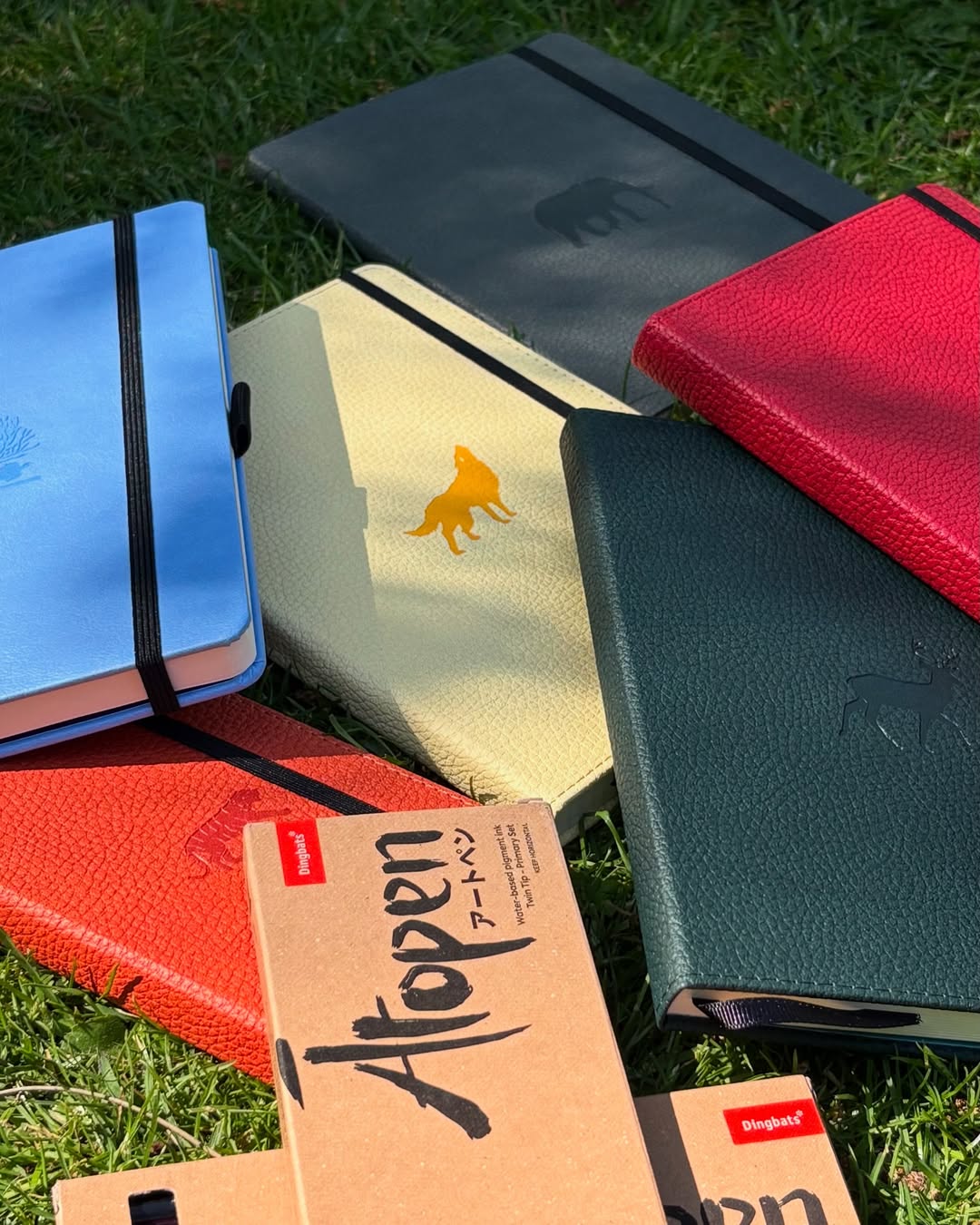
The Wildlife Collection gives each notebook an animal personality.
The Earth Collection connects to planning and nature-led structure.
The Pro Collection supports creative work and visual thinking.
The notebook is useful first. Then, over time, it becomes meaningful.

The Psychology of Completing a Collection
There is a special satisfaction in completing a collection. The final piece changes the meaning of the whole set.
One notebook is an object.
Two notebooks are a pair.
Several notebooks become a pattern.
A full collection becomes a story.
Completion gives a sense of order. It turns separate objects into a whole. It also gives the collector a feeling of progress, commitment, and personal connection.
This is especially true when the collection has strong visual identity. Animal covers, color groups, matching formats, or themed designs make the collection feel more intentional.
Why Completion Feels Satisfying
| Reason | What It Means |
|---|---|
| Order | The set feels complete |
| Progress | Each object marks a step |
| Identity | The collection reflects taste and interest |
| Anticipation | Each new piece creates excitement |
| Story | The full collection says more than one object |
| Display | The objects look meaningful together |
| Belonging | Collectors may feel connected to a wider community |
This is why someone might want every animal in the Wildlife Collection. It is not only about needing more notebooks. It is about the satisfaction of building a personal set.
Why Animal Collections Feel Personal
Animal-themed collections often feel more emotional than abstract collections. Animals carry symbolism, mood, personality, and association. People connect to animals because they can represent traits, memories, places, causes, or parts of identity.
A whale can feel calm and deep.
An elephant can feel wise and steady.
A tiger can feel bold and powerful.
A duck can feel curious and light.
A deer can feel gentle and alert.
A bear can feel grounded and protective.
This makes animal stationery especially collectible. Each design feels like a different character.
Why Animal Collections Work
| Element | Why It Matters |
|---|---|
| Symbolism | Animals carry meaning beyond appearance |
| Personality | Each design feels distinct |
| Variety | Different animals invite collection |
| Emotional connection | People identify with certain animals |
| Giftability | Animal designs feel personal for different recipients |
| Story | Wildlife themes connect objects to nature |
| Display | A set of animal covers feels visually rich |
The Dingbats* Wildlife Collection works because it combines function with animal identity.
Each notebook is useful, but it also feels like a character in a larger collection.
Why We Collect Objects Connected to Identity
Collections often reflect identity. Not always loudly. Sometimes quietly.
A shelf of books can say what you are curious about.
A stack of notebooks can say that writing matters to you.
A collection of travel tickets can say that movement shaped you.
A box of letters can say that relationships matter.
A set of animal notebooks can say something about your connection to nature, design, or personal symbolism.
We keep objects that feel like they belong to the story we tell about ourselves.
Collections Can Reflect
| Identity Area | Example |
|---|---|
| Interests | Books, notebooks, art supplies, music, maps |
| Values | Sustainable products, handmade objects, vegan materials |
| Creativity | Sketchbooks, journals, pens, papers |
| Work | Project notebooks, tools, samples |
| Places | Postcards, tickets, souvenirs |
| Relationships | Letters, cards, gifts |
| Taste | Colors, textures, themes, design styles |
| Personal history | Objects from different life phases |
A collection can show who you were, who you are, and what you keep becoming.
The Role of Nostalgia in Collecting
Nostalgia is one of the strongest reasons people keep objects. An object can hold the feeling of a time that no longer exists.
A notebook from school.
A letter from an old friend.
A ticket from a first trip.
A receipt from a place that closed.
A postcard from a city you miss.
A journal from a year that changed you.
Nostalgia is not only sadness for the past. It can also be connection. It helps us feel continuity between who we were and who we are now.
Objects That Often Become Nostalgic
| Object | What It Can Bring Back |
|---|---|
| Old notebook | A phase of life, handwriting, routines |
| School notes | Learning, friendships, pressure, identity |
| Travel ticket | Place, movement, independence |
| Letter | Someone’s voice and relationship |
| Photo | A visual moment |
| Recipe card | Family, care, home, tradition |
| Music object | A song, era, or mood |
| Childhood item | Early identity and memory |
A notebook becomes nostalgic because it holds a past self in your own handwriting. That is hard to replace.

Collecting as a Way to Create Order
Collections are not only emotional. They can also create order. To collect is to sort, group, choose, arrange, name, compare, and preserve. That act can make the world feel more understandable.
A collection says: these things belong together. A notebook can do the same with thoughts.
When you create an index, a list, a quote bank, a travel log, a project archive, or a personal timeline, you are collecting pieces of life into a form you can return to.
How Collecting Creates Order
| Action | What It Does |
|---|---|
| Sorting | Groups similar things |
| Naming | Gives the collection identity |
| Arranging | Creates structure |
| Completing | Gives a sense of wholeness |
| Recording | Preserves context |
| Reviewing | Makes meaning visible |
| Displaying | Turns private value into visible story |
| Archiving | Keeps memory accessible |
Earth helps collect thoughts, not just objects.
Collecting as Creative Inspiration
Collections can inspire creativity.
A collection of postcards can inspire a color palette.
A stack of notebooks can inspire a writing habit.
A box of tickets can become a travel archive.
A group of pressed leaves can become a nature journal.
A set of quotes can become an essay.
A page of sketches can become a design direction.
Creative people often collect because collected things become raw material. They provide references, textures, moods, stories, shapes, colors, and associations.
Creative Collections Can Include
| Collection | Creative Use |
|---|---|
| Paper scraps | Collage, visual journals, memory pages |
| Quotes | Writing prompts, essays, captions |
| Sketches | Design ideas, art studies, visual thinking |
| Tickets | Travel pages, personal archives |
| Colors | Moodboards and palettes |
| Packaging | Texture, typography, design inspiration |
| Natural objects | Sketching, observation, seasonal pages |
| Notebooks | Different spaces for different creative uses |
The Dingbats* Pro Collection fits this well because its 160gsm mixed media paper supports sketches, moodboards, collage-style pages, brush pens, markers, calligraphy, visual notes, and light washes. A collection can become the beginning of creative work.

Why We Keep Finished Notebooks
A finished notebook is one of the hardest things to throw away.
It may not be tidy.
It may not be beautiful.
It may not make sense to anyone else.
It may contain old tasks, outdated plans, half-finished ideas, and pages you barely remember writing.
But it also holds time. A finished notebook is a physical record of a period of life. It shows what you were thinking, doing, planning, noticing, learning, and trying to remember.
Why Finished Notebooks Feel Valuable
| Reason | What It Means |
|---|---|
| Handwriting | The pages carry a physical trace of you |
| Dates | The notebook belongs to a period of time |
| Process | It shows ideas before they were finished |
| Memory | It preserves details you may have forgotten |
| Routine | It shows the rhythm of daily life |
| Growth | It reveals change over time |
| Effort | It records work that may not appear elsewhere |
| Identity | It captures what mattered to you then |
A finished notebook is not just used stationery. It is a collected version of your life.
Why Some People Collect Blank Notebooks
Collecting blank notebooks is not only about stationery obsession. A blank notebook represents possibility.
It could become a journal.
A travel log.
A sketchbook.
A project notebook.
A reading journal.
A planner.
A place for letters.
A personal archive.
A creative notebook.
A record of a future chapter.
This potential is part of the appeal. A blank notebook is not empty in the emotional sense. It is waiting.
Why Blank Notebooks Are Appealing
| Appeal | Why It Matters |
|---|---|
| Possibility | The notebook could become many things |
| Design | Covers and colors invite different moods |
| Preparedness | Having a notebook ready feels useful |
| Ritual | Starting a new notebook feels like a beginning |
| Identity | Stationery reflects taste and habits |
| Collection | Different formats support different uses |
| Inspiration | A beautiful notebook can make writing feel inviting |
The key is to let blank notebooks eventually become used notebooks. The value deepens when possibility turns into pages.
The Dingbats* Wildlife Collection: Collecting With Character
The Dingbats* Wildlife Collection is naturally collectible because each notebook has its own animal identity. The covers are not random designs. They carry character, symbolism, and mood. This makes each notebook feel personal, while the full collection feels connected.
Why Wildlife Feels Collectible
| Feature | Why It Matters |
|---|---|
| Animal covers | Each notebook has a distinct personality |
| Nature-inspired design | Creates emotional and visual connection |
| Multiple animals | Encourages collecting by character or meaning |
| Practical formats | The notebooks are useful, not just decorative |
| 100gsm cream paper | Supports everyday writing |
| Vegan materials | Aligns animal inspiration with animal-friendly choices |
| FSC-certified paper | Adds responsible material value |
A Wildlife notebook can be collected because of the cover. But it becomes kept because of the pages inside.
The Dingbats* Earth Collection: Collecting With Structure
The Dingbats* Earth Collection connects to the organizing side of collecting. It is ideal for people who like systems, indexes, trackers, goals, routines, lists, and carefully arranged thoughts. A collection does not always need to be physical objects on a shelf. It can also be a collection of information: books read, places visited, habits tracked, memories saved, ideas developed, lessons learned.
Use Earth to Collect
| Collection Type | Example |
|---|---|
| Ideas | Concepts, projects, notes, questions |
| Habits | Trackers, routines, progress |
| Memories | Monthly recaps, timelines, milestones |
| Reading | Quotes, books, themes, notes |
| Travel | Places, routes, lists, plans |
| Work | Projects, decisions, lessons, follow-ups |
| Personal growth | Goals, reflections, changes |
Earth is for collectors of patterns. People who want to see life arranged on the page.
The Dingbats* Pro Collection: Collecting Visually
The Dingbats* Pro Collection is ideal for visual collectors. Some collections are better seen than listed.
Color palettes.
Sketches.
Paper scraps.
Moodboards.
Maps.
Pressed details.
Design references.
Creative experiments.
With 160gsm mixed media paper, Pro gives visual collections enough space to become layered pages.
Use Pro to Collect
| Visual Collection | How to Use It |
|---|---|
| Color palettes | Swatches, notes, combinations |
| Paper scraps | Collage and memory pages |
| Sketches | Objects, places, animals, ideas |
| Moodboards | Visual direction for projects or seasons |
| Travel keepsakes | Tickets, maps, receipts, sketches |
| Creative references | Textures, layouts, typography, materials |
| Nature observations | Leaves, colors, patterns, drawings |
Pro is for people who collect visually. The ones who understand ideas through color, shape, texture, and arrangement.

How to Start a Meaningful Collection
A meaningful collection does not need to be expensive or large. Start with a theme. It could be notebooks, tickets, postcards, letters, quotes, pressed flowers, travel scraps, recipes, books, or objects connected to a person, place, or phase of life. Then add context. Without context, objects can become confusing over time. With a short note, they become easier to return to.
Simple Collection Setup
| Step | What to Do |
|---|---|
| Choose a theme | Decide what kind of objects or notes you want to collect |
| Set a boundary | Keep the collection focused enough to manage |
| Add dates | Give objects time context |
| Write captions | Explain why each item matters |
| Store intentionally | Use boxes, shelves, folders, pockets, or notebook pages |
| Review occasionally | Notice what still feels meaningful |
| Let go when needed | Not everything has to stay forever |
A collection becomes more meaningful when it is curated, not endless. The goal is not to keep everything. It is to keep what tells the story.
A Notebook Collection Page Template
Use this template to record why a collection matters.
Collection Page
| Prompt | Your Notes |
|---|---|
| What am I collecting? | |
| Why did this collection begin? | |
| What does it say about me? | |
| What are the most meaningful pieces? | |
| What stories are attached to them? | |
| How do I want to store or display them? | |
| What should I stop collecting? | |
| What still feels missing? |
This works for physical collections, personal archives, reading lists, travel objects, creative materials, and notebooks. A collection becomes clearer when you write down its meaning.
A Finished Notebook Archive Template
Finished notebooks deserve context too. Before putting one on a shelf, add a final note.
Finished Notebook Archive Page
| Prompt | Your Notes |
|---|---|
| Notebook used | |
| Date started | |
| Date finished | |
| What phase of life does it represent? | |
| What did I write about most? | |
| Which pages matter most? | |
| What objects or scraps are inside? | |
| What changed while I used it? | |
| Why am I keeping it? |
This turns a filled notebook into an intentional archive. Not just something stored away. Something understood.
A Keepsake Caption Template
When saving an object, write a short caption.
Keepsake Caption
| Prompt | Your Notes |
|---|---|
| Object | |
| Date | |
| Place | |
| Person connected to it | |
| Why I kept it | |
| What it reminds me of | |
| One sentence memory |
This works for tickets, receipts, postcards, cards, letters, photos, labels, tags, and small objects. A caption protects the memory from fading.
How to Collect Without Keeping Too Much
Collecting can become overwhelming when everything feels meaningful. To avoid that, create gentle rules. A rule does not make the collection less emotional. It protects it.
Collection Boundaries
| Boundary | Example |
|---|---|
| Keep the best example | One ticket from a trip, not every receipt |
| Keep what has a story | Save objects you can explain |
| Keep what fits the theme | Avoid unrelated accumulation |
| Keep what you can store well | Do not damage what matters |
| Keep what still connects | Let go of objects that no longer speak |
| Keep context | Write down why something matters |
| Keep intentionally | Choose, do not simply accumulate |
A collection is strongest when each piece has room to matter.
When to Let Go of a Collection
Sometimes a collection stops feeling like you. That does not mean it was meaningless. It may have belonged to an earlier version of your life. It may have served its purpose. It may have helped you remember, create, explore, or belong for a while. Letting go can be part of the story too. Before letting go, you can preserve the memory. Write about the collection. Photograph it. Keep one piece. Save a page in your notebook explaining what it meant.
Questions Before Letting Go
| Question | Why It Helps |
|---|---|
| Does this still feel connected to me? | Checks current meaning |
| Do I know why I kept it? | Tests memory value |
| Is it creating joy or stress? | Checks emotional weight |
| Do I need the object, or only the story? | Helps decide what to keep |
| Can I keep one piece instead of all? | Preserves meaning without overload |
| Have I written down what it meant? | Keeps the memory even if the object goes |
You do not have to keep every object forever. Sometimes the story is enough.
Frequently Asked Questions
Why do people collect things?
People collect things for memory, identity, beauty, order, nostalgia, creativity, completion, connection, and storytelling. Collections help people preserve meaning and make parts of life visible.
Why do we keep things that have no monetary value?
We keep things with no monetary value because they can have emotional, memory, identity, relationship, place, time, creative, or story value.
What is the psychology of collecting?
The psychology of collecting explores why people gather, keep, organize, and attach meaning to objects. Collecting can be connected to memory, identity, nostalgia, comfort, curiosity, and the desire to create order.
Is collecting the same as hoarding?
No. Collecting is usually intentional and meaningful, while hoarding is associated with distress, difficulty discarding, and impairment. A collection should feel connected and manageable, not overwhelming.
Why do people collect notebooks?
People collect notebooks because of design, paper feel, format, theme, creativity, completion, and memory. Blank notebooks represent possibility, while filled notebooks become personal records.
Why are finished notebooks hard to throw away?
Finished notebooks are hard to throw away because they hold handwriting, dates, thoughts, routines, memories, ideas, projects, and evidence of a specific phase of life.
Which Dingbats* notebook is best for collectors?
The Wildlife Collection is especially collectible because of its animal-inspired covers. The Earth Collection is ideal for organizing collections, lists, and archives. The Pro Collection is best for visual collections, moodboards, sketches, and creative pages.

Leave a comment
All comments are moderated before being published.
This site is protected by hCaptcha and the hCaptcha Privacy Policy and Terms of Service apply.