
Last updated: September 2026 | A guide to rereading old notes, finished notebooks, journaling, memory, reflection, personal growth, and Dingbats* notebooks
Old notes have a strange power. You open a notebook from months ago, or years ago, and suddenly a past version of yourself is there on the page.
Not perfectly.
Not completely.
But clearly enough.
A list you forgot making.
A goal you used to care about.
A phrase you kept repeating.
A plan that never happened.
A worry that no longer feels so large.
A note from a meeting that became more important later.
A sentence that sounds exactly like you, but also like someone you used to be.
Writing things down is powerful. But rereading what you wrote can be just as powerful.
Old notes help you see patterns, remember details, understand change, revisit ideas, and recognize progress that may have been invisible while it was happening. They show what your mind was carrying at a certain time. They show what kept coming back. They show what mattered before you knew it mattered.
A notebook is not only useful while you are filling it. Sometimes its value appears later.
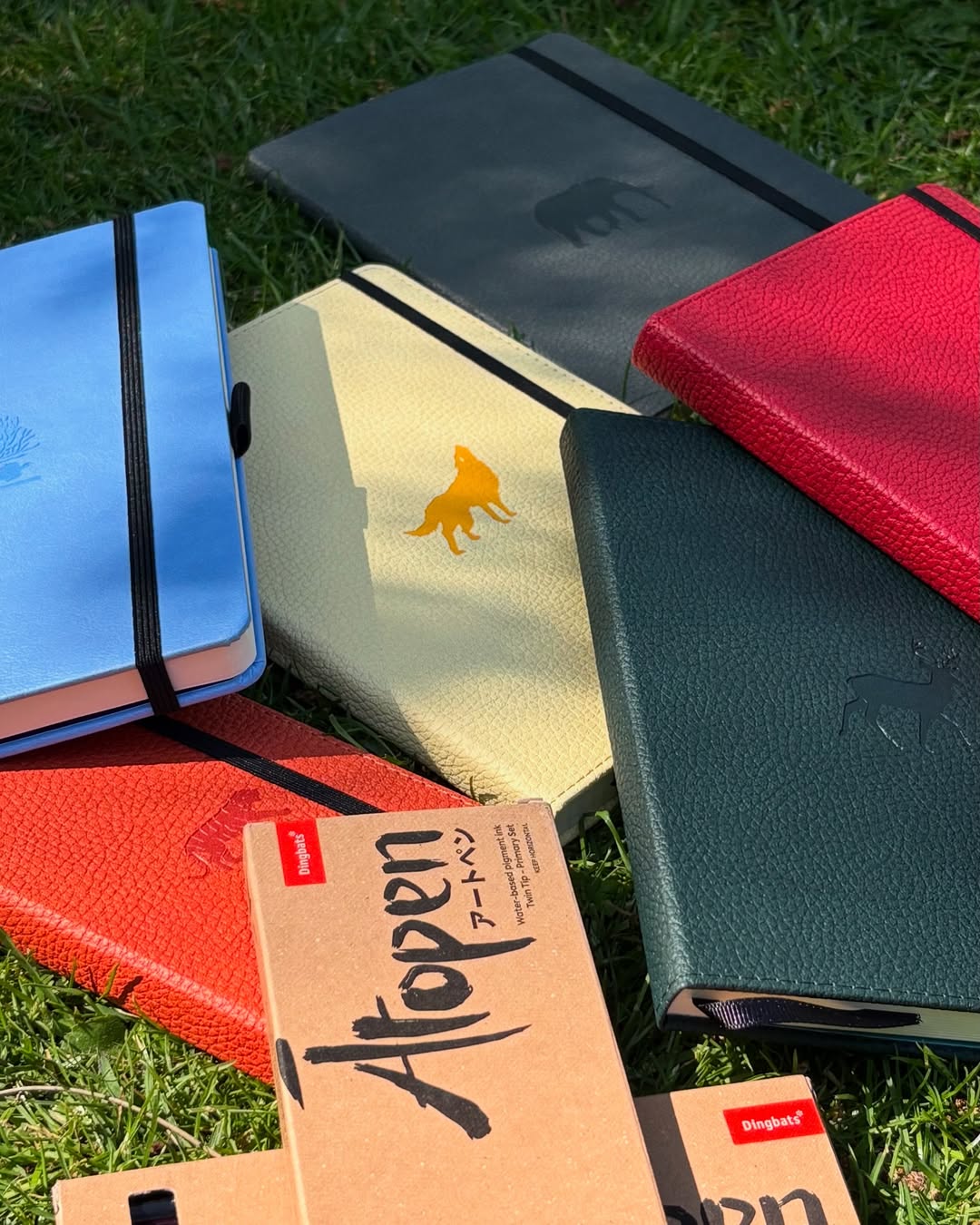
At Dingbats*, we believe notebooks are made to be used, kept, and returned to. The Wildlife Collection, Earth Collection, and Pro Collection each support a different kind of note-taking, but they all become more meaningful over time. A filled notebook is not just finished stationery. It is a record of thought, memory, process, and change.
The page remembers more than you think. You just have to go back.
Quick Overview: Why Rereading Old Notes Matters
| Reason | Why It Matters |
|---|---|
| Memory | Old notes bring back details you would have forgotten |
| Reflection | They help you understand what a past season felt like |
| Progress | They show how far you have moved |
| Patterns | Repeated ideas, worries, and goals become visible |
| Creativity | Forgotten ideas can become useful later |
| Decision-making | Old notes reveal why choices were made |
| Personal growth | You can see how your thinking changed |
| Closure | Finished notebooks help mark the end of a chapter |
Old notes are not only reminders. They are evidence.
Why We Rarely Reread Old Notes
Most people write notes and move on.
The notebook fills.
The project ends.
The meeting passes.
The journal entry is written.
The list is crossed off.
The idea is captured.
The page turns.
Then the notebook goes on a shelf, into a drawer, inside a bag, or under a stack of other things. We often treat notes as useful only in the moment. Once the task is done or the thought is captured, we assume the page has served its purpose.
But notes can have a second life. A note that seemed ordinary when you wrote it may become meaningful later. A list may reveal what daily life looked like. A sketch may become the beginning of a future idea. A crossed-out plan may show how much changed. A journal entry may explain a feeling you had almost forgotten.
Why Old Notes Get Forgotten
| Reason | What Happens |
|---|---|
| The task is done | The note feels no longer useful |
| The notebook is full | It gets replaced by a new one |
| The system changes | Old pages feel disconnected |
| The note feels ordinary | Its value is not obvious yet |
| Life moves quickly | Reflection gets postponed |
| The notebook feels messy | You avoid revisiting it |
| You assume you remember | But details fade over time |
Rereading old notes is a way of giving those pages another chance to matter.
Old Notes Show What You Were Really Thinking About
Memory can simplify the past. You may remember a period of life as busy, difficult, exciting, confusing, or productive. But old notes show the smaller details behind that summary. They reveal what was actually on your mind.
The same task appearing three weeks in a row.
The same idea written in different words.
The same worry returning.
The same person’s name.
The same project changing shape.
The same dream becoming more specific.
Old notes show attention. And attention tells a story.
What Old Notes Can Reveal
| Note Pattern | What It Might Show |
|---|---|
| Repeated goals | What you kept wanting |
| Repeated worries | What was weighing on you |
| Repeated ideas | What wanted to become something |
| Repeated names | Who mattered during that time |
| Repeated tasks | What daily life required |
| Repeated places | Where your life was happening |
| Repeated questions | What you were trying to understand |
| Repeated symbols | What your mind kept circling |
A notebook can show the themes of a life before you consciously name them.
Rereading Helps You Notice Progress
Progress is hard to see while you are living it. Change usually happens slowly.
You learn something one page at a time.
You build a routine one week at a time.
You finish a project through small tasks.
You move through a hard season without realizing when it starts to become easier.
You become better at something before you feel better at it.
Old notes can make progress visible. A page from six months ago may show a problem you have since solved. A goal that felt impossible may now feel normal. A rough idea may have become a real project. A note written in stress may now feel distant.
Progress Old Notes Can Show
| Old Page | What It May Reveal Later |
|---|---|
| Goal list | What you achieved or outgrew |
| Work notes | How a project developed |
| Journal entry | How a feeling changed |
| Habit tracker | What became consistent |
| Reading notes | How your thinking expanded |
| Sketches | How your visual ideas improved |
| Decision page | How your priorities shifted |
| Monthly review | How life changed over time |
Sometimes you need an old page to prove that you moved.
Old Notes Preserve Details Memory Loses
Memory keeps the general shape of things, but it often loses the specifics.
You may remember that a trip was beautiful, but not the name of the cafe.
You may remember that a project was difficult, but not the decision that changed it.
You may remember that a month felt heavy, but not what was actually happening.
You may remember a person, but not the exact phrase they said.
Old notes preserve those details. They bring back context.
Details Old Notes Can Save
| Detail | Why It Matters Later |
|---|---|
| Dates | Places a memory in time |
| Names | Preserves people and connections |
| Places | Brings back the setting |
| Tasks | Shows what life required |
| Quotes | Preserves exact language |
| Decisions | Explains why something happened |
| Feelings | Captures emotional texture |
| Small observations | Makes the memory vivid again |
A note does not need to be long to be useful later. It needs to be specific.

Rereading Old Notes Can Bring Back Forgotten Ideas
Some ideas are not ready when they first appear.
They arrive too early.
They do not fit the current project.
They feel incomplete.
They get written down and left behind.
Then months later, they suddenly make sense. Rereading old notes can uncover ideas that were waiting for better timing. This is especially useful for creative work, business, writing, design, product development, content planning, and problem-solving.
Forgotten Ideas Worth Looking For
| Old Note Type | What It Could Become |
|---|---|
| Random title | Blog post, campaign, project, product name |
| Rough sketch | Design direction |
| Rejected idea | Future concept |
| Question | Research topic |
| Complaint | Problem worth solving |
| Quote | Article opening or caption |
| Observation | Insight |
| Half-list | Full plan |
A notebook is not a place where ideas go to disappear. It is a place where they can wait.
Old Notebooks Show How Your Taste Changed
Taste changes quietly.
The colors you loved.
The books you copied quotes from.
The places you wrote about.
The objects you drew.
The songs you listed.
The notebooks you chose.
The layouts you kept making.
The words you used again and again.
Old notes can show earlier versions of your taste with surprising clarity. This matters because taste is part of identity. It shows what you were drawn to before you could fully explain why.
Taste Clues in Old Notes
| Clue | What It Reveals |
|---|---|
| Favorite lists | What you loved at the time |
| Color notes | Visual mood and preference |
| Reading notes | Ideas and language you were drawn to |
| Sketches | Shapes, symbols, and details you noticed |
| Travel pages | Places that left an impression |
| Desk notes | Objects you kept close |
| Product notes | Materials, textures, and styles you preferred |
| Repeated words | The language of that season |
A filled notebook can become a record of your changing taste. Not just what you liked. What kept calling your attention.
Old Notes Help You Understand Decisions
Decisions often make sense when we make them. Later, the reason can blur.
Why did we choose this direction?
Why did that plan change?
Why did we stop one thing and begin another?
Why did a project take that shape?
Why did a goal matter so much then?
Old notes can answer those questions. They preserve the thinking behind the decision, not only the result.
Decision Notes Worth Rereading
| Note Type | What It Reveals |
|---|---|
| Pros and cons | What mattered at the time |
| Meeting notes | Who said what and why it shaped the outcome |
| Project notes | How an idea changed |
| Goal pages | Why a goal felt important |
| Feedback notes | What influenced the final version |
| Timelines | What happened before the decision |
| Reflection pages | How you felt about the choice |
| Rejected ideas | What you decided not to do |
This is especially useful for work. The final file may show what happened. The notebook often shows why.
Old Notes Are a Map of Your Attention
Your notebook does not capture everything. It captures what you noticed. That is what makes it interesting. When you reread old notes, you are not only looking at information. You are looking at the shape of your attention at a certain time.
What did you write down?
What did you ignore?
What did you repeat?
What did you save?
What did you underline?
What did you return to?
What did you leave unfinished?
Attention Questions to Ask Old Notes
| Question | What It Helps You See |
|---|---|
| What did I keep writing about? | Recurring focus |
| What did I avoid writing about? | Possible gaps |
| What did I mark as important? | Priorities |
| What did I save in the pocket? | Memory anchors |
| What did I cross out? | Change and revision |
| What did I never finish? | Interrupted thoughts |
| What still feels alive? | Ideas worth returning to |
| What no longer matters? | Growth or release |
Attention is personal. Your old notes show where yours went.
Why Rereading Can Feel Emotional
Rereading old notes can be emotional because it brings you close to a past self.
Sometimes that feels comforting.
Sometimes it feels embarrassing.
Sometimes it feels tender.
Sometimes it feels surprising.
Sometimes it reminds you how much has changed.
Sometimes it reminds you what has not changed at all.
This is normal. Old notebooks hold unfinished versions of us. They can show worry, hope, confusion, ambition, excitement, boredom, sadness, humor, and ordinary life in ways that feel very direct.
Why Old Notes Can Feel Powerful
| Feeling | Why It Happens |
|---|---|
| Nostalgia | The page brings back a past time |
| Pride | You see progress more clearly |
| Embarrassment | You meet an older version of yourself |
| Relief | A past worry is no longer current |
| Sadness | Some moments or people have changed |
| Curiosity | You wonder what happened next |
| Gratitude | You are glad the detail was saved |
| Clarity | The past makes the present easier to understand |
You do not have to judge the old page. You can simply recognize it.

The Value of Finished Notebooks
A finished notebook is not just a completed object. It is a chapter.
The beginning and ending dates matter. The pages inside hold a period of life. The notes show what you were managing, building, thinking, remembering, and becoming. This is why finished notebooks can be difficult to throw away. They hold more than paper. They hold continuity.
What a Finished Notebook Can Hold
| Page Type | What It Preserves |
|---|---|
| Lists | Daily life, tasks, priorities |
| Journal entries | Thoughts and feelings |
| Work notes | Projects, decisions, progress |
| Sketches | Visual ideas |
| Travel notes | Movement, places, details |
| Reading notes | Quotes, questions, reactions |
| Scraps in the pocket | Physical memory |
| Crossed-out pages | Process and change |
A finished notebook has earned its place. Not by staying perfect. By being used.
How Often Should You Reread Old Notes?
You do not need to reread old notes constantly. Too much reviewing can become another task. The best rhythm is occasional and intentional. At the end of a week, you might review recent notes. At the end of a month, you might look for patterns. At the end of a notebook, you might reflect on what it held. At the end of a year, you might revisit the notebooks that carried you through it.
Simple Review Rhythm
| Time | What to Review |
|---|---|
| Weekly | Tasks, ideas, follow-ups, small decisions |
| Monthly | Patterns, memories, goals, repeated themes |
| End of project | Decisions, lessons, feedback, process notes |
| End of notebook | Important pages, dates, scraps, reflections |
| End of year | Major themes, changes, progress, memories |
Review does not need to be complicated. It only needs to bring the pages back into attention.
A Weekly Note Review Template
A weekly review helps keep notes useful before they disappear into the notebook.
Weekly Review
| Prompt | Your Notes |
|---|---|
| What did I write down this week? | |
| What still needs action? | |
| What idea should I return to? | |
| What decision was made? | |
| What pattern appeared? | |
| What memory is worth keeping? | |
| What can I let go of? | |
| What should move into next week? |
This is especially useful for work, planning, creative projects, and personal organization. The point is not to rewrite everything. It is to notice what still matters.
A Monthly Old Notes Review Template
A monthly review helps you see the bigger picture.
Monthly Review
| Prompt | Your Notes |
|---|---|
| What kept appearing in my notes this month? | |
| What changed? | |
| What did I finish? | |
| What did I keep postponing? | |
| What surprised me? | |
| What page feels most important now? | |
| What idea should not be forgotten? | |
| What does this month’s notebook say about my life? |
This turns a notebook into more than storage. It becomes a way of understanding time.
A Finished Notebook Review Template
When you finish a notebook, give it one final page.
Finished Notebook Review
| Prompt | Your Notes |
|---|---|
| Date started | |
| Date finished | |
| What phase of life did this notebook hold? | |
| What did I write about most? | |
| Which pages do I want to remember? | |
| What changed while I used this notebook? | |
| What ideas are worth carrying forward? | |
| What scraps or objects are inside? | |
| What did this notebook help me understand? | |
| What will my next notebook be for? |
This closing page turns the notebook into a complete record. It helps you understand what the notebook became.
What to Look for When Rereading Old Notes
Rereading old notes can feel overwhelming if you do not know what you are looking for. Start with patterns. You do not need to analyze every page. Let your attention find what repeats, what surprises you, and what still feels useful.
Look For These Things
| Look For | Why It Matters |
|---|---|
| Repeated ideas | They may still be important |
| Old goals | See what changed or progressed |
| Unfinished tasks | Decide whether they still matter |
| Forgotten memories | Recover details you would have lost |
| Useful phrases | Save lines, titles, and wording |
| Decisions | Understand why choices were made |
| Project notes | Learn from past process |
| Emotional patterns | Notice what shaped that period |
| Scraps and tickets | Add captions before context fades |
| Pages that still feel alive | Bring them into the next notebook |
The best old notes are not always the neatest. They are the ones that still speak.
What to Do With Useful Old Notes
When an old note still feels useful, do not leave it buried. Move it forward. You can copy it into a new notebook, add it to an index, turn it into a project, place a bookmark on the page, photograph it for reference, or write a short follow-up.
Ways to Bring Old Notes Forward
| Method | Best For |
|---|---|
| Copy into new notebook | Ideas still in progress |
| Add to an index | Important pages you want to find again |
| Create a follow-up page | Thoughts that need more development |
| Turn into a task | Notes that require action |
| Mark with a tab | Pages worth revisiting |
| Summarize the idea | Notes that are too messy but useful |
| Build a project page | Creative or work ideas |
| Write a reflection | Notes that show personal change |
Review is useful because it keeps good notes from becoming hidden notes. An idea is easier to use when it is brought back into view.
What to Do With Old Notes That No Longer Matter
Not every old note needs to be revived. Some notes were useful once and are finished now. That is fine. An old task list may no longer matter. A goal may no longer fit. An idea may feel outdated. A worry may have passed. A page may belong fully to the past. Rereading is not about keeping everything active. It is also about letting some things rest.
Old Notes You Can Let Go Of
| Note Type | Why It Can Stay in the Past |
|---|---|
| Completed tasks | Their purpose is finished |
| Outdated plans | Life moved in another direction |
| Old worries | They no longer need attention |
| Unused ideas | They may not fit anymore |
| Abandoned goals | Your priorities changed |
| Repeated reminders | You built a better system |
| Old drafts | They taught you something, even if unused |
Letting go does not mean the note was worthless. It means it served its time.
Old Notes and Creative Work
Creative work benefits from rereading. A creative notebook is full of fragments that may not make sense immediately. Titles, sketches, color notes, references, moodboards, loose phrases, layout ideas, and half-finished concepts may become useful later. Sometimes the old note is better than you remembered. Sometimes it connects to a new idea. Sometimes it solves a problem you did not have when you first wrote it.
Creative Notes Worth Revisiting
| Old Creative Note | Possible Future Use |
|---|---|
| Title list | Blog, campaign, poem, product name |
| Sketch | Visual direction |
| Color palette | Design inspiration |
| Moodboard | Creative brief |
| Rejected concept | Future variation |
| Phrase | Email subject, caption, headline |
| Layout test | Design direction |
| Question | Research angle |
Creative notes age in unexpected ways. A page that was not useful then may be exactly what you need now.

Old Notes and Work
Work notes often become valuable after the work is done. During a project, notes can feel purely practical. Later, they become process records.
They show what changed.
What was decided.
What feedback shaped the final version.
What problems repeated.
What questions were never answered.
What ideas were saved for later.
This is useful because work moves fast. A notebook can preserve the story behind the result.
Work Notes Worth Rereading
| Work Note | Why It Matters |
|---|---|
| Meeting notes | Decisions and follow-ups |
| Project timelines | How work developed |
| Feedback pages | What influenced the final outcome |
| Launch checklists | What the process required |
| Strategy notes | Why a direction was chosen |
| Customer comments | Real language and insight |
| Creative briefs | Original purpose and constraints |
| Post-project reflections | Lessons for next time |
The Dingbats* Earth Collection works well for structured work review because indexes, trackers, project notes, and collections help make old information easier to find.
Old work notes are not only records. They are reusable intelligence.

Old Notes and Personal Memory
Personal notes can feel ordinary when you write them. Later, they become emotional because they bring back a time you cannot return to in the same way.
A daily list can show a routine that no longer exists.
A travel note can bring back a place.
A journal entry can remind you how far you have moved.
A line about someone can return their voice.
A small receipt in the pocket can reopen a whole memory.
Personal Notes Worth Rereading
| Note Type | What It Can Bring Back |
|---|---|
| Daily reflection | What life felt like then |
| Travel notes | Places, routes, details |
| Relationship notes | People, conversations, inside jokes |
| Favorite lists | Taste and mood |
| Monthly reviews | Changes across time |
| Object captions | Why keepsakes mattered |
| Old worries | What you moved through |
| Old hopes | What you wanted then |
Personal memory needs a place to return to. A notebook gives it one.

Old Notes and Identity
Old notes help you see continuity.
You may have changed in many ways, but certain questions, interests, values, and patterns may still appear. The same themes may return in different forms. The same kind of work may attract you. The same worries may soften. The same values may become clearer.
A notebook can show both change and continuity. That is why rereading can feel grounding.
Identity Clues in Old Notes
| Clue | What It Shows |
|---|---|
| Repeated interests | What has stayed with you |
| Changing goals | How your priorities evolved |
| Old routines | How you lived then |
| Favorite phrases | The language of a past self |
| Notes about people | Relationships and connection |
| Work patterns | What kind of problems you like solving |
| Creative fragments | What your imagination returned to |
| Values | What kept mattering across time |
Old notes do not define you. They help you understand the thread.
How to Store Finished Notebooks
Finished notebooks deserve to be stored in a way that makes them easy to return to. You do not need an elaborate archive. A shelf, box, drawer, or labeled storage space is enough. What matters most is context.
When did the notebook start?
When did it end?
What did it hold?
What phase of life does it represent?
Finished Notebook Storage Ideas
| Method | Why It Helps |
|---|---|
| Label the spine or cover | Makes notebooks easier to identify |
| Add start and finish dates | Gives time context |
| Write a closing page | Summarizes what the notebook held |
| Keep related scraps inside | Preserves memory objects |
| Store by year | Makes review easier |
| Store by purpose | Work, journal, travel, creative |
| Create an index note | Helps find important pages later |
| Keep in a dry place | Protects paper over time |
A finished notebook should not feel like clutter. It should feel like an archive.
The Wildlife Collection: For Personal Notes Worth Returning To
Its animal-inspired covers give each notebook character, while the 100gsm cream paper supports journaling, lists, reflections, reading notes, travel memories, and daily observations.
Use Wildlife For
| Note Type | Why It Works |
|---|---|
| Personal reflections | Warm, expressive everyday writing |
| Travel notes | Captures place, movement, and memory |
| Daily lists | Preserves ordinary life |
| Reading reactions | Holds quotes and thoughts |
| Letters and drafts | Supports personal writing |
| Memory pages | Gives small details a place |
Wildlife notebooks are the kind you may want to return to later because they become attached to a certain chapter of life. The cover becomes part of the memory too.
The Earth Collection: For Structured Notes Worth Finding Again
The Dingbats* Earth Collection works well for people who want old notes to stay organized. It supports planning, trackers, routines, indexes, goals, collections, and project notes. This makes it especially useful for notes you plan to revisit.
Use Earth For
| Note Type | Why It Works |
|---|---|
| Monthly reviews | Shows change over time |
| Project notes | Preserves decisions and progress |
| Habit trackers | Reveals patterns |
| Goal pages | Shows priorities and growth |
| Indexes | Makes important pages easier to find |
| Collections | Groups ideas, memories, lists, and references |
Earth is for notes that need structure. The kind you want to return to without searching blindly.
The Pro Collection: For Visual Notes Worth Rediscovering
The Dingbats* Pro Collection works well for old notes that are visual, creative, or layered. With 160gsm mixed media paper, Pro supports sketches, diagrams, moodboards, color notes, brush pens, markers, calligraphy, light washes, and creative development.
Use Pro For
| Note Type | Why It Works |
|---|---|
| Sketches | Visual ideas can become useful later |
| Moodboards | Preserves creative direction |
| Diagrams | Shows how ideas connect |
| Color palettes | Records visual taste |
| Creative drafts | Shows process |
| Project concepts | Keeps early ideas visible |
| Visual memory | Captures things words cannot fully explain |
Pro is ideal for notes that may not make sense immediately. Visual ideas often need time.

How to Reread Old Notes Without Judging Yourself
Old notes can feel embarrassing. That is normal. You may find old goals that changed, old worries that now seem small, old ideas that feel naive, or old plans that never happened. Try not to treat the old notebook like evidence against you. Treat it like a record of a real person in a real moment.
Gentle Ways to Reread Old Notes
| Approach | Why It Helps |
|---|---|
| Read with curiosity | Avoid judging too quickly |
| Notice context | Remember what was happening then |
| Look for growth | See what changed |
| Look for patterns | Understand what repeated |
| Keep what helps | Bring useful notes forward |
| Let some pages rest | Not everything needs action |
| Thank the page | It held what you needed then |
You do not need to agree with every old note. You only need to understand what it was trying to hold.
A Simple “Reread With Me” Exercise
Choose one old notebook and open to a random page. Do not start by judging it. Start by asking questions.
Rereading Exercise
| Question | Your Notes |
|---|---|
| When did I write this? | |
| What was happening in my life then? | |
| What was I trying to remember? | |
| What did I care about? | |
| What has changed since then? | |
| What still feels true? | |
| What idea or memory should I carry forward? | |
| What can I leave behind? |
This exercise helps turn old notes into reflection. Not every page needs to be useful. Some pages only need to be witnessed.
Frequently Asked Questions
Why should I reread old notes?
Rereading old notes helps you remember forgotten details, see progress, notice patterns, recover old ideas, understand decisions, and reflect on how your thinking has changed over time.
Are old notebooks worth keeping?
Old notebooks can be worth keeping because they preserve handwriting, thoughts, memories, ideas, work, routines, sketches, and the context of a specific phase of life.
How often should I review my notebook?
You can review your notebook weekly, monthly, at the end of a project, at the end of a year, or when you finish a notebook. The best rhythm is one you can keep without pressure.
What should I look for when rereading old notes?
Look for repeated ideas, unfinished tasks, forgotten memories, old goals, useful phrases, decisions, patterns, and pages that still feel meaningful or useful.
What should I do with old notes I still need?
You can copy them into a new notebook, index them, mark the page, turn them into tasks, create a follow-up page, or use them as inspiration for a new project.
Should I throw away old notebooks?
You can let go of notebooks that no longer feel meaningful or useful, but it is worth reviewing them first. Sometimes one old page holds a memory, idea, or detail you will be glad you kept.
Which Dingbats* notebook is best for notes worth revisiting?
The Wildlife Collection works well for personal notes and memories. The Earth Collection works well for structured notes, indexes, and reviews. The Pro Collection works well for visual notes, sketches, moodboards, and creative ideas.


Leave a comment
All comments are moderated before being published.
This site is protected by hCaptcha and the hCaptcha Privacy Policy and Terms of Service apply.