
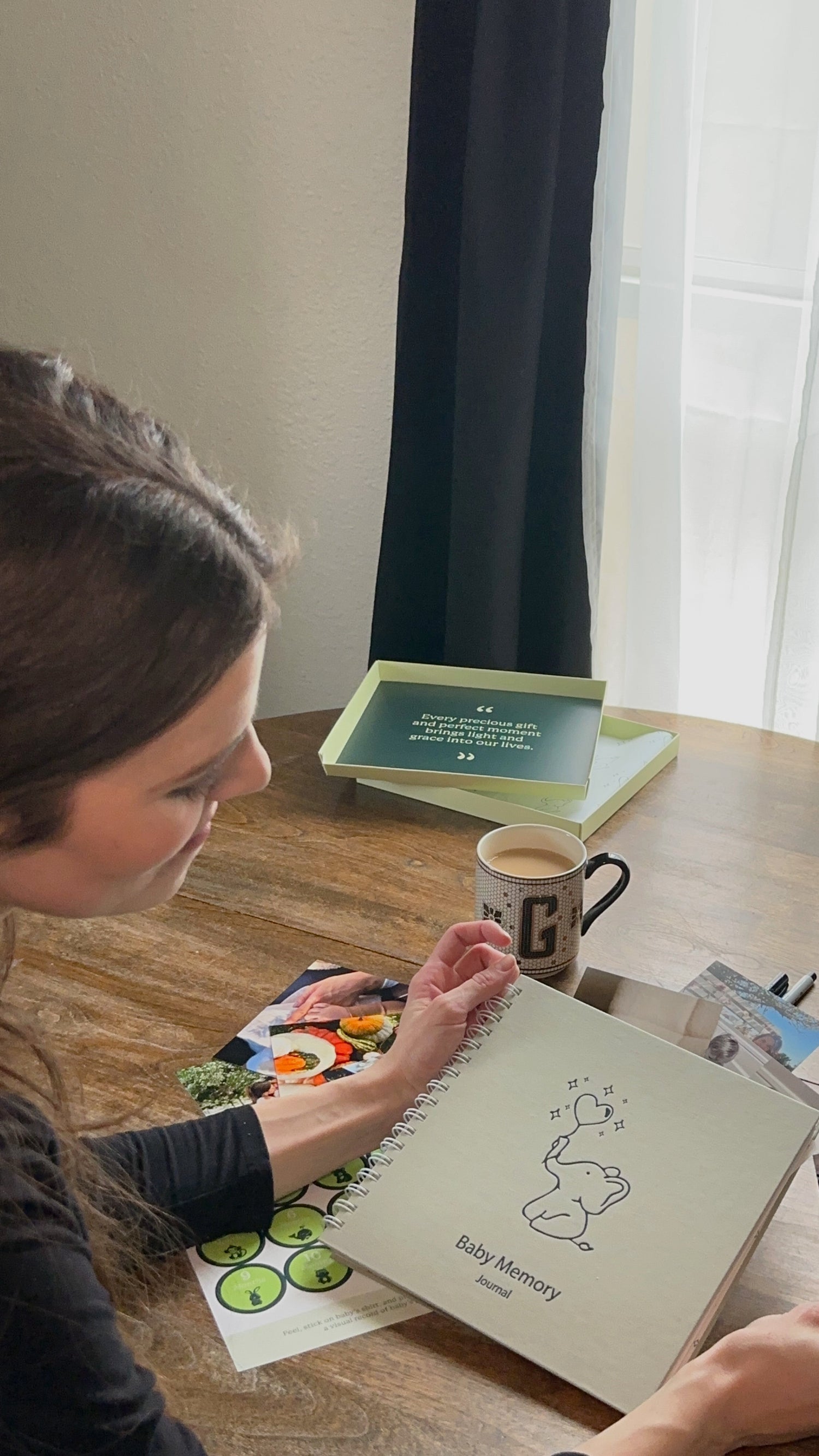
Last updated: July 2026 | A thoughtful guide to baby memory book ideas, milestone pages, first-year memories, keepsakes, prompts, and using the Dingbats* Baby Memory Journal
Some baby memories feel impossible to forget.
The first smile.
The first tiny hand wrapped around your finger.
The first time they looked at you like they knew exactly who you were.
The sleepy sounds.
The soft clothes.
The way they stretched after waking up.
The songs you kept singing.
The little face they made before crying.
The smell of their hair after a bath.
In the moment, it feels like these details will stay forever. But the first year moves quickly.
Days blur into nights. Milestones arrive quietly. Routines change before you notice. Tiny habits disappear and are replaced by new ones. A sound they made every day suddenly stops. A favorite position, expression, toy, or bedtime ritual becomes part of the past before you realize it has changed.
That is why a baby memory journal matters.
It is not only for the big milestones. It is for the small details that made your baby’s first year feel like yours.
The Dingbats* Baby Memory Journal is designed to help you keep those moments in one beautiful place. It gives you space to record milestones, firsts, memories, family details, little notes, keepsakes, and the everyday parts of your baby’s story. With its vegan textile cover, 160gsm mixed-media-friendly paper, spiral format, end pocket, and stickers, it is made to be easy to use, meaningful to fill, and lovely to return to later.
A baby memory book does not need to be perfect.
It just needs to be honest enough to bring the moment back.
Quick Overview: Baby Memory Book Ideas
| What to Record | Examples | Dingbats* Baby Memory Journal Fit |
|---|---|---|
| Milestones | First smile, first laugh, first words, first steps | Milestone pages |
| Everyday details | Favorite sounds, routines, tiny habits | Memory prompts |
| Daily updates | Growth, personality, new things learned | Monthly/yearly pages |
| Family memories | Visitors, messages, family traditions | Family sections |
| Keepsakes | Photos, cards, hospital bracelet, notes | End pocket + throughout the journal |
| Firsts | First bath, first outing, first holiday | Firsts pages |
| Personality notes | What made them laugh, how they slept, what they loved | Reflection spaces |
| Decorative memories | Stickers, small notes, labels, dates | Included stickers |
The best baby memory book is not the one with the most perfect handwriting or the most complete pages. It is the one that captures the details you will want to remember later.
What Is a Baby Memory Book?
A baby memory book is a keepsake journal used to record your baby’s early life.
It usually includes milestones, firsts, photos, family details, monthly updates, little memories, and important moments from pregnancy, birth, and the first months or years.
But a baby memory book can also hold the things that do not always fit into a milestone chart.
The way they yawned.
The nickname that stuck.
The song that always helped.
The first outfit you loved.
The funny face they made during bath time.
The visitor who cried when they held them.
The quiet moment when everything suddenly felt real.
A good baby memory book holds both the timeline and the feeling.
It tells the story of what happened, but also what it was like to be there.

Why Baby Memories Are Worth Writing Down
The early months can feel intense, beautiful, exhausting, emotional, and fast.
You may think you will remember every detail because the moments feel so vivid while they are happening. But babyhood changes quickly. What feels normal today may be gone next month.
That is why writing things down matters.
A photo can show what your baby looked like.
A memory book can capture what that moment felt like.
| A Photo Captures | A Baby Memory Book Captures |
| Their first smile | Who was there and how it felt |
| A tiny outfit | Why you loved it |
| A family visit | What people said and remembered |
| A birthday cake | The story behind the day |
| A sleeping baby | The routine that helped them rest |
| A first step | The excitement in the room |
The small details are often the most precious later.
Not because they were dramatic, but because they were real.
What to Write on the First Page of a Baby Memory Book
The first page can feel intimidating, but it does not need to be complicated.
Start with a simple welcome note.
You can write directly to your baby, or write as a parent recording the beginning of their story.
First Page Ideas
| Page Idea | What to Write |
| Welcome letter | A short note to your baby |
| Before you arrived | What life felt like before birth |
| The day we met you | First emotions and memories |
| Why we chose your name | Name meaning or story |
| A promise to you | Hopes, wishes, and love |
| Our first family moment | The first time everyone was together |
Example First Page
Dear little one,
Before you arrived, we imagined you in so many ways. We wondered what you would look like, what your little sounds would be, and how life would feel once you were here. Then we met you, and suddenly everything became real. This book is for the moments we never want to forget: the big firsts, the tiny details, and all the love that surrounded you from the very beginning.
You do not need to write something perfect. You only need to write something true.

Milestones to Record
Milestones are the moments many parents expect to include in a baby memory book.
They help create a timeline of growth and change.
Baby Milestones to Write Down
| Milestone | What to Record |
| First smile | Date, where you were, who saw it |
| First laugh | What made them laugh |
| First rollover | How it happened |
| First tooth | Date and reaction |
| First solid food | What they tried and whether they liked it |
| First crawl | Where they were headed |
| First words | What they said and how it sounded |
| First steps | Who was there and what happened |
| First birthday | Favorite moment from the day |
| First holiday | Outfit, people, traditions |
Milestones are meaningful because they show change.
But the story around the milestone is what makes it personal.
Instead of only writing:
First smile: June 10
Write:
First smile: June 10. You were lying on the blanket after your nap. We were making silly faces, and suddenly you smiled like you knew exactly what was happening. We all froze for a second because it felt like the first little conversation.
That is the part you will want later.
The Little Details Parents Forget
The most beautiful baby memories are not always the official milestones.
They are the tiny everyday details.
The sounds.
The faces.
The routines.
The habits.
The way they liked to be held.
The songs that worked.
The toy they stared at.
The strange little movement they did with their hands.
These things often disappear quietly.
A baby memory book helps keep them.
Little Details Worth Writing Down
| Detail | Prompt |
| Favorite sound | What noise did they make often? |
| Sleep habit | How did they like to fall asleep? |
| Funny face | What expression made everyone laugh? |
| Favorite position | How did they like to be held? |
| Bath time habit | What did they do in the bath? |
| Feeding moment | What routine felt familiar? |
| Favorite song | What song helped calm them? |
| Tiny movement | What did their hands, feet, or face do? |
| Nickname | What did you call them and why? |
| Everyday routine | What did a normal day look like? |
These details may seem too small to write down.
That is exactly why they are worth keeping.
Monthly Baby Update Pages
Monthly updates are one of the easiest ways to keep a baby memory book consistent.
You do not have to write every day. One monthly page can capture a lot. In the Dingbats* Baby Memory Journal, the monthly pages are already set up for you (and includes monthly stickers for you to use in the notebook), but typically includes the below:
Monthly Baby Update Template
| Section | Notes |
| Month | |
| New things you learned | |
| Favorite sounds | |
| Favorite foods or feeds | |
| Sleep updates | |
| Things that made you smile | |
| Places we went | |
| People you saw | |
| Favorite memory this month | |
| What we want to remember |
Monthly pages help you see your baby’s personality unfolding.
One month they may be discovering their hands.
The next, they may be rolling.
Then laughing.
Then reaching.
Then babbling.
Then trying to move toward everything.
A monthly page turns fast change into a story you can follow.
Firsts to Include in a Baby Memory Book
Baby’s firsts are often the pages people love most.
Some firsts are big. Others are small and sweet.
Baby’s Firsts List
| First | What to Add |
| First day home | How it felt to arrive |
| First bath | Reaction, photos, funny moment |
| First smile | Date and story |
| First laugh | What caused it |
| First outing | Where you went |
| First visitor | Who came and what they said |
| First holiday | Outfit, traditions, family |
| First favorite toy | What they loved about it |
| First food | What they tried |
| First tooth | When it appeared |
| First word | What they said |
| First steps | Where and how it happened |
You can also include firsts that are more personal to your family:
- first time meeting a grandparent
- first time visiting the beach
- first time hearing a certain song
- first time travelling
- first time sleeping through the night
- first time wearing a meaningful outfit
- first time visiting a family home
- first time joining a family tradition
The more specific the memory, the more meaningful the page becomes.

Family, Visitors, and Messages
A baby memory book is not only about the baby. It is also about the circle of love around them.
Family members, friends, siblings, grandparents, cousins, neighbors, and visitors all become part of the early story.
Family Memory Page
| Prompt | Notes |
| Who came to meet you? | |
| What did they say? | |
| Who held you first? | |
| Who cried when they saw you? | |
| What family traditions welcomed you? | |
| What messages did people send? |
You can also create a page for short messages from loved ones.
Messages for Baby
Ask family and close friends to write one line:
- “What do you hope they always know?”
- “What was your first thought when you met them?”
- “What do you want to tell them when they are older?”
- “What family story do you want them to remember?”
These messages become especially beautiful years later.
They show the baby not only what happened, but how loved they were from the beginning.
Keepsakes to Save in a Baby Memory Book
Keepsakes bring the memory book to life.
The Dingbats* Baby Memory Journal includes an end pocket, which is perfect for storing small paper memories and keepsakes.
Baby Keepsake Ideas
| Keepsake | Why It Matters |
| Hospital bracelet | First tiny identity marker |
| Birth announcement card | Beginning of the story |
| Ultrasound photo | Memory before arrival |
| First lock of hair | Personal keepsake |
| Baby shower card | Messages from loved ones |
| First birthday card | Family memory |
| Small printed photos | Visual timeline |
| Gift tag | Reminder of someone’s thoughtfulness |
| Note from a loved one | Personal message |
| Tiny envelope | Keeps small treasures together |
You do not need to save everything.
Choose the pieces that bring back a feeling.
A small card, photo, or note can hold a whole season of life.
What to Write When You Are Busy
A baby memory book should not become another source of pressure. New parents are busy. Tired. Adjusting. Learning. Doing their best.
You do not need to fill pages perfectly or keep up every day.
Use shortcuts.
Low-Pressure Memory Book Ideas
| If You Have… | Write This |
| 30 seconds | One sentence about today |
| 2 minutes | A funny thing they did |
| 5 minutes | A monthly update |
| 10 minutes | A milestone story |
| No words | Add a photo or keepsake |
| No time | Write a note on your phone and copy later |
Try keeping a running note called:
Things to add to the baby book
Then later, when you have a moment, transfer the best details into the journal.
You can also write in fragments:
- “Loved bath time today.”
- “Started making a new sound.”
- “Fell asleep holding my finger.”
- “Smiled at the lamp again.”
- “Grandma visited and sang the same song three times.”
A memory does not need to be long to be worth keeping.

Baby Journal Prompts
If needed, you can use these prompts when you are not sure what to write.
Milestone Prompts
| Prompt | Notes |
| What new thing did you learn this month? | |
| What made you smile for the first time? | |
| What sound did you start making? | |
| What did you reach for first? | |
| What was your first favorite toy? | |
| What was your first food, and did you like it? |
Everyday Memory Prompts
| Prompt | Notes |
| What tiny habit do I never want to forget? | |
| What did our mornings look like this month? | |
| What song did we sing most often? | |
| What made everyone laugh? | |
| What did you love looking at? | |
| How did you like to be comforted? |
Parent Reflection Prompts
| Prompt | Notes |
| What surprised me about this stage? | |
| What moment made me emotional? | |
| What did I learn about you this month? | |
| What did I learn about myself? | |
| What was hard, but worth remembering? | |
| What do I hope you feel when you read this one day? |
These prompts help the book feel human.
Not just a list of achievements, but a record of love, change, and everyday life.
How to Make a Baby Memory Book Feel Personal
A baby memory book becomes special when it sounds like your family.
Use the words you actually say.
Write the nicknames you actually use.
Include the funny details.
Mention the songs, foods, places, people, and routines that belong to your home.
The pages do not need to look perfect.
They should feel like you.
Ways to Personalize a Baby Memory Book
| Idea | How to Use It |
| Add nicknames | Write the names you used at each stage |
| Include family phrases | Capture repeated sayings or jokes |
| Add stickers | Mark milestones or decorate pages |
| Use photos | Pair images with short notes |
| Save small notes | Add cards, tags, or messages |
| Write directly to baby | Make entries feel intimate |
| Add dates and places | Give memories context |
| Include routines | Record what daily life felt like |
The Dingbats* Baby Memory Journal includes stickers, which make it easier to decorate pages, mark special moments, and add personality without needing a complicated scrapbook setup.
How the Dingbats* Baby Memory Journal Helps
The Dingbats* Baby Memory Journal is designed to help parents keep the memories that matter without needing to build a system from scratch.
It gives structure, but still leaves room for personal stories.
Dingbats* Baby Memory Journal Features
| Feature | How It Helps |
| Guided memory pages | Makes it easier to know what to write |
| Milestone sections | Helps track firsts and important moments |
| Spiral format | Easy to open and use while filling pages |
| Stickers | Adds decoration and milestone marking |
| End pocket | Stores keepsakes, cards, photos, and notes |
| 160gsm mixed-media-friendly paper | Makes writing feel enjoyable |
| Vegan textile cover | Beautiful keepsake quality |
A good baby memory journal should feel helpful, not overwhelming.
It should guide you when you do not know what to write and give you space when you have a story to tell.
Baby Memory Book Ideas by Age
Different stages bring different memories.
Newborn Stage
| What to Record | Examples |
| Arrival story | First day, first night, first feelings |
| Tiny details | Hands, feet, hair, sounds |
| Visitors | Who came to meet baby |
| Sleep | Early routines and habits |
| First home moments | First day home, favorite place to rest |
1–3 Months
| What to Record | Examples |
| First smiles | Date and story |
| Sounds | Coos, little noises |
| Personality | Calm, curious, expressive |
| Favorite positions | How they liked to be held |
| Daily routines | Feeding, sleeping, bath time |
4–6 Months
| What to Record | Examples |
| Rolling | When and where it happened |
| Laughing | What made them laugh |
| Reaching | Favorite toys or objects |
| First foods | Reactions and favorites |
| More interaction | How they responded to people |
7–9 Months
| What to Record | Examples |
| Crawling or movement | Where they tried to go |
| Babbling | Sounds and repeated syllables |
| Favorite games | Peekaboo, songs, toys |
| New foods | Likes and dislikes |
| Personality | What became clearer |
10–12 Months
| What to Record | Examples |
| First words | What they said |
| First steps | Where and how |
| First birthday | Celebration and memories |
| Favorite routines | Books, songs, games |
| First-year recap | What changed most |
A first-year memory book does not need to capture every day.
It just needs to capture enough to remember who your baby was becoming.
Frequently Asked Questions
What should I write in a baby memory book?
You can write milestones, firsts, monthly updates, tiny habits, favorite songs, sleep routines, funny sounds, family visits, messages from loved ones, keepsakes, and reflections from parents.
When should I start a baby memory book?
You can start during pregnancy, at birth, or anytime during the first year. It is never too late to begin. Start with what you remember now and add details as they come back.
What are the most important baby milestones to record?
Common milestones include first smile, first laugh, first rollover, first tooth, first food, first crawl, first words, first steps, first holiday, and first birthday.
What if I fall behind filling out the baby memory book?
That is completely normal. Use short notes, monthly updates, photos, and fragments. A memory book does not need to be filled perfectly to be meaningful.
What keepsakes should I save in a baby memory book?
You can save hospital bracelets, ultrasound photos, baby shower cards, birth announcement cards, gift tags, family notes, printed photos, first birthday cards, and other small paper memories.
What makes the Dingbats* Baby Memory Journal useful?
The Dingbats* Baby Memory Journal includes guided memory pages, milestone sections, stickers, an end pocket for keepsakes, 160gsm mixed-media-friendly paper, a spiral format, and a vegan textile cover.
Our Verdict
A baby memory book is not only about recording milestones. It is about keeping the little details that made the first year feel alive.
The sleepy sounds.
The first smile.
The favorite song.
The tiny habits.
The visitors.
The nicknames.
The first foods.
The funny faces.
The ordinary mornings.
The moments that felt small at the time but become priceless later.
The Dingbats* Baby Memory Journal gives those memories a beautiful place to live.

Leave a comment
All comments are moderated before being published.
This site is protected by hCaptcha and the hCaptcha Privacy Policy and Terms of Service apply.