
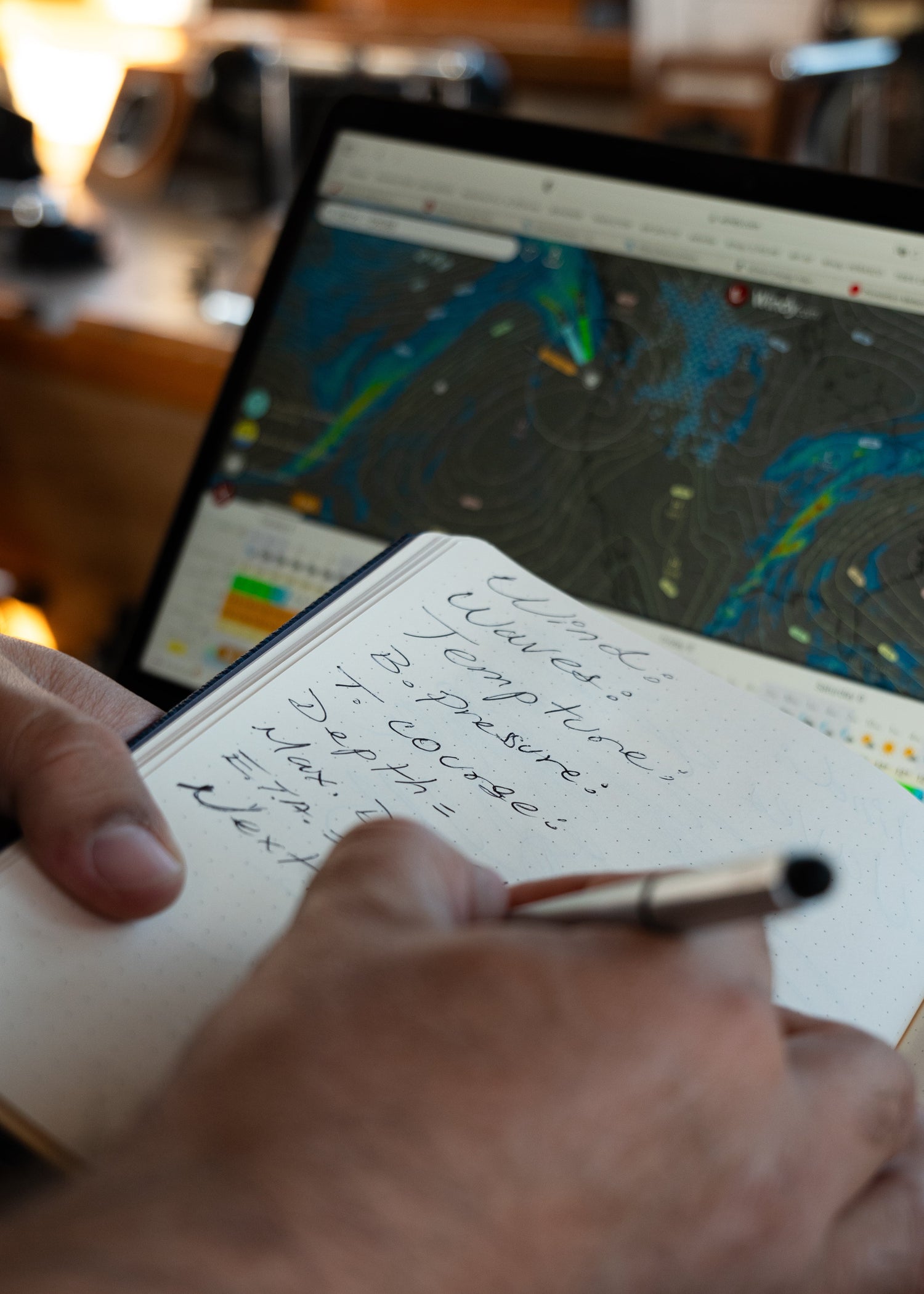
Last updated: May 2026 | A practical guide to building a journaling system for planning, reflection, creativity, memory keeping, and mental clarity
Most people try to make one notebook do everything.
They use the same pages for work notes, personal thoughts, to-do lists, creative ideas, reminders, book notes, dreams, and long-term goals. At first, this feels convenient. Everything is in one place.
But over time, it can become messy. Important ideas get buried. Personal reflections sit beside meeting notes. Creative sketches compete with grocery lists. Eventually, the notebook becomes harder to use, not because writing is the problem, but because the system has no clear role.
That is where a journal ecosystem comes in.
A journal ecosystem is the idea of using different notebooks for different parts of your life. Instead of forcing one notebook to hold everything, each notebook has a purpose. One might be for planning. Another for reflection. Another for creative work. Another for reading, dreams, or memories.
This is not about overcomplicating journaling. It is about making your notebooks easier to return to.
Recent lifestyle coverage has framed the “journal ecosystem” as a growing 2026 journaling trend, especially among people who want more intentional ways to organize their thoughts, routines, and creativity.

Quick Overview: What a Journal Ecosystem Can Look Like
| Life Area | Notebook Role | Dingbats* Fit |
|---|---|---|
| Everyday thoughts | Notes, reminders, lists, ideas | Wildlife Collection |
| Planning and structure | Goals, habits, routines, monthly planning | Earth Collection |
| Creative expression | Sketches, visual ideas, calligraphy, mixed media | Pro Collection |
| Reading life | Book notes, reading lists, reflections | Reading Journal |
| Dreams | Dream recall, symbols, patterns, nighttime thoughts | Dream Journal |
| Memories | Milestones, keepsakes, relationship or family memories | Baby Memory / Wedding Anniversary Journals |
The strongest journal ecosystem is not the one with the most notebooks. It is the one where every notebook has a clear job.
Why One Notebook Often Becomes Overwhelming
One notebook can absolutely work, especially if your needs are simple. But for many people, one notebook eventually becomes a mix of unrelated thoughts.
A page of work tasks might sit beside a private reflection. A creative idea might be lost between habit trackers and errands. A list of books to read might disappear under weeks of daily planning.
The issue is not that the notebook is messy. Real notebooks are supposed to be lived in. The issue is that when everything has equal weight, it becomes harder to find what matters.
This is where separating notebooks by purpose can help. It creates mental categories. When you open your planner-specific notebook, you know you are planning. When you open your reflection notebook, you know you are processing. When you open your creative notebook, you know you are exploring.
That separation matters because our environment and tools can act as cues. Habit research shows that repeated behavior in a consistent context helps habits become more automatic over time.
In simple terms: when the notebook has a clear role, your brain has less deciding to do.

The Science Behind a Journal Ecosystem
A journal ecosystem works because it supports four things that matter in real life: memory, cognitive load, habits, and emotional processing.
1. Writing Things Down Reduces Mental Load
When you write something down, you are not only recording information. You are moving it out of your head and onto the page. This is often called cognitive offloading: using external tools, such as paper, lists, calendars, or notes, to reduce the amount of information your mind has to hold at once.
Research on cognitive offloading shows that external reminders can improve task performance, especially when people are managing demanding information.
This is one reason notebooks feel useful. A to-do list does not just remind you what to do. It also reduces the pressure of mentally carrying everything at once.
Example:
If you are planning a product launch, keeping campaign ideas, supplier notes, creative concepts, and personal reflections in one notebook can become mentally heavy. But if your Dingbats* Earth Collection notebook holds the plan, your Wildlife Collection holds quick notes, and your Pro Collection holds visual concepts, each notebook removes a different kind of mental clutter.

2. Handwriting Supports Memory and Learning
Handwriting is slower than typing, but that slowness can be useful. It forces you to process information rather than simply capture it.
Research continues to associate handwriting with memory and learning benefits, partly because it engages fine motor processes and richer brain activity than typing. Scientific American summarized recent research showing that writing by hand can support learning and memory through the fine motor system.
That does not mean digital tools are bad. It means handwritten notebooks still have a strong place, especially when the goal is to think, remember, reflect, or make sense of something.
Example:
A reading journal is not just a place to list books. When you write down what a book made you think about, which quotes stayed with you, or how your opinion changed, you are actively processing the material. That makes a Dingbats* Reading Journal more than a tracker. It becomes a thinking tool.

3. Consistent Cues Help Habits Stick
People often think they fail at journaling because they lack discipline. But habits are strongly shaped by context.
A 2024 systematic review and meta-analysis on habit formation found that habits develop through repeated behavior in consistent contexts.
That is exactly why a journal ecosystem can work. Each notebook becomes a cue.
Your Earth notebook cues planning.
Your Wildlife notebook cues everyday writing.
Your Pro notebook cues creative work.
Your Dream Journal cues subconscious reflection.
When each notebook has a purpose, you do not have to decide what it is for every time you open it. The role is already clear.
Example:
If your Dream Journal stays by your bed, it becomes associated with subconscious and dream recall. If your Earth Collection notebook stays on your desk, it becomes associated with planning and structure. If your Wildlife Collection travels in your bag, it becomes associated with everyday capture.
The habit becomes easier because the context stays consistent.

4. Reflective Writing Can Support Emotional Processing
Writing can also help people process thoughts and emotions. Expressive writing research, pioneered by James Pennebaker and colleagues, has explored how writing about emotional experiences can support psychological and physical health outcomes in some contexts.
This does not mean a notebook replaces therapy or professional support. It simply means writing can be a useful tool for reflection, clarity, and self-awareness.
A journal ecosystem makes this easier because emotional writing does not have to compete with everything else. Reflection has its own place.
Example:
A person using the Dingbats* Wildlife Collection for free writing might keep it separate from their Earth Collection notebook. That way, personal reflection does not get mixed with deadlines and tasks. The separation creates emotional space.
What Belongs in a Journal Ecosystem?
A journal ecosystem can be simple or detailed. The goal is not to own more notebooks for the sake of it. The goal is to create clearer spaces for different parts of life.
Below are the strongest categories to include.
1. The Everyday Notebook
This is the notebook that catches everything.
It holds quick thoughts, reminders, ideas, lists, notes from conversations, and things you do not want to forget. It does not need to be beautiful or perfectly organized. It just needs to be useful.
The Dingbats* Wildlife Collection fits this role well because it comes in different sizes, designs, and rulings, including lined, dotted, grid, and plain. That makes it easy to choose a format that matches how you naturally write.
A lined Wildlife notebook works well for daily notes and journaling. A dotted Wildlife notebook works well for mixed use. A grid Wildlife notebook can support more structured thinking, diagrams, or lists. A plain Wildlife notebook gives more freedom for sketches and freeform ideas.
Real-life example:
A Wildlife notebook might include a reminder from a call, a packaging idea, a list of people to contact, a sentence you want to use in a campaign, and a random thought from the day. It is not messy. It is alive.

2. The Planning Notebook
This is where structure matters.
A planning notebook is not for every thought. It is for organizing the things that need direction: goals, habits, routines, deadlines, monthly plans, and projects.
The Dingbats* Earth Collection is the strongest fit here because it is built with more structure. It includes dotted pages, numbered pages, index pages, key pages, and future-log-style planning features. That makes it suitable for people who want clarity without needing to build everything from scratch.
Real-life example:
You might use Earth Notebook to plan a monthly campaign calendar, track habits, outline weekly priorities, or create a content roadmap. Because the pages are numbered, it becomes easier to reference ideas later instead of losing them.

3. The Creative Notebook
Creativity needs a different kind of space.
Creative thinking is not always linear. It might involve sketches, layouts, arrows, color, moodboards, calligraphy, packaging ideas, or visual experiments. A normal writing notebook may not support that kind of use, especially if the paper is too thin.
The Dingbats* Pro Collection fits this part of the ecosystem because it uses 160gsm mixed media paper, designed for heavier creative use. It works well for sketching, layering, brush pens, markers, calligraphy, and visual brainstorming.
Real-life example:
A designer might use Pro to sketch product packaging, test lettering styles, map a campaign moodboard, or draw early concepts for a notebook cover. The point is not to make every page polished. The point is to give ideas enough room to become visible.

4. The Reflection Notebook
Reflection is different from planning.
Planning asks, “What needs to happen?”
Reflection asks, “What am I thinking, feeling, or learning?”
These two modes often need different spaces. If you use the same notebook for both, reflection can start to feel like another task. A separate reflection notebook helps protect that space.
The Wildlife Collection works well for open reflection because it does not force a system. The Earth Collection can work if you prefer tracking patterns, recurring thoughts, or guided structure.
Real-life example:
A reflection notebook might include a few lines after a long day, thoughts after a meeting, something you are trying to understand, or a repeated pattern you are noticing. This kind of writing does not need to be organized. It needs to be honest and accessible.
5. The Reading Journal
A reading journal gives your reading life a home.
Instead of finishing a book and forgetting the details, you can record what you read, what stayed with you, what you disagreed with, and what you want to explore next.
The Dingbats* Reading Journal can sit inside a journal ecosystem as the notebook for intellectual curiosity. It is not just about tracking books. It is about building a record of what shaped your thinking.
Real-life example:
After reading a business book, you might note one idea you want to apply at work. After reading a novel, you might record a theme, character, or sentence that stayed with you. Over time, the Reading Journal becomes a map of your taste and thinking.
6. The Dream Journal
Dreams are easy to forget because they disappear quickly after waking. A dream journal creates a dedicated place for capturing them before they fade.
The Dingbats* Dream Journal works well as a nighttime notebook because it gives that part of the mind a specific space. Even a few words in the morning can help capture patterns, moods, images, or recurring themes.
Real-life example:
A dream entry does not need to be long. It might simply record the setting, a person, a feeling, or a strange image. The value comes from repetition over time.
7. The Memory-Keeping Journal
Some journals are not for daily productivity. They are for preserving moments.
This is where guided keepsake journals fit into the ecosystem. A Baby Memory Journal or Wedding Anniversary Journal has a different role from an everyday notebook. It is not meant to capture every thought. It is meant to hold milestones, reflections, photographs, letters, and memories that become more meaningful over time.
Real-life example:
A Wedding Anniversary Journal might hold yearly reflections from both partners, photos, notes, and letters. A Baby Memory Journal might track milestones, family details, small memories, and early years. These journals are less about productivity and more about emotional permanence.

How to Build Your Own Journal Ecosystem
You do not need to start with six notebooks. In fact, you probably should not.
Start with the roles that solve your actual problem.
| If Your Problem Is… | Start With… | Dingbats* Fit |
|---|---|---|
| Your thoughts feel scattered | Everyday notebook | Wildlife |
| You need more structure | Planning notebook | Earth |
| You have creative ideas everywhere | Creative notebook | Pro |
| You forget what you read | Reading journal | Reading Journal |
| You want to remember dreams | Dream notebook | Dream Journal |
| You want to preserve milestones | Keepsake journal | Baby / Wedding Anniversary |
A good journal ecosystem should feel lighter, not heavier. If it becomes complicated, reduce it.
Simple Journal Ecosystem Examples
The Minimalist Ecosystem
This version uses only two notebooks.
This works well for people who want more clarity but do not want too many notebooks.
The Creative Ecosystem
This version is built for visual thinkers.
This works well for designers, artists, marketers, and anyone who develops ideas visually.
Why a Journal Ecosystem Works Better Than One Perfect Notebook
The idea of the “perfect notebook” is appealing, but it can be unrealistic.
One notebook can do a lot, but it cannot always support every mode of thinking equally. Planning, reflecting, sketching, reading, and memory keeping each ask something different from the page.
A journal ecosystem works because it gives each mode a home.
When you want to plan, you open the planning notebook.
When you want to reflect, you open the reflection notebook.
When you want to create, you open the creative notebook.
That separation reduces friction. It makes the act of writing feel more intentional without making it more complicated.
Frequently Asked Questions
What is a journal ecosystem?
A journal ecosystem is a system of using different notebooks for different parts of your life. Instead of making one notebook hold everything, each notebook has a clear role, such as planning, reflection, creativity, reading, dreams, or memory keeping.
Do I need multiple journals?
Not always. If one notebook works for you, keep using one. A journal ecosystem is useful when one notebook starts to feel cluttered, overwhelming, or too mixed to be helpful.
How many notebooks should be in a journal ecosystem?
Start with two or three. A strong starting point is one everyday notebook, one planning notebook, and one creative or reflection notebook. You can add more only when there is a clear need.
Is it better to separate work and personal notebooks?
For many people, yes. Separating work and personal writing can make both spaces clearer. Work notes stay practical, while personal reflections have room to be more honest and open.
What is the best Dingbats* notebook for a journal ecosystem?
It depends on the role. The Wildlife Collection is best for everyday notes and reflections, the Earth Collection is best for planning and structured journaling, the Pro Collection is best for creative work, and the guided journals are best for specific life areas like reading, dreams, baby memories, or anniversaries.
Our Verdict
A journal ecosystem is not about having more notebooks. It is about giving your thoughts better places to land.
The science supports the idea that writing can reduce mental load, handwriting can support learning and memory, repeated behavior in consistent contexts can help habits form, and reflective writing can support emotional processing. A journal ecosystem brings those ideas into a practical system: one notebook for one role, each with a clear purpose.
Dingbats* is naturally built for this approach. The Wildlife Collection supports everyday writing through different formats and designs. The Earth Collection supports planning and structure. The Pro Collection supports creative expression. The Reading Journal, Dream Journal, Baby Memory Journal, and Wedding Anniversary Journal give specific life areas a dedicated home.
You do not need one notebook to hold your whole life. You need the right spaces for the different ways you think, plan, create, and remember.

Leave a comment
All comments are moderated before being published.
This site is protected by hCaptcha and the hCaptcha Privacy Policy and Terms of Service apply.